A dress that made its cost visible
For much of history, clothing was too valuable to treat as disposable. Fabric, sewing, and fitting all took time, and a well-made dress could be altered or worn again. A pale gown posed a different challenge: dust, food, and ordinary handling showed up clearly, while cleaning delicate fabric could be difficult and labor-intensive.
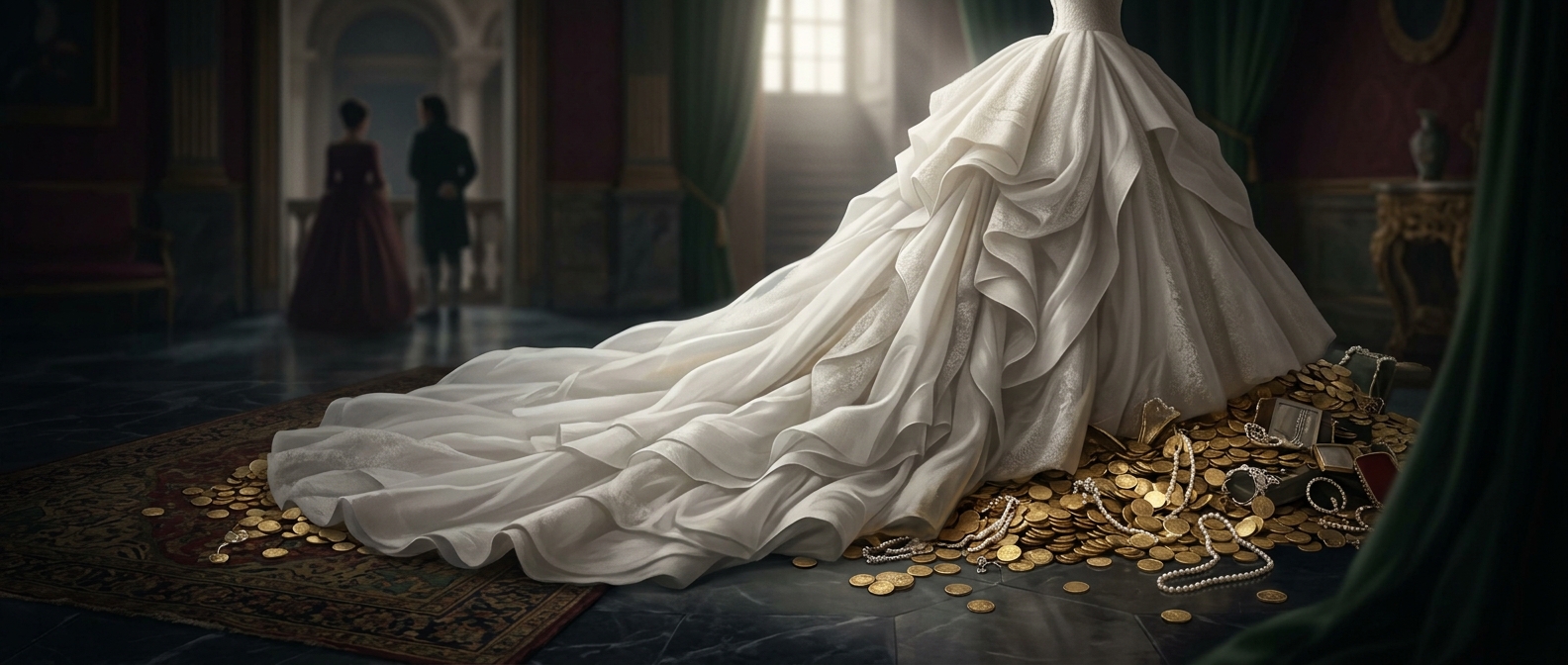
That made the wedding dress a public display of resources. The wearer was not simply dressed for a special occasion; she could appear in a garment whose brightness demanded careful treatment and whose style might not fit easily into everyday life. The cost included the risk of keeping it clean and the possibility that it would have little practical use afterward.
The expense was part of the message
A family with limited means had reason to favor a dress that could serve beyond the ceremony. Choosing a conspicuously pale gown instead meant accepting a tradeoff: money and effort spent on a garment for one highly visible day rather than on clothing with repeated use.
Guests did not need to know the dress’s price to read that signal. Its impracticality was on display. In a world where garments were commonly valued for how long they could be worn, a dress suited to one occasion could itself announce that its owner could afford an exception.