Why a ruff could get between a diner and dinner
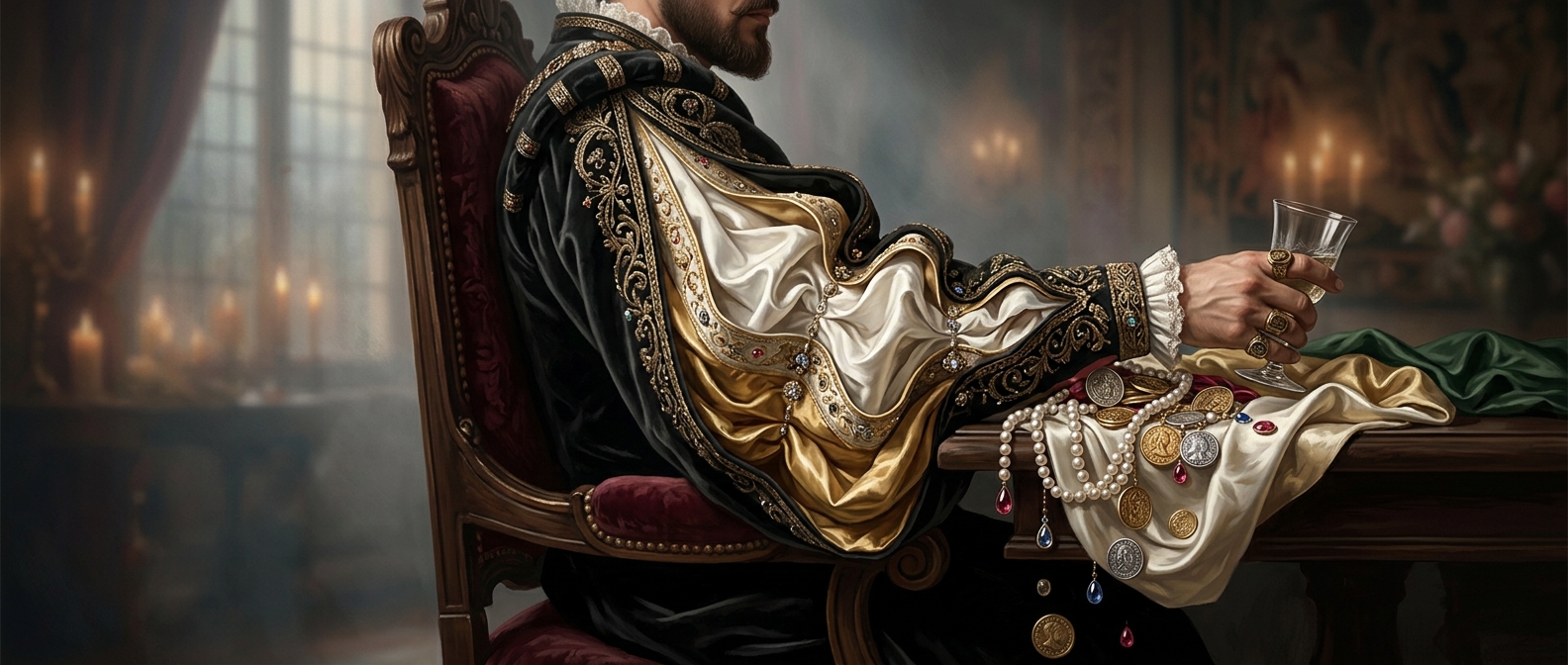
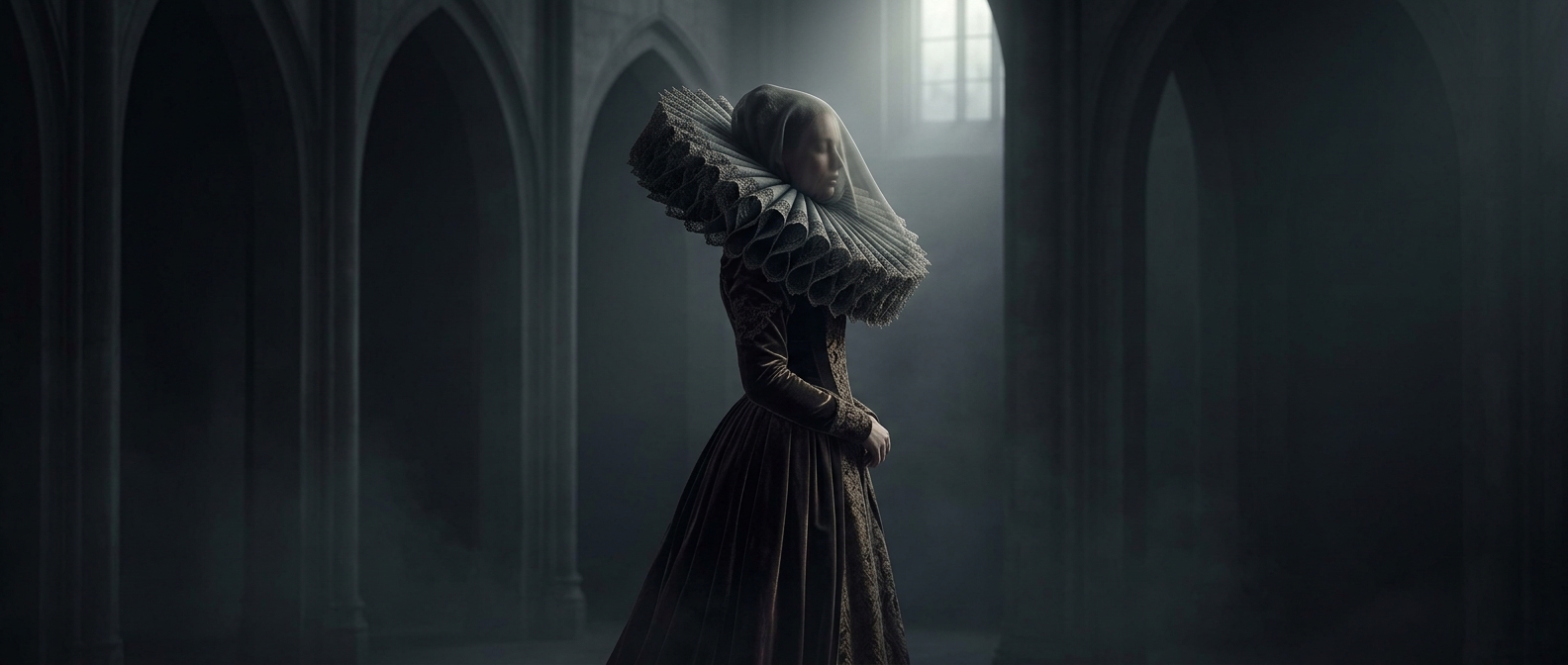
An Elizabethan ruff was not a soft collar that could simply be pushed aside. It was a broad, pleated band of linen, often stiffened with starch to hold its shape around the neck. The fashionable outline could spread well beyond the wearer’s shoulders, turning an ordinary movement—bringing a spoon to the mouth—into a problem of clearance.
The ruff did not make eating impossible; it made the route awkward. A short spoon had to travel up from the bowl and forward past the collar without catching on its stiff folds. A longer handle let the hand stay farther away while the spoon reached around the ruff toward the mouth. The accessory changed the mechanics of a meal, not just its appearance.
Fashion with practical consequences
That inconvenience was part of the tradeoff of conspicuous dress. A large ruff announced careful grooming and status, but its rigid, outward-spreading shape constrained the wearer’s movements. Getting dressed, turning the head, and dining all had to accommodate the silhouette.
The long-handled spoon is a small, memorable example of how people adapted to that constraint: instead of changing the collar at the table, they used a utensil that could reach past it. Fashion had made lunch a matter of arm’s length.