From practical cover to focal point
In the 15th and 16th centuries, men’s hose often consisted of two separate leg coverings attached to a doublet, a close-fitting upper garment. The opening between them needed covering. A codpiece began as a shaped flap fastened over that gap, making a practical piece of clothing part of the outfit’s visible front.
As clothing styles changed, the flap became larger and more sculpted. Padding and careful shaping made it project outward; embroidery, rich fabric, and jewels turned it into an ornament. A garment detail that had once solved a problem of fit now drew the eye.
Why make it so conspicuous?
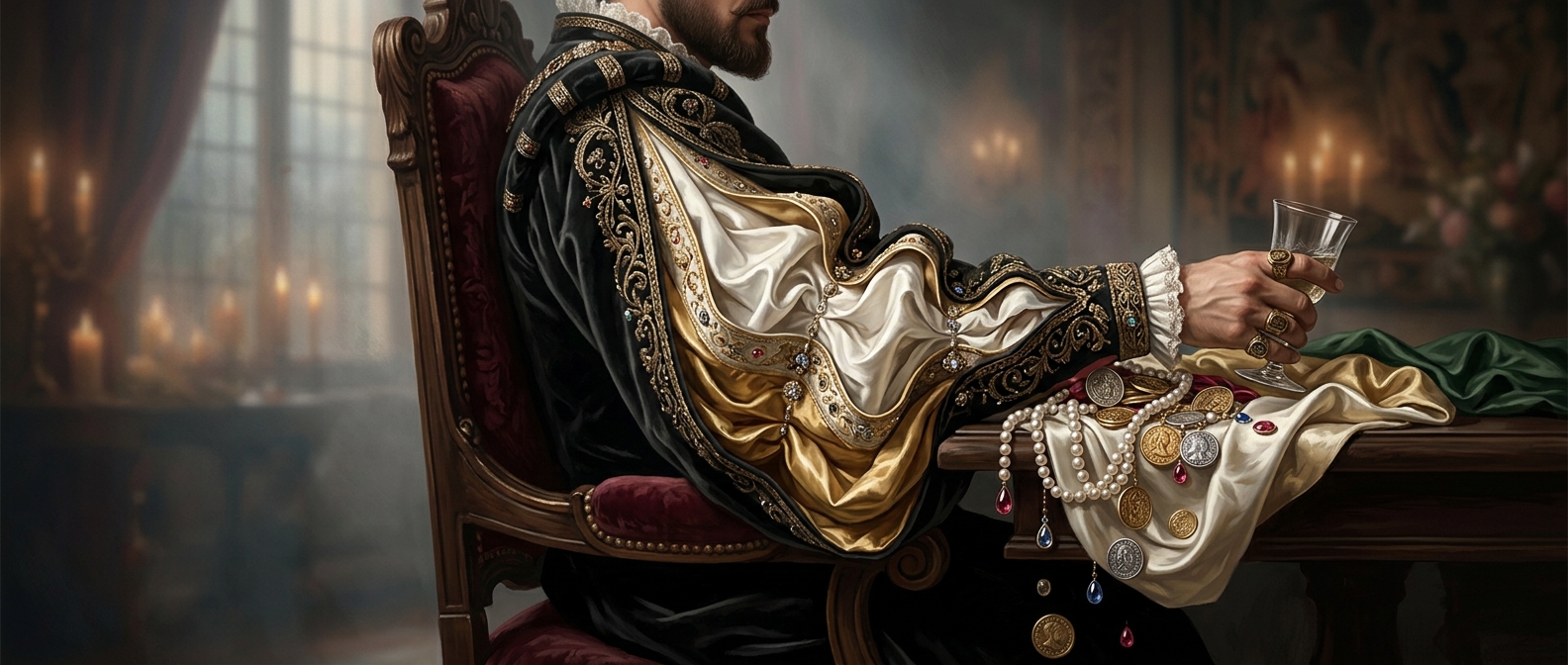
Dress could communicate rank and wealth before a wearer spoke. An elaborate codpiece displayed access to costly materials and skilled workmanship. Its exaggerated shape also made masculinity an overt part of the outfit—not a subtle signal, but one built into the silhouette.
The effect depended on contrast: the codpiece occupied a small area, yet its position and shape made it hard to ignore. Decorating it lavishly turned the body itself into a display surface, linking personal fashion with public status.
Clothing with a second use
Some codpieces could also hold small belongings, including coins. That practical use added another layer to a feature already designed to attract attention: a conspicuous piece of dress could double as a pocket.
The codpiece’s rise shows how fashion can transform necessity into spectacle. Once the opening in a man’s clothing had to be covered, its cover became a place to display wealth, shape, and social ambition.