A small accessory made the watch visible
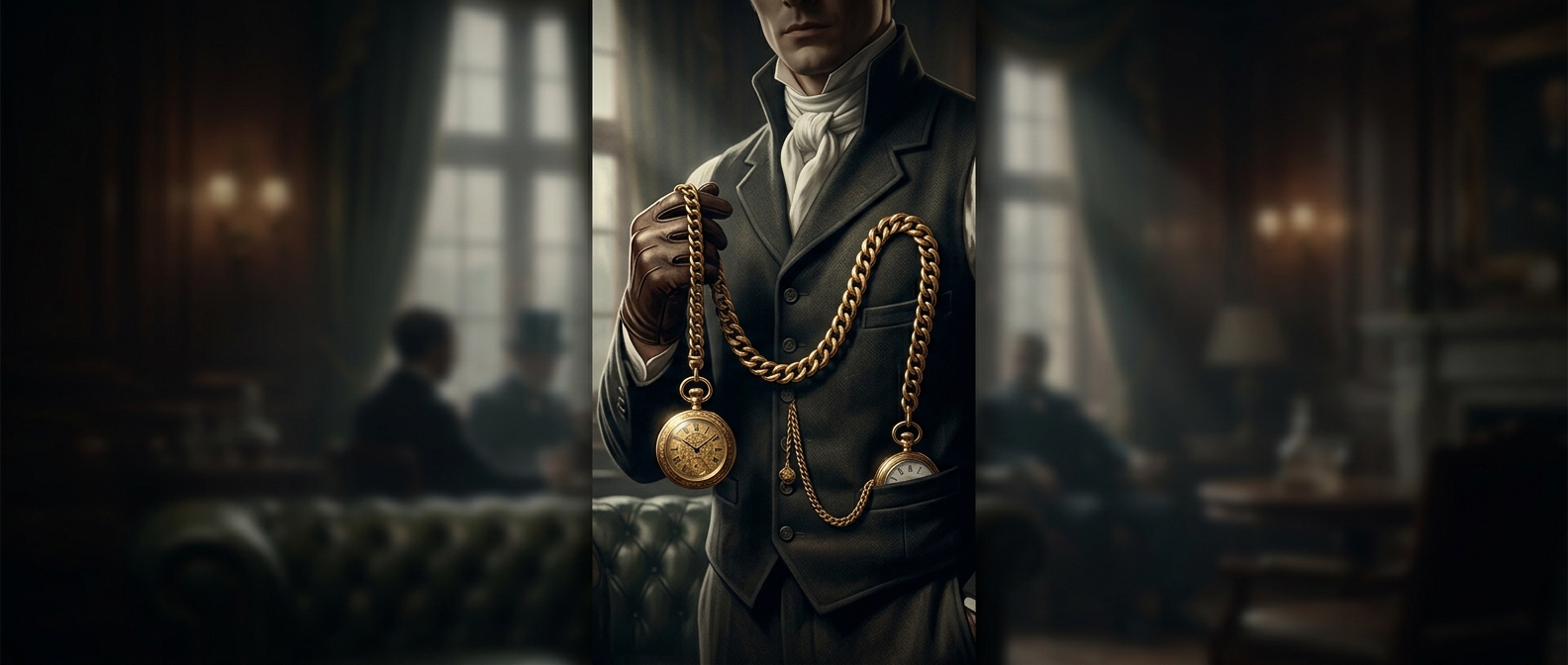
A pocket watch was usually tucked into a waistcoat pocket, so the chain did more than prevent a costly object from falling. It ran from the pocket to a buttonhole or another fastening, crossing the vest in plain sight. The watch could stay hidden while the chain announced that its wearer carried one.
That visibility mattered because a fine watch represented both money and access to skilled work. Its small gears had to keep time reliably, and making and repairing them required specialized craft. A chain made of precious metal—or one with an elaborate clasp or ornament—could add another layer of display. The signal was not only “I own a watch,” but “I can afford a well-made accessory, too.”
Practical security, social meaning
The chain’s everyday job gave its display a plausible purpose. It tethered the watch to the wearer, reducing the chance of losing it when taking it out or putting it away. Different chain arrangements could also connect the watch to a vest in distinctive ways, turning a functional fastening into part of a carefully composed outfit.
This was a form of status signaling: a possession communicated social position without requiring its owner to talk about it. The watch itself might spend most of the day in a pocket, but the chain remained on view. A practical safeguard became a public hint about the value of what it protected.