Why a wedding night could have witnesses
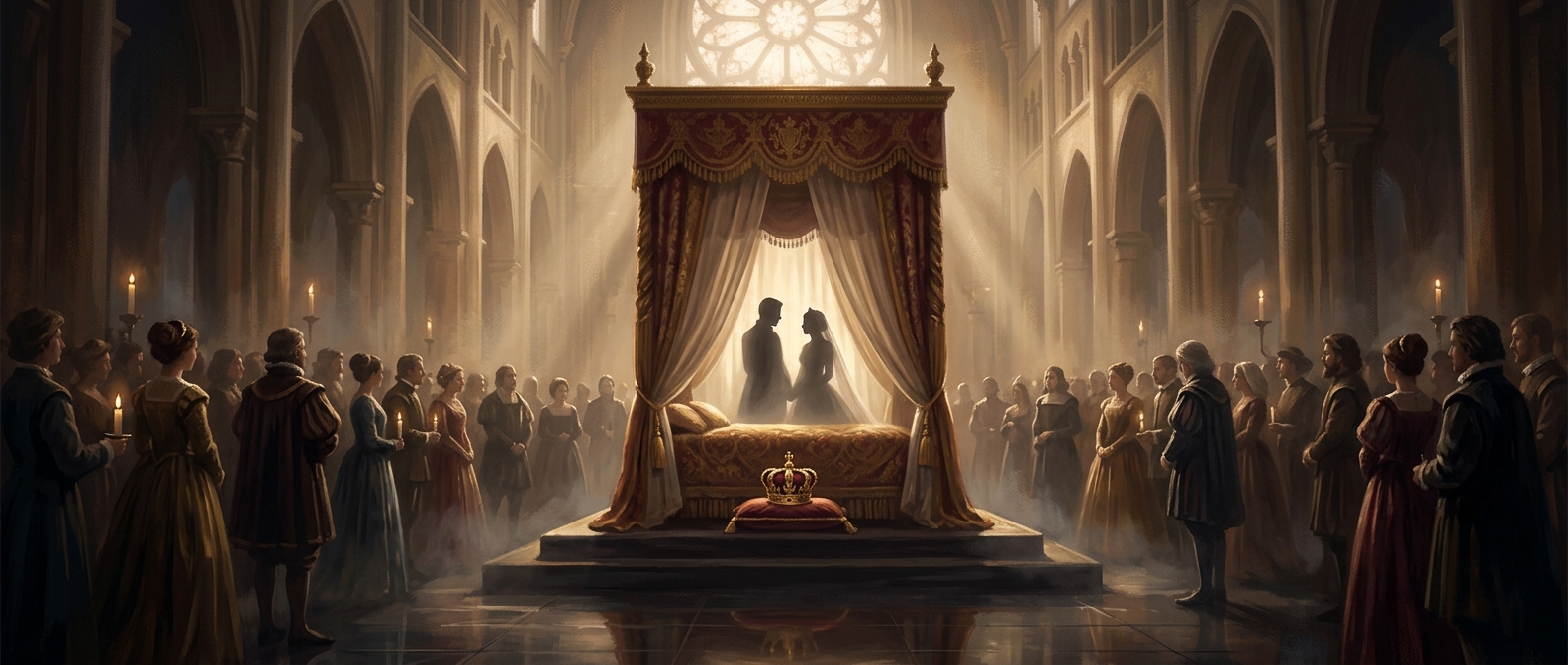
In some aristocratic marriages, the wedding did not end when the couple exchanged vows. Relatives, courtiers, or household attendants might accompany them to the bedchamber and witness part of the transition to married life. The practice was not a universal ceremony, and “witnessing” did not necessarily mean watching the couple have sex. In some accounts, the witnesses’ role was to see the couple placed in bed or to confirm that they had retired together.
Consummation had consequences
Consummation—the couple’s first sexual intercourse—could matter because marriage joined families as well as individuals. A marriage might secure an alliance, property, or a claim to a title. If the union’s validity or the status of a future child were challenged, whether the marriage had been consummated could become relevant. A witnessed ritual offered visible evidence that the marriage had proceeded beyond its public vows, though it could not settle every possible dispute.
This made the bedchamber a strangely public space. A private act carried consequences for inheritance and family standing, so powerful relatives had reasons to care about what happened there. The witnesses were part of the household’s effort to make a politically important union legible—and, when necessary, defensible.