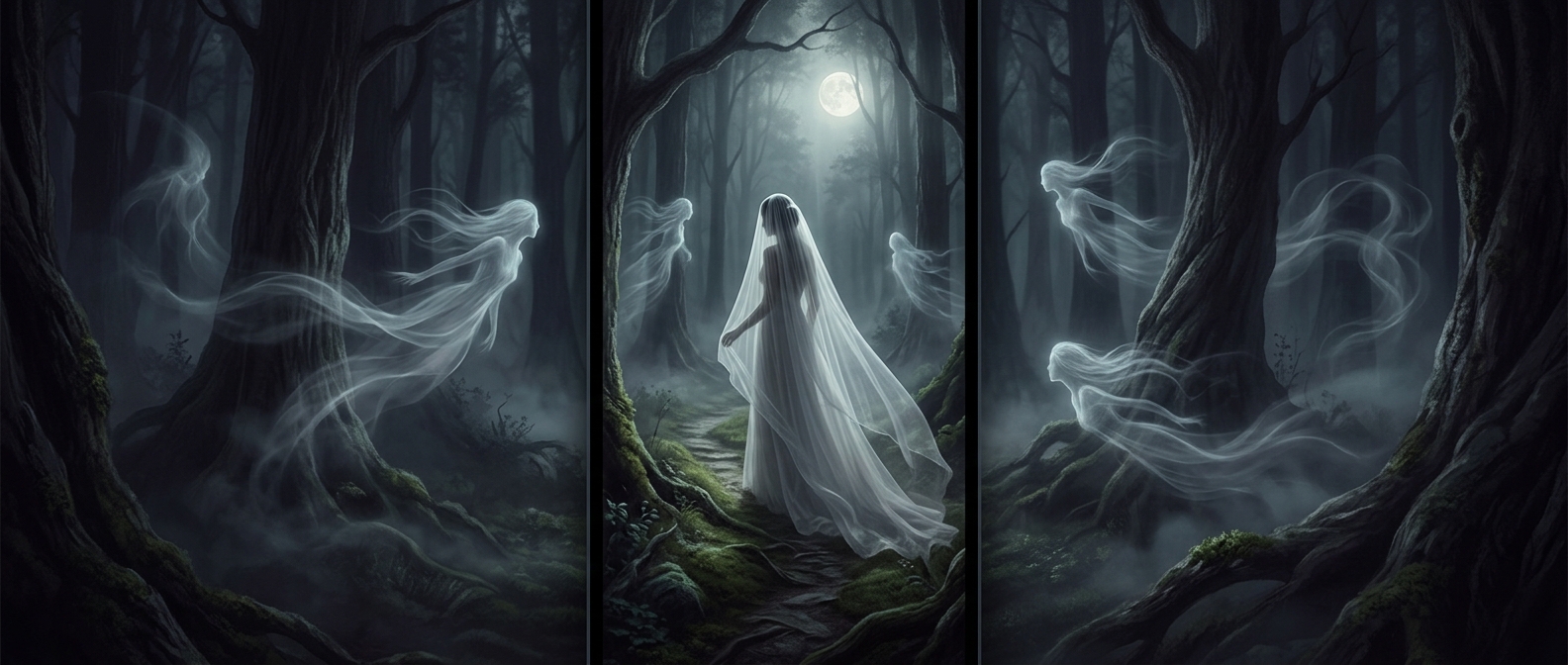
A veil could disguise the bride
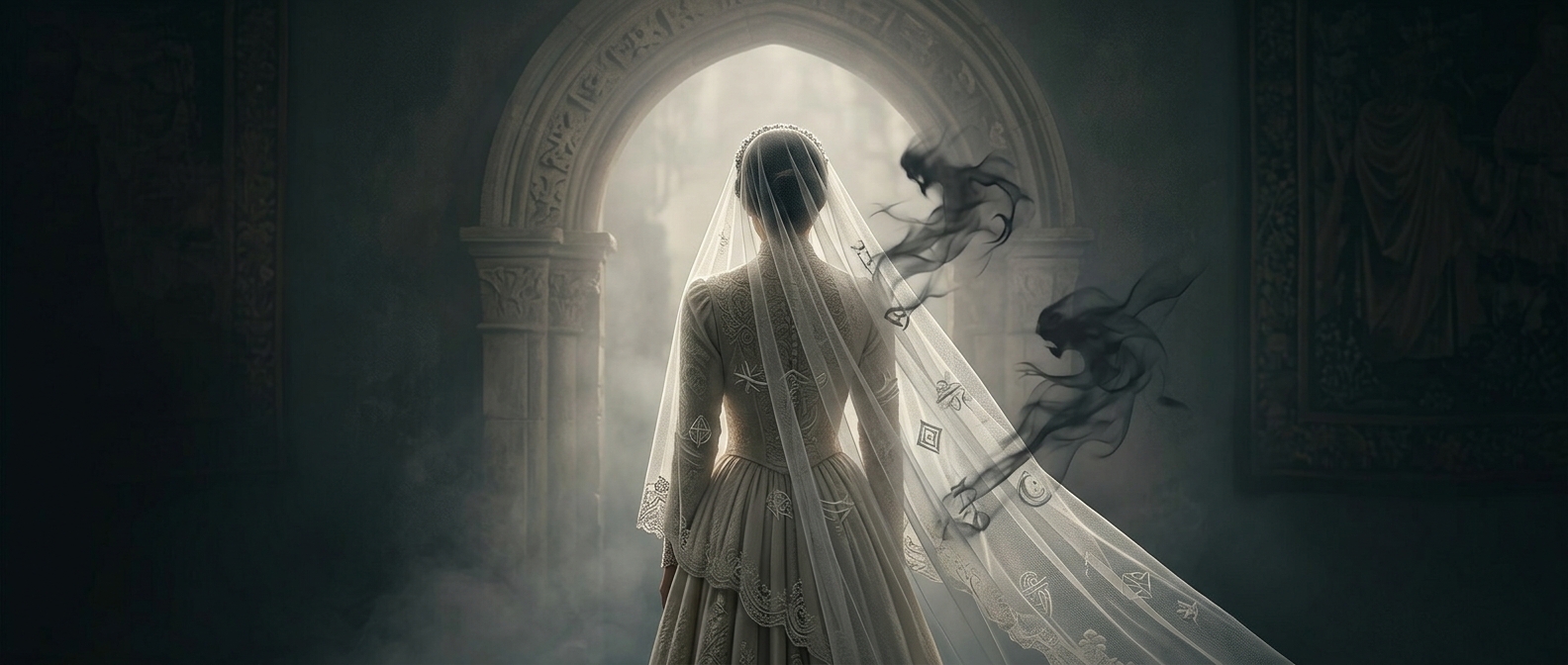
In traditions where people feared that harmful spirits might interfere with a wedding, the bride’s covered face could serve as a kind of camouflage. The idea was straightforward: if a spirit could not identify the person beneath the covering, it might be less able to target her.
This was not a universal explanation for bridal veils. Customs varied between communities, and a veil could carry other meanings as well. But where protection from spirits mattered, concealment gave the covering a practical role within the community’s understanding of danger.
Why a wedding called for protection
A wedding marked a major change in the bride’s life and place in her community. In some belief systems, moments of transition were thought to leave people especially exposed to harmful forces. The ceremony also drew attention to the bride, making her a visible focus of the event. Covering her face could therefore reduce recognition at the very moment she was most conspicuous.
The logic was not that cloth physically blocked a spirit. It was that being unseen—or unrecognized—could offer protection. A garment familiar today as a bridal accessory could thus operate as a form of ritual disguise, helping the bride pass through a consequential change with less risk as her tradition understood it.