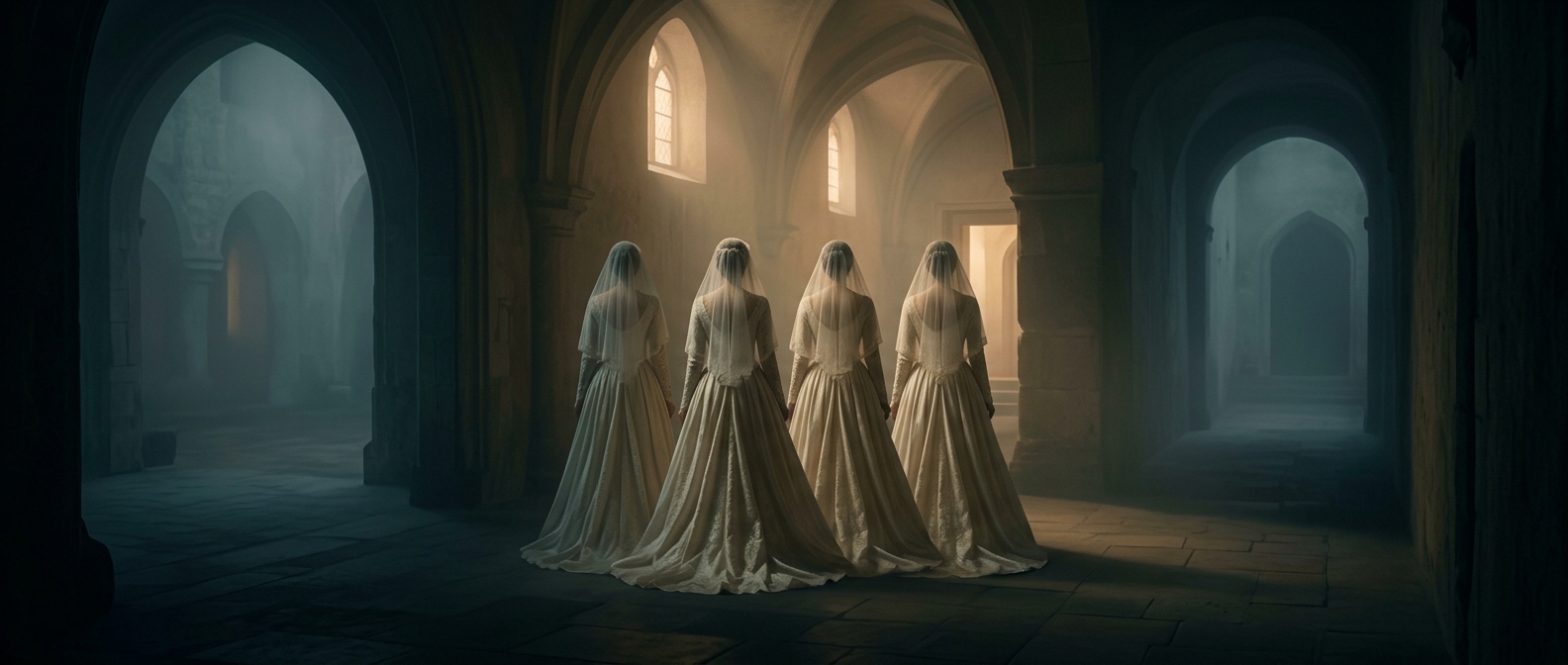
A veil could make the bride harder to find
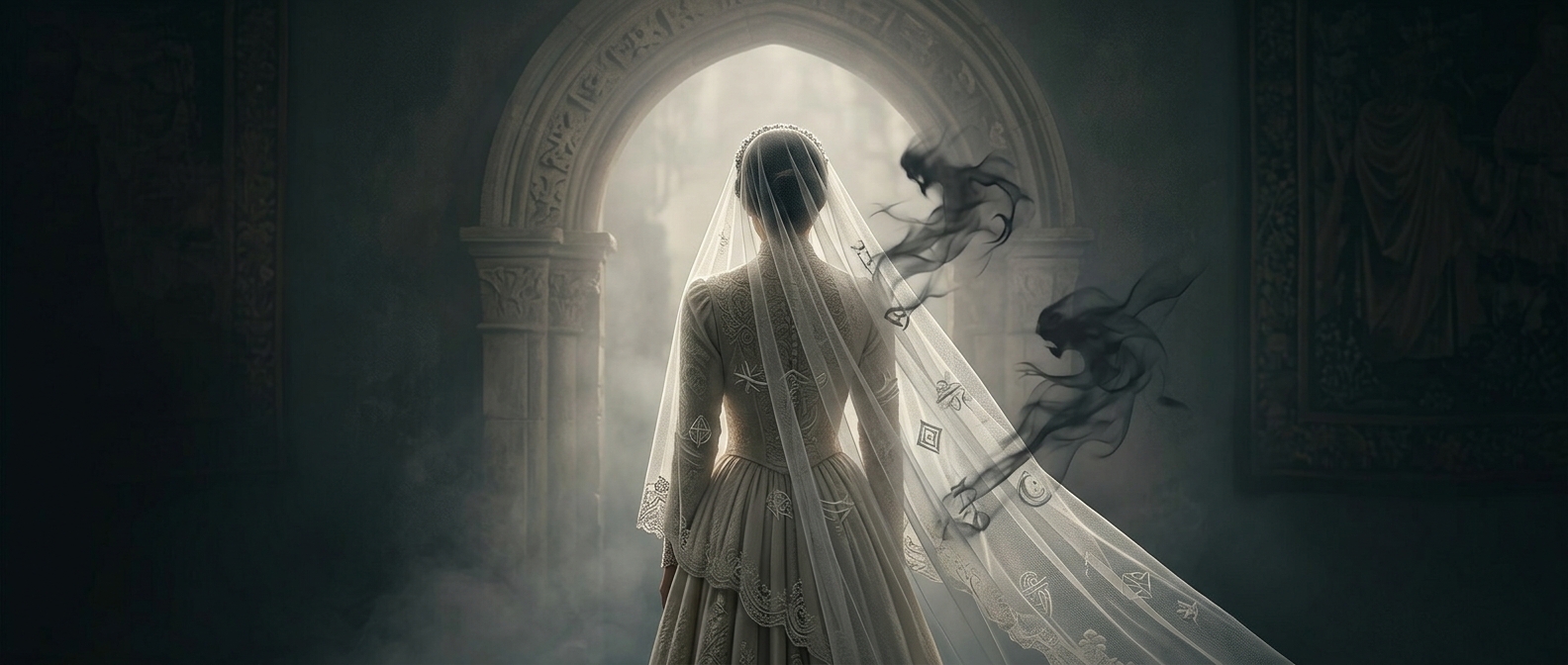
In some wedding traditions, a veil did more than cover a bride’s face: it was thought to keep harmful or jealous spirits from identifying her. The logic was one of concealment. A spirit that could not recognize its target, people believed, could not single her out and spoil the marriage ceremony or the life that followed.
That idea fit a moment understood as unusually exposed. A wedding moved a bride from one household and social role into another, and the ceremony gathered attention around her. Covering her face offered a form of symbolic protection at a time when good fortune seemed worth guarding from envy or unseen forces. The veil was not literally crowd control; it was meant to confuse whatever might threaten the occasion.
One garment, several meanings
Veiling customs were not identical everywhere, and no single explanation accounts for every bridal veil. Depending on the tradition, a covering could also express modesty, mark a bride’s status, or shape the formal reveal of her face. These meanings could coexist: a garment could be both an elegant part of a ceremony and protection against a danger people took seriously.
As wedding customs changed, the veil remained even where belief in spirits faded. Its practical role shifted toward ceremony and appearance, but the older idea leaves a vivid trace: the bride was not simply dressed for the wedding—she was, in a sense, hidden from whatever might wish her ill.