A mystery inside a translucent cup
When Chinese porcelain began reaching Europe in significant quantities, its fine white body and delicate walls seemed unlike ordinary pottery. Held to the light, a thin porcelain cup could glow at the edges; tapped, it often produced a clear, ringing sound. European buyers admired the result, but for a long time they did not know what mixture or firing process produced it.
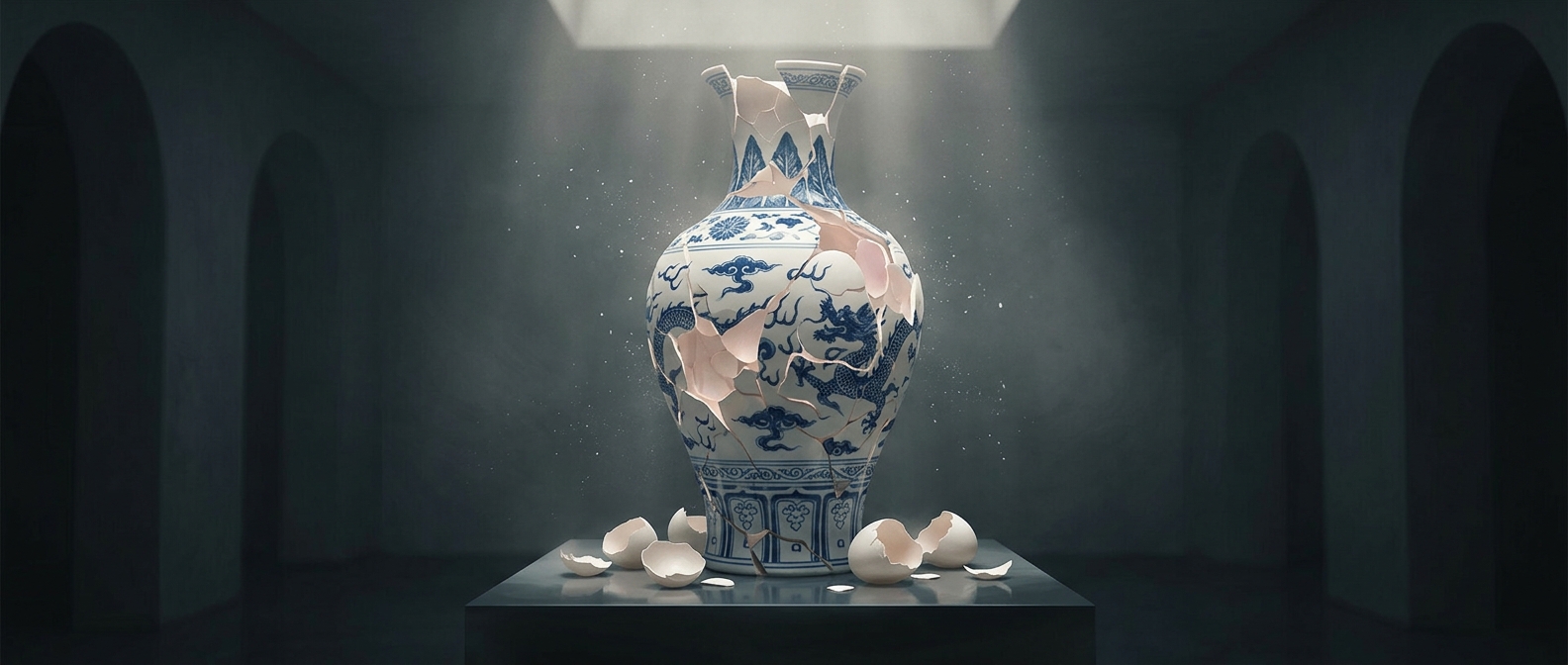
That gap invited guesses. One story imagined porcelain made from eggshells that had been crushed and left underground for generations. The tale treated the material’s uncanny delicacy as evidence of an equally unusual recipe—rather than as the outcome of carefully controlled minerals and heat.
What made porcelain look so unusual
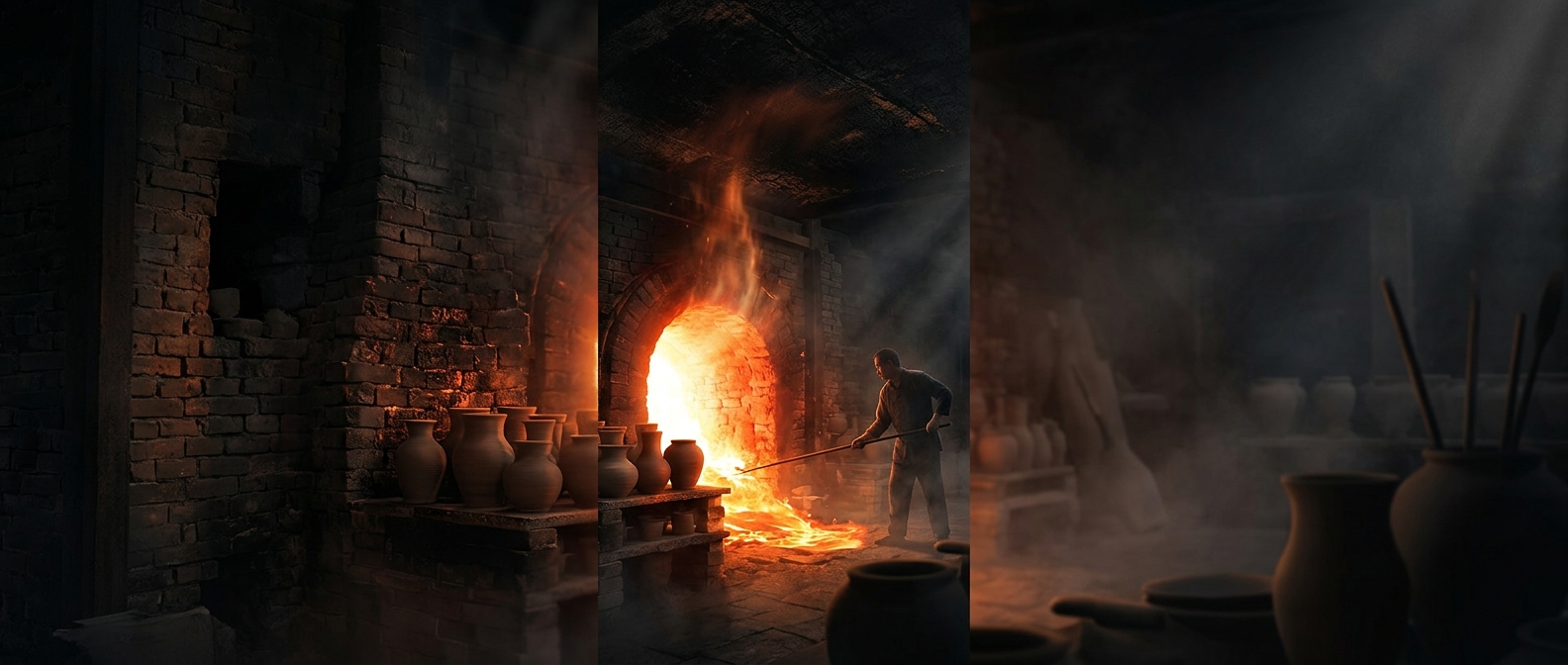
Porcelain is not simply clay shaped and baked. In traditional hard-paste porcelain, kaolin, a fine white clay, gives the body structure, while feldspathic minerals help it partially melt in the kiln. At high temperatures, the ingredients fuse into a dense, glass-like material. When a vessel is made thin, light can pass through that body, creating its characteristic translucence.
The precise recipe and firing conditions mattered: too little heat left the ware more porous, while the right combination produced a hard, compact object. The finished cup gave no easy visual clue to the materials or kiln work behind it. Its appearance made the eggshell story imaginable, but not accurate.
From imitation to European porcelain
European potters tried for decades to reproduce the imported ware, experimenting with local clays and kiln methods. The breakthrough came in the early eighteenth century, when work in Saxony led to hard-paste porcelain production at Meissen. Once makers could produce the material themselves, porcelain stopped being quite so mysterious—and the old eggshell explanation became a reminder of how easily a remarkable surface can conceal an unfamiliar process.