A toast as a test of trust
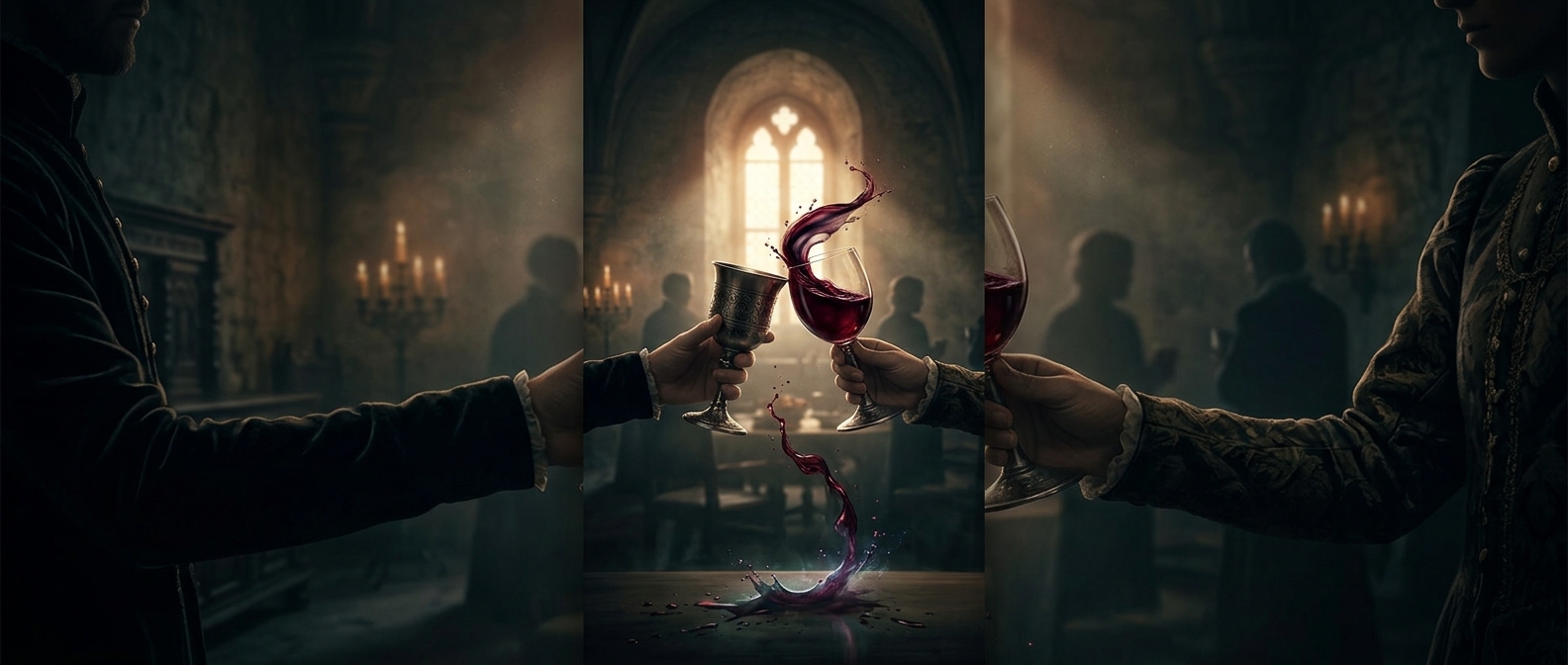
In a setting where a drink could be tampered with, accepting a cup was more than a social gesture: it meant trusting whoever had poured or offered it. A forceful clink made that trust visible. The point was not that a splash could reliably reveal poison, but that a would-be poisoner might hesitate if the act could put their own drink at risk too.
Deterrence, not detection
That distinction matters. The custom worked, if it did, as a small deterrent—not as a test that made wine safe. A poisoned drink would not necessarily look, smell, or taste different, and a splash between cups could not guarantee that anything harmful had transferred. The ritual instead changed the calculation: harming another person might carry a cost for the person doing it.
It also gave both drinkers a public role in the exchange. Each could see the other take part in the same gesture, turning a private worry into a shared performance of confidence. The clink mattered less as chemistry than as a signal: neither person wanted the toast to become a one-sided risk.