Why open pores seemed dangerous
In much European medical thinking, the body was porous: health depended on keeping its internal balance intact, and the skin was understood as a boundary that could admit harmful influences. Heat was thought to loosen that boundary. A hot bath, then, was not merely uncomfortable or indulgent; it could seem to expose the body to polluted air and disease.
During plague outbreaks, that idea made bathing feel especially risky. People did not know how plague spread in the modern sense, so they had to reason from what they could observe: illness seemed to travel through communities, and invisible corruption was a plausible culprit. The fear was not that water itself was poisonous, but that warmth might leave the body vulnerable.
Cleanliness without the bath
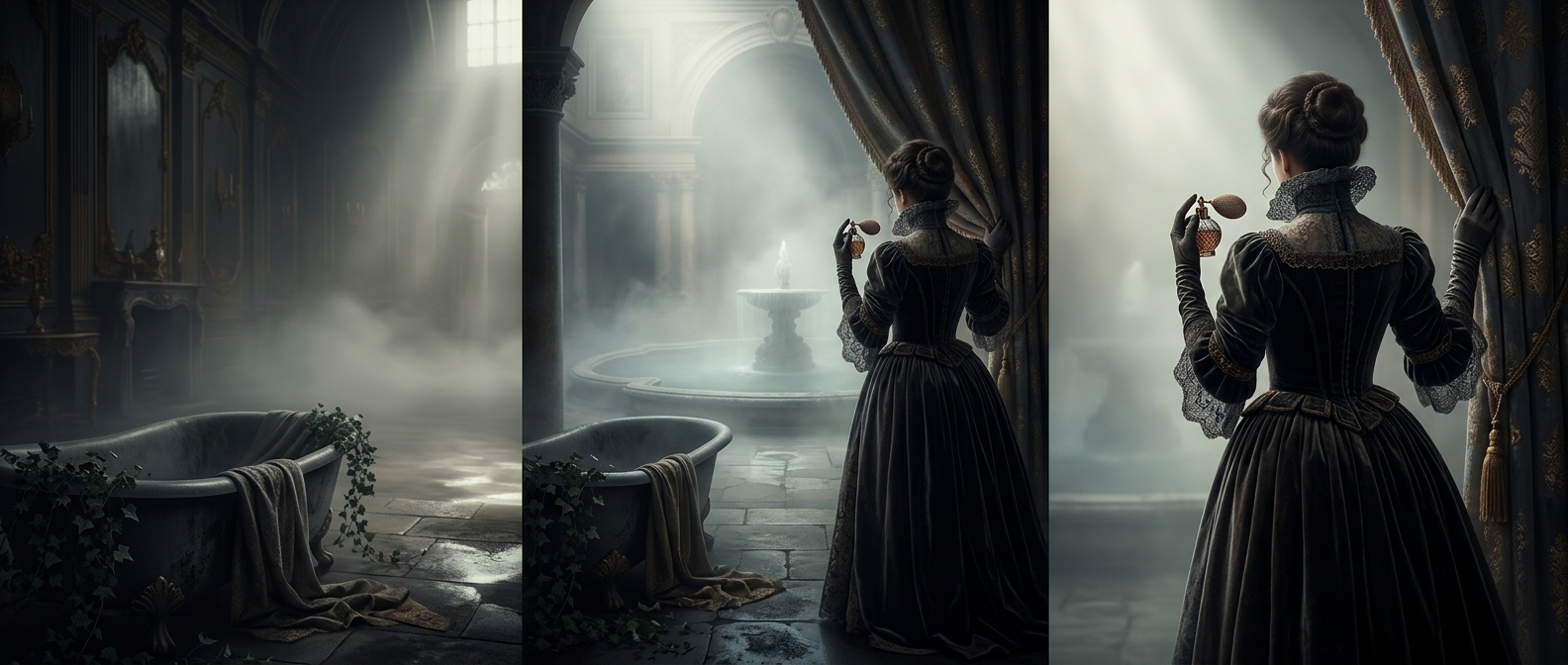
For some wealthy people, grooming shifted toward methods that seemed less likely to weaken the body's defenses. Rubbing the skin with linen could remove sweat and surface dirt without immersing the body in hot water. Fresh clothing and fragrance also helped manage the signs of bodily odor. Perfume improved the smell; it did not prevent infection.
These practices were not universal rules, and bathing habits varied across time and place. But the logic behind avoiding a hot bath shows how medical theories shaped everyday choices: a treatment that might now sound like basic hygiene could then look like opening a door to danger.