Why a Bride’s Tears Could Be Read as Good Fortune
In some wedding traditions, a bride’s crying was understood through a logic of substitution: grief expressed now might spare her from grief later. The tears were not treated as evidence that she dreaded the marriage. Instead, the ceremony gave sorrow a brief, visible place, as though acknowledging it could keep it from overshadowing married life.
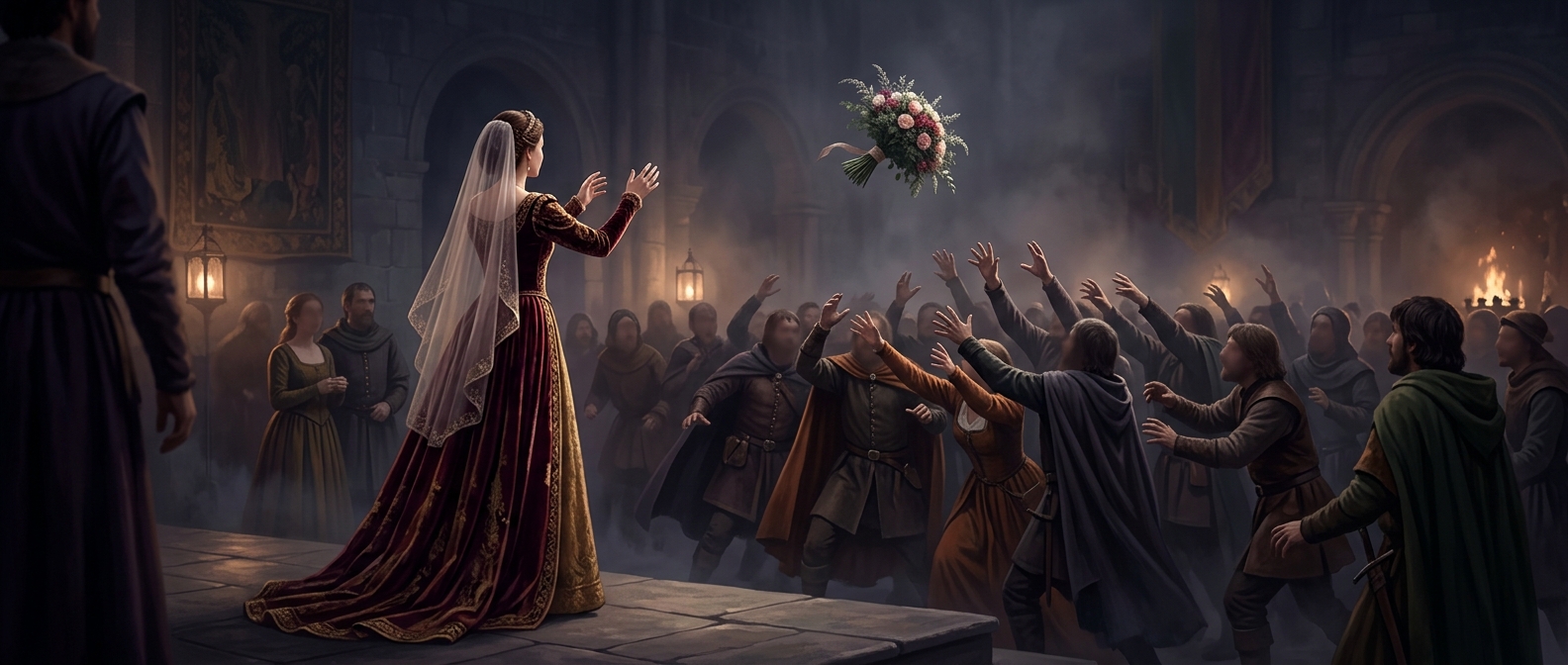
That idea made a wedding cry more than a private reaction. It turned emotion into a ritual act—something the bride could pass through at the threshold of a new household and a new set of expectations. The hope was not that marriage would contain no hardship, but that the sadness had already been given its moment.
Emotional Insurance, Not a Prediction
Calling the tears a kind of emotional insurance captures the custom’s practical appeal. A wedding marks a major change, and change can carry both joy and loss: a bride may be leaving familiar routines or relationships even as she begins a celebrated new chapter. The ritual offered a reassuring way to account for that mixed feeling without treating it as a bad sign.
The belief did not make tears a guarantee of happiness. Its force lay in the story it told: sorrow could be acknowledged and contained rather than left to define what came next. A bride’s tears could therefore be remembered not as a forecast of an unhappy marriage, but as the sadness the ceremony had already made room for.