A penny bought more than a drink
In seventeenth-century England, coffeehouses offered an unusual bargain: a modest entrance charge—often described as a penny—gave a customer a place to sit and take part in the room’s conversation. That low price helped earn them the nickname “penny universities.” The point was not that a penny purchased formal lessons. It opened the door to an informal exchange of news, opinions, and practical knowledge.
How the room became a classroom
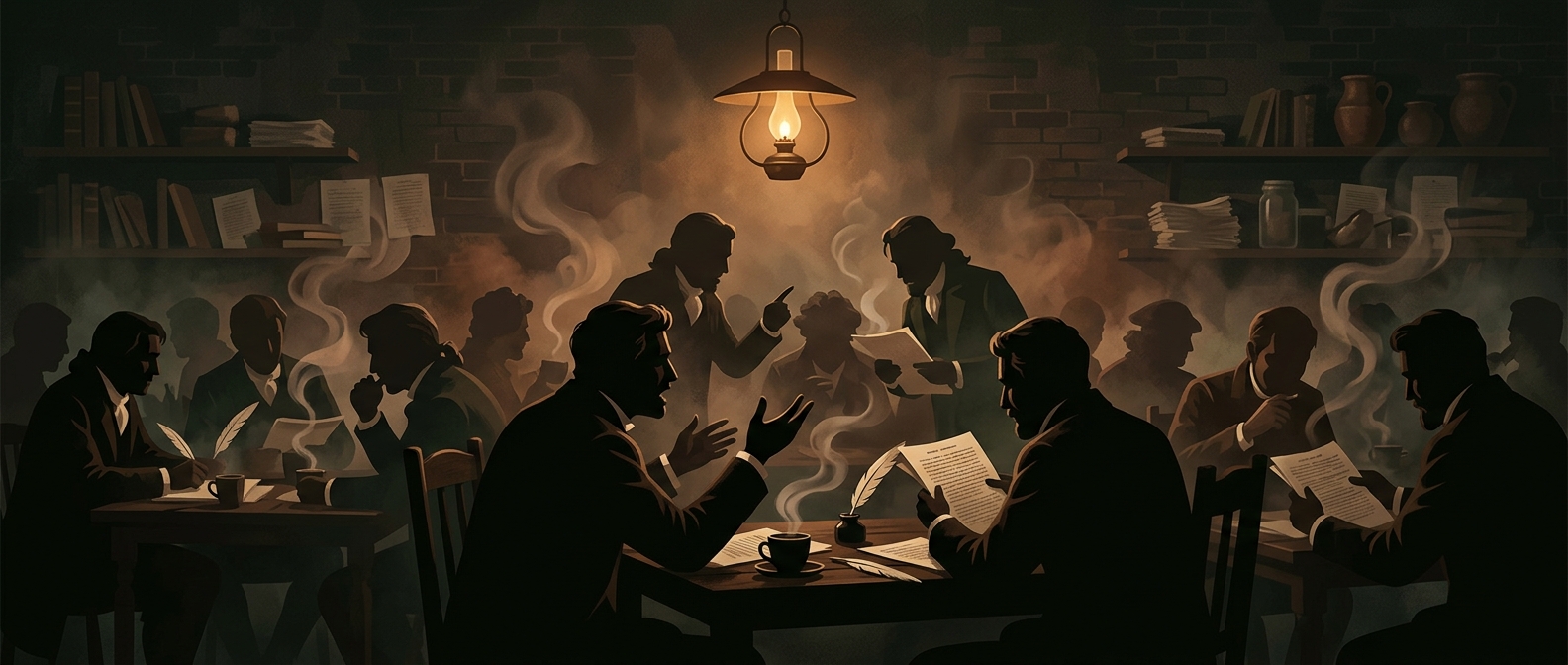
A coffeehouse brought people with different work and experience into the same space. Patrons could hear what others knew, question a claim, and carry information from one circle into another. Printed material and lively discussion made the room useful to people who wanted to keep up with public affairs or business as well as those drawn to argument for its own sake.
The setting mattered. Unlike a lecture hall, a coffeehouse did not require students to enroll or follow a teacher’s lesson. Learning happened through listening and joining in—and, because the drink was cheap enough for a long visit, a customer could stay for the conversation rather than hurry away after a purchase.
Access with limits
The nickname captures the coffeehouse’s appeal, not universal access: a small fee could still exclude some people, and who felt welcome varied from place to place. But the combination of a public gathering place, shared information, and open-ended debate gave coffeehouses an educational role beyond their service as cafés. Their “university” was the crowd itself: knowledge passed across a table, one argument at a time.