A café that doubled as an office
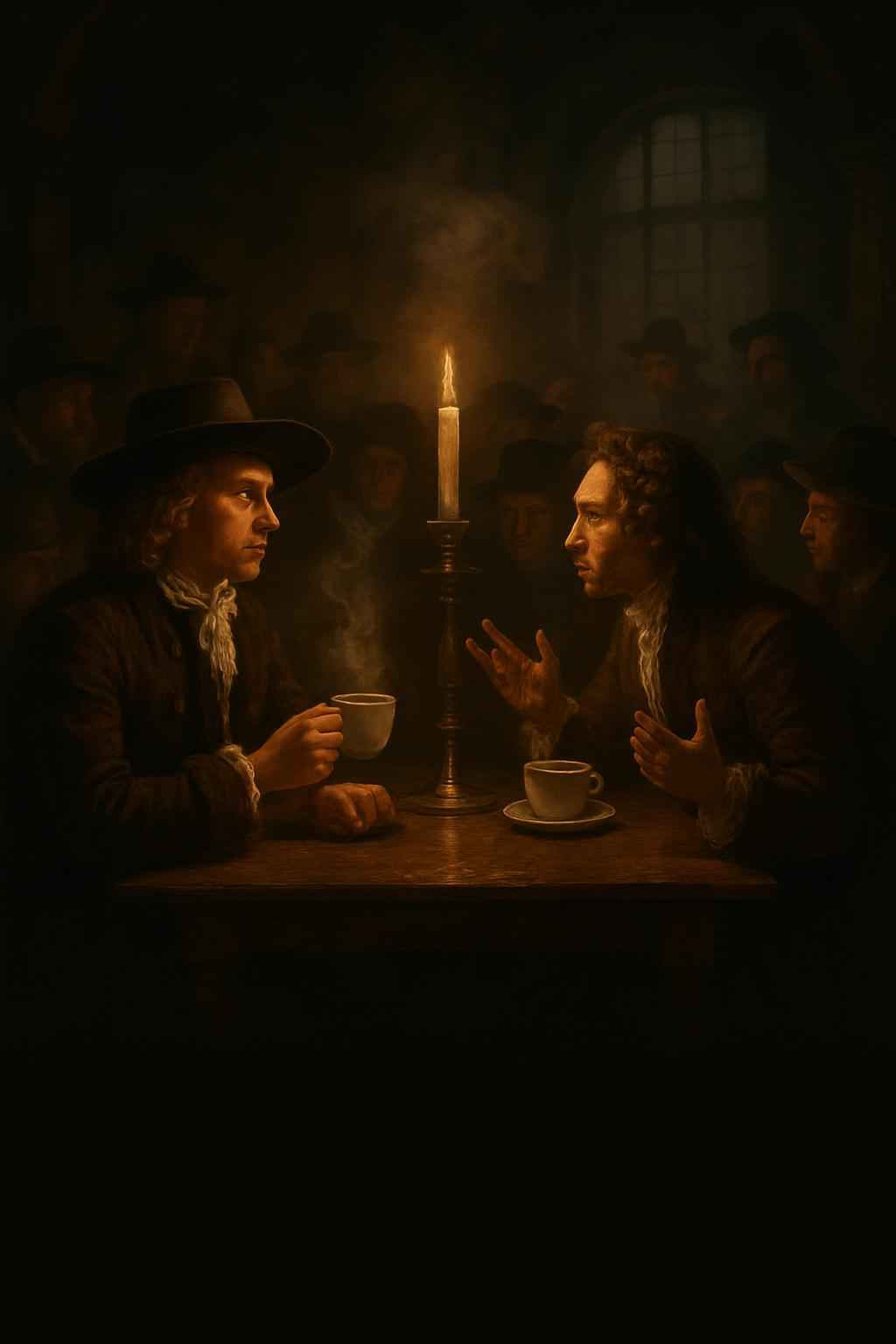
In the early modern period, a coffeehouse was more than a place to buy a drink. It offered men a public room where they could meet, exchange news, and conduct business without needing a private office or an invitation into someone’s home. The steady traffic of customers made these rooms lively—and often loud.
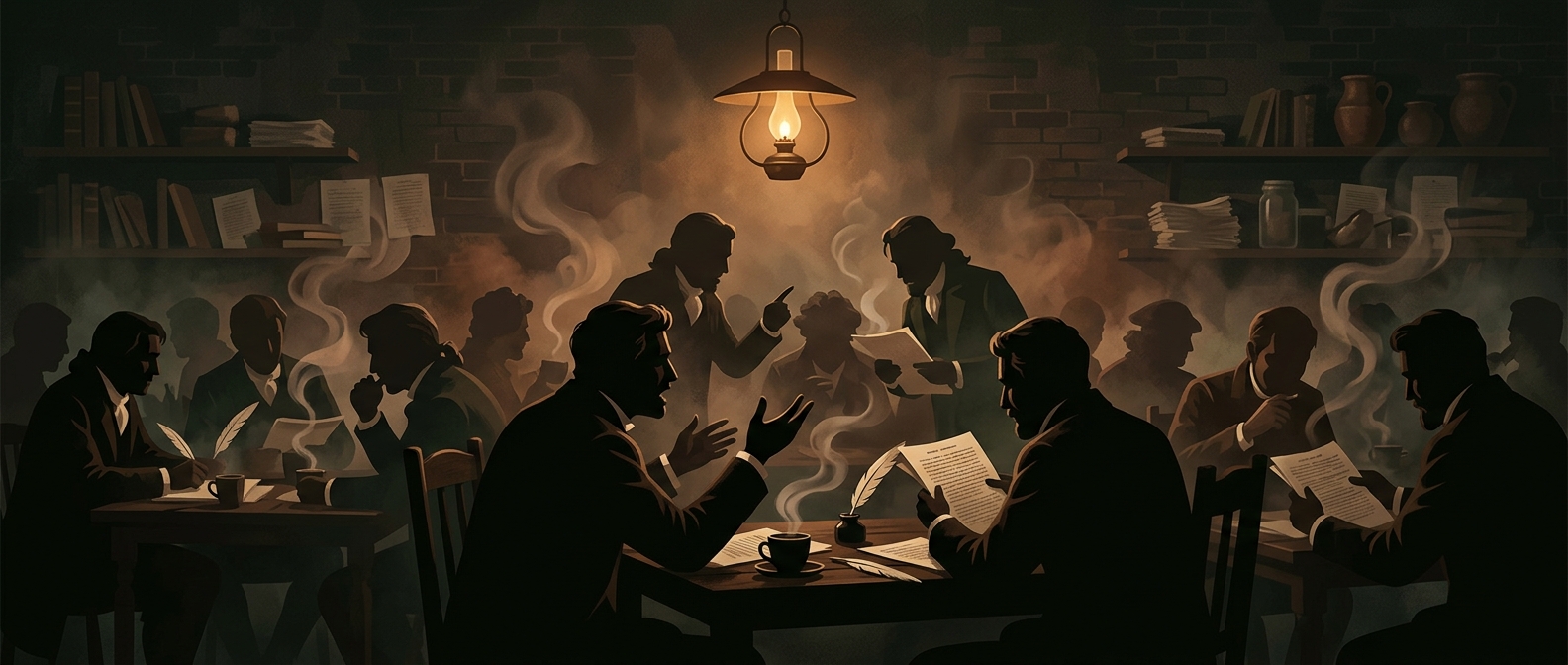
Conversation was part of the draw. Visitors discussed trade and public affairs, while printed pamphlets and news sheets gave them fresh material to argue over. Reading a pamphlet aloud made its contents available to a whole group at once, including people who might not have had a copy in hand. The coffeehouse turned news into a shared, spoken event.
Why the room mattered
The setting shaped what happened there. Customers could arrive, linger over coffee, and join conversations with people beyond their usual circle. That mix of drink, printed information, and face-to-face debate made the coffeehouse useful as an informal workplace: business could be discussed in public, and news could circulate quickly from one table to another.
These rooms were not simply quiet cafés in the modern sense. Nor does the description mean every coffeehouse had the same clientele or atmosphere. But in a society where access to private meeting spaces was limited, a noisy public room could serve as a practical venue for work as well as sociability. A man might go in for coffee and leave with a business lead, a new pamphlet to discuss, or an argument still ringing in his ears.