A holiday that briefly flipped Roman household rules
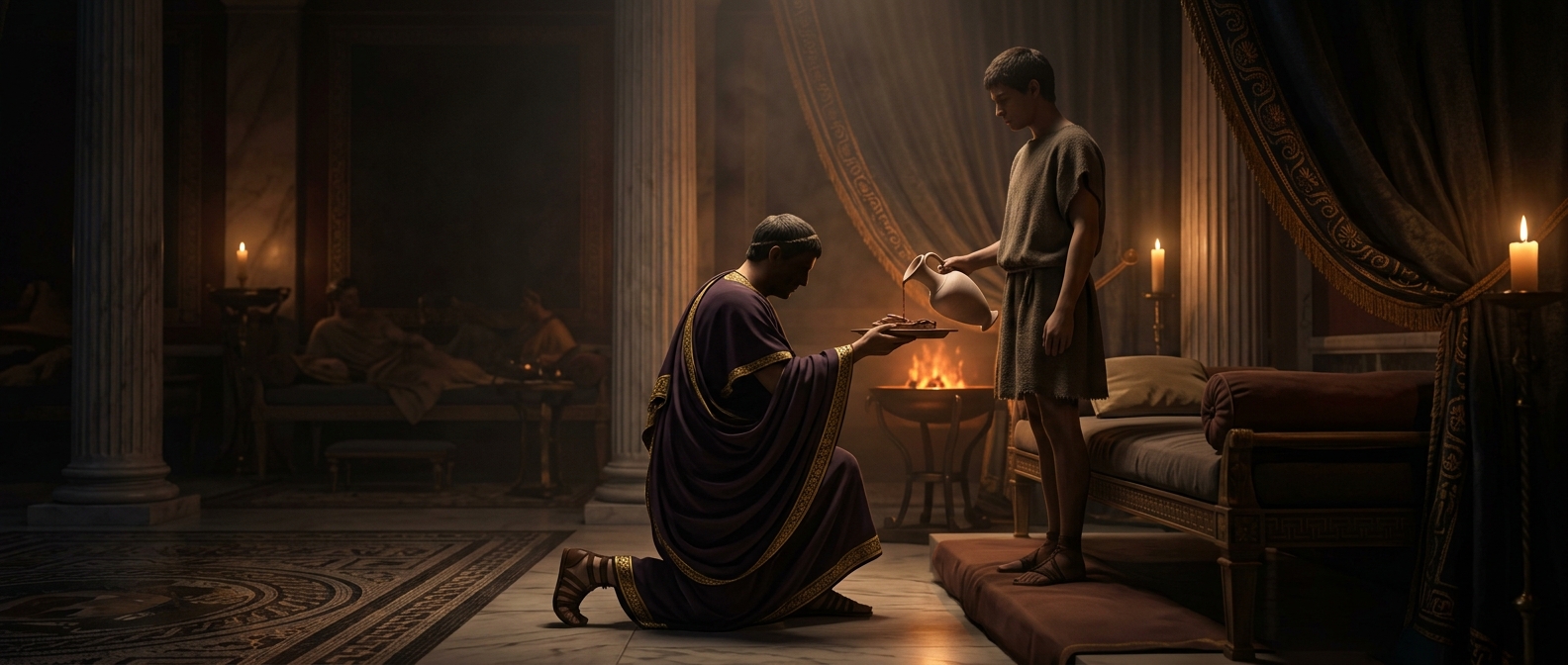
Saturnalia honored Saturn, an old Roman god associated with agriculture and a legendary age of abundance. Its celebrations loosened ordinary routines: people feasted, exchanged small gifts, and wore the pileus, a cap associated with freed people. The festival’s playful reversals could include enslaved people speaking more freely to their enslavers—and, in some households, masters serving a meal to those they enslaved.
That freedom was real as a festival custom, but limited. Saturnalia did not abolish slavery or give enslaved Romans lasting protection from their owners’ power. The mockery and role reversals belonged to a marked period of celebration; when it ended, household authority returned.
Why let the jokes happen?
The reversal made the usual hierarchy visible by temporarily breaking its rules. A servant’s insolence was funny partly because everyone knew it would not last. The custom offered a sanctioned outlet for teasing and festivity while leaving the underlying system intact. In that sense, the holiday did not erase Roman social order; its boundaries helped reinforce the contrast between ordinary life and the brief exception.
Saturnalia also changed the mood of the household through shared feasting and relaxed etiquette. Such customs could make the day feel unusually generous without changing who held power afterward. The striking part is the contrast: for a short stretch, a Roman servant might voice a joke at a master’s expense, but the calendar—not a change in status—set the terms of that permission.