How a Bread Oven Became a Neighborhood Kitchen
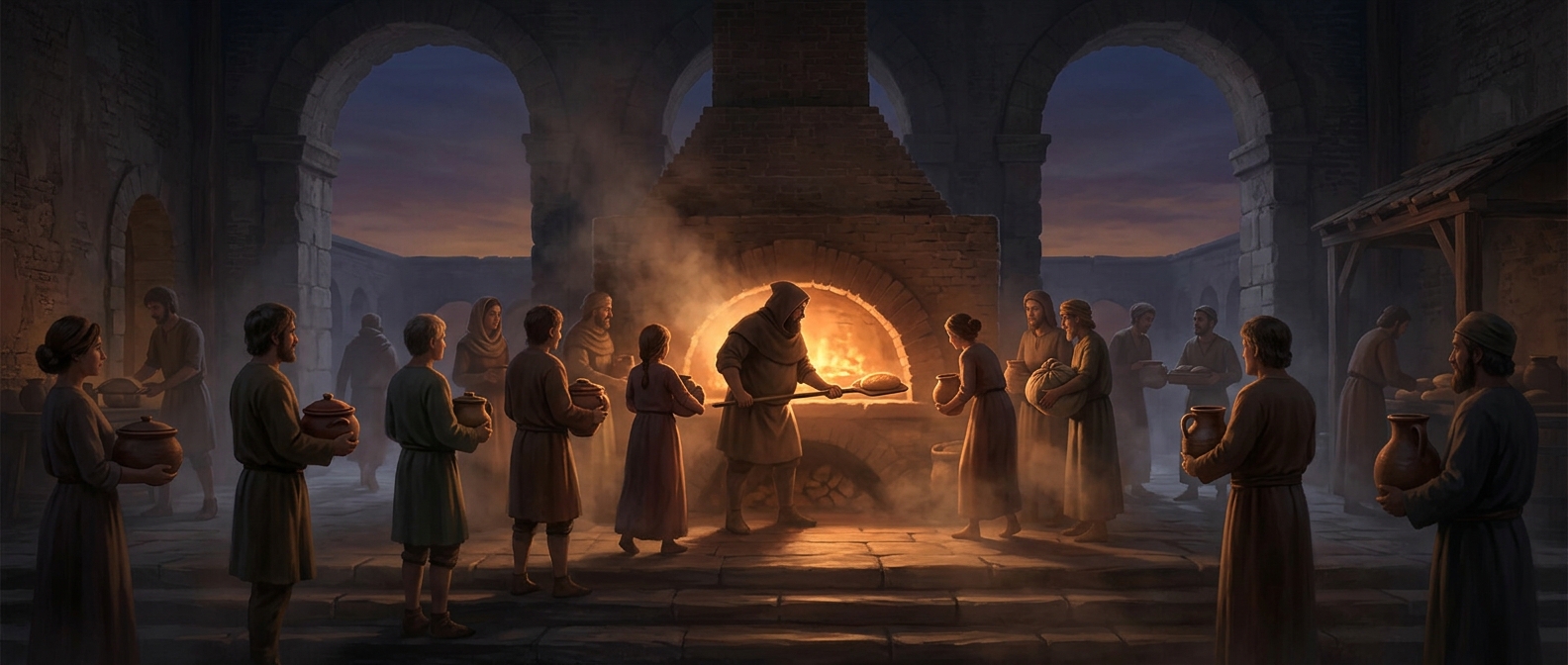
In communities where a household oven was uncommon, a baker’s oven offered something families could not easily provide at home: steady, intense heat in a large enclosed space. Once the day’s bread was baked, the oven could be used for other food. Families brought in prepared dishes or raw meat, and the baker roasted them alongside the bakery’s regular work.
The Bakery’s Heat Did the Work
A masonry oven stays hot after its fire is reduced or removed. That stored heat makes it useful beyond bread: food can cook slowly as the oven cools, without each household needing to tend a fire or build its own oven. The bakery thus supplied more than fuel and equipment. The baker controlled the oven and its timing, while neighbors supplied the ingredients and cooking vessels.
Weekend roasting fit this shared arrangement particularly well. A family could leave a meal to cook while attending to other tasks, then collect it later. The bakery became a practical extension of the home, especially for dishes that benefited from long, gentle cooking.
Shared Infrastructure, Everyday Life
This arrangement turned a commercial workspace into a piece of neighborhood infrastructure. Its usefulness depended on a resource that was already concentrated in one place—the large oven—and on a routine that let different households make use of it in turn. Buying bread and arranging dinner could therefore happen at the same neighborhood stop.
The memorable twist is that the bakery’s most communal service might not have been selling food at all: it was lending the neighborhood the heat to cook its own.