When a Fire Became a Contract Dispute
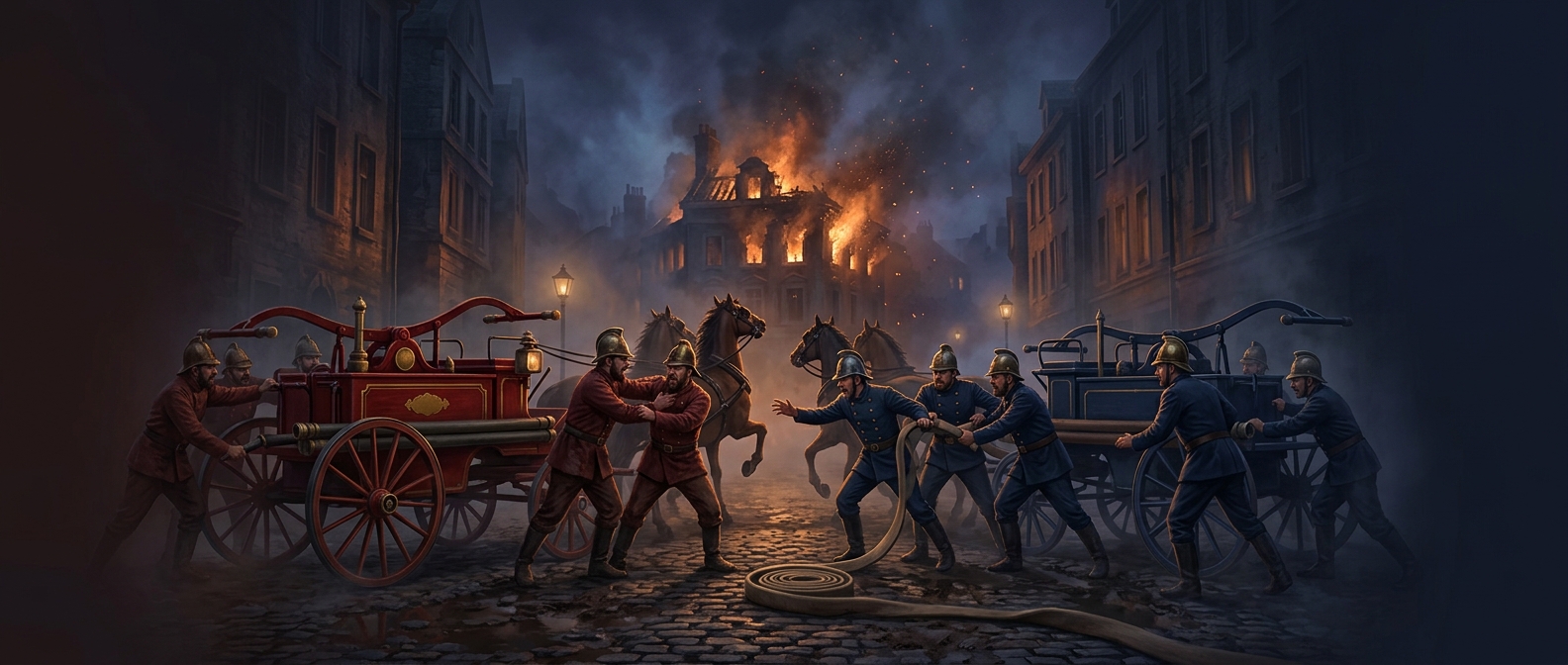
In some cities, firefighting was not yet a unified public service. Private companies sold protection to customers, so a burning building could present two problems at once: stopping the fire and determining which crew had the right to serve the property—and collect payment.
That arrangement tied a practical emergency response to a commercial claim. A crew that spent time and labor on a building without being recognized as its protector might not get paid. When rival companies arrived, each had an incentive to establish that it was the one entitled to act.
The Cost of Competing While the Fire Spread
The dispute could turn physical. Instead of immediately coordinating, crews might shove or fight over access to the building. Meanwhile, flames continued to consume the structure; a collapse could end the argument only by leaving neither company a building to save.
The conflict was not simply a matter of individual tempers. A system that made protection depend on competing contracts could put the companies’ claims in tension with the urgent need to cooperate. The fire did not wait for them to settle who would be paid.
Why Public Fire Departments Changed the Stakes
A public department shifts the central question from “Which company owns this job?” to “How can responders work together to control the fire?” That does not mean every private crew fought, or that public systems eliminate conflict. It does show the risk of organizing an emergency around rival claims: while responders contest responsibility, the damage keeps moving forward.