Roach’s rooftop visits exposed a gap between game logic and game scenery
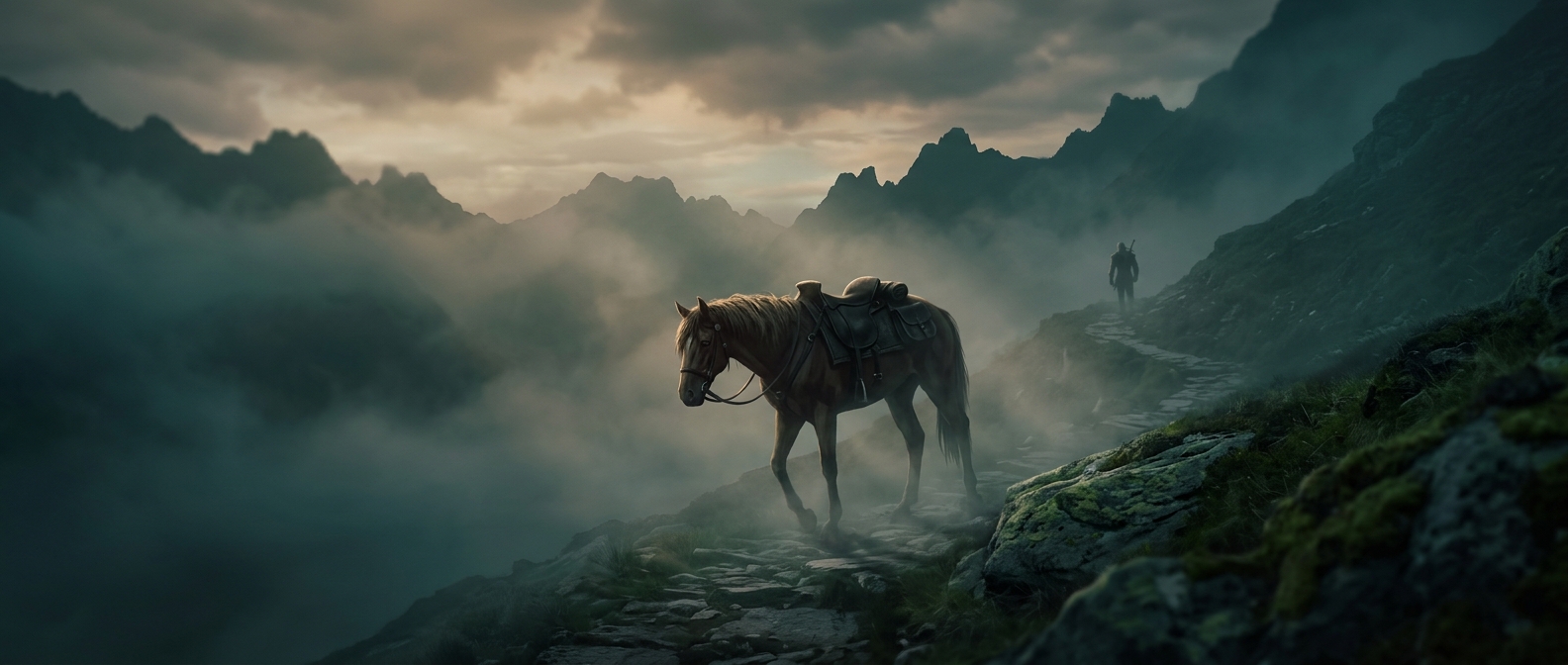
In The Witcher 3: Wild Hunt, Geralt’s horse, Roach, is more than a way to cross the map: the game has to make her move through a world built for exploration. Paths bend, slopes change, and obstacles crowd the landscape. A mount’s movement must look convincing while still responding to the player and navigating terrain—a difficult combination for any game system.
When Roach’s motion looked awkward, or she appeared somewhere absurdly unsuitable, the mismatch became visible. A rooftop arrival, for instance, turns a practical problem of placing a summoned character in the world into a slapstick image: the horse is present, but the world around her says she should not be.
A technical quirk became part of the character
Players could have treated those moments as interruptions. Instead, Roach’s peculiar behavior became a running joke, giving the horse a comic personality distinct from Geralt’s grim adventures. The humor came from the contrast: a dramatic fantasy world, and a supposedly dependable mount behaving as if the rules of the scene did not apply to her.
That shift matters because players do not encounter a game only as its designers intend. They notice repeated oddities, share them, and build a common story around them. Once Roach’s improbable appearances became recognizable, the glitch was no longer just a failure of movement or placement; it was a familiar bit of Witcher comedy. The joke worked because the technical flaw was visible enough to feel like a personality trait.