How Magic’s Five Colors Shape a Spell
A spell’s color is built into its mana cost: the symbols on a card show what resources a player must spend to cast it. Mana is the game’s spending resource, usually produced by lands. A Mountain produces red mana, so a spell with a red symbol in its cost requires that kind of mana. A player may have plenty of mana overall and still be unable to cast a spell if it is the wrong color.
That requirement makes color more than a label. It influences which cards can fit together in a deck and what a player must give up to include them. A deck built around several colors gains access to more kinds of effects, but must also draw the right lands at the right time.
The Color Pie Is a Design Boundary
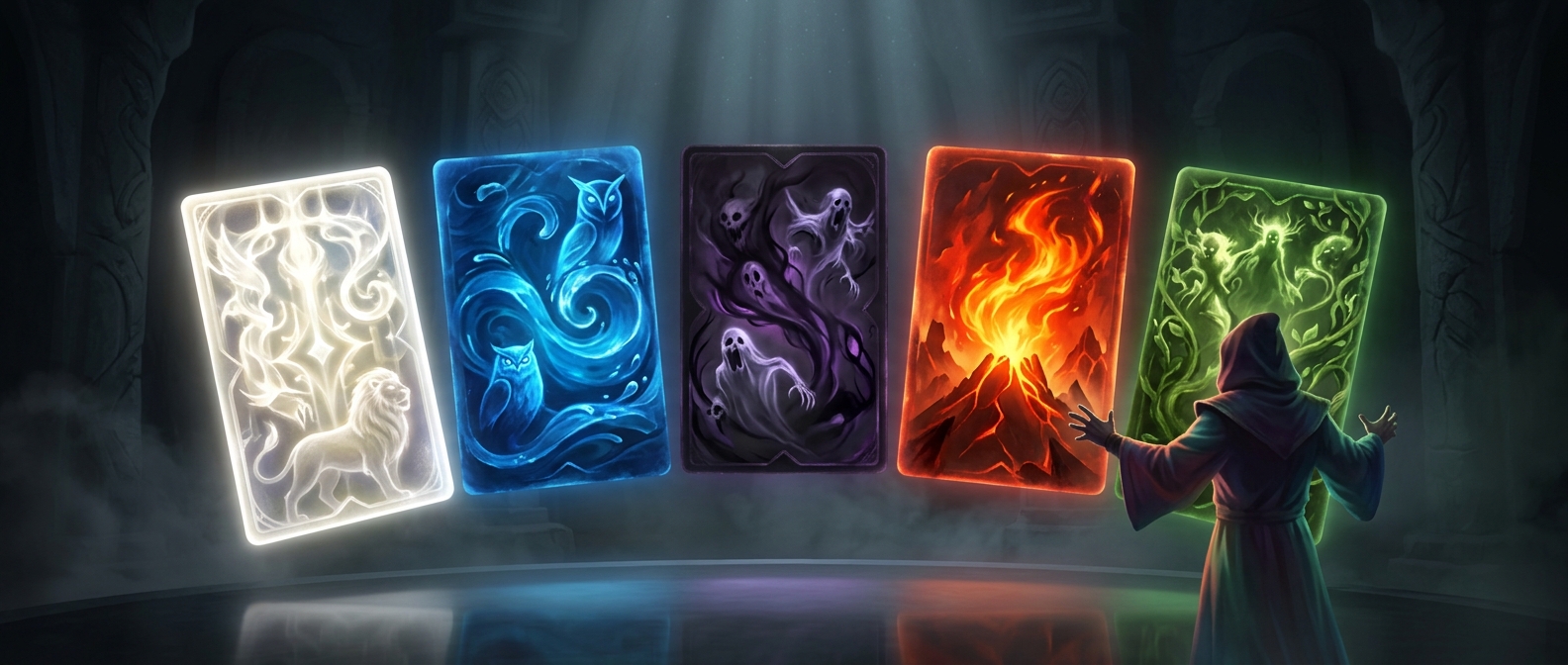
Each color is associated with a different approach to solving problems. Red favors fast, direct action; blue leans toward knowledge and control; green toward growth and nature; white toward order and cooperation; and black toward ambition and personal power. These themes guide not only a card’s story and appearance but also the abilities it is allowed to have.
This division is known as the color pie. It gives each color strengths and weaknesses: red can deal damage quickly, for instance, but is less suited to answering every kind of threat. Keeping those boundaries makes choices meaningful. If every color could do everything equally well, a deck’s color would matter far less.
Not every card belongs to exactly one color. Some spells require multiple colors, and some are colorless. But when a spell does have a color, that color tells players both what mana it needs and what kind of tools they can expect it to bring.