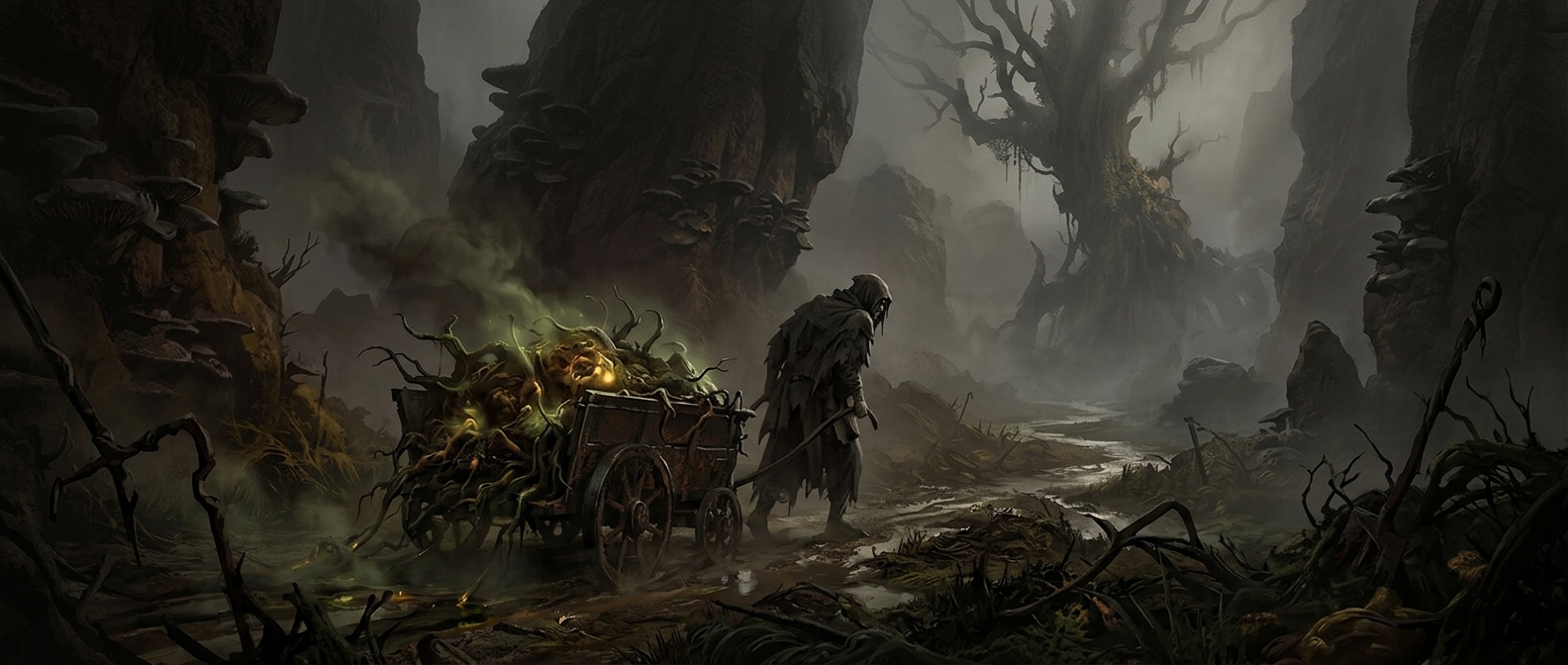
Why the Dung Eater’s curse is more than grotesque
In Elden Ring, the Dung Eater’s fixation is bound to what he does to his victims: he murders them and defiles their bodies, leaving behind a Seedbed Curse. The horror is not simply that he chooses a repulsive symbol. In the Lands Between, death is tied to the Erdtree, whose order shapes how souls return to the world. His curse is meant to interfere with that order.
A crime aimed beyond the victim
The Dung Eater treats defilement as a lasting spiritual injury, not just an act against a corpse. The Seedbed Curse marks its victim, and his plan is to spread that condition rather than let it end with the people he kills. That turns each murder into an attempt to make the curse part of the world’s future.
The player can pursue this plan through the Blessing of Despair ending. Its consequence is a world in which people born afterward are also afflicted. The ending’s name is pointed: the Dung Eater does not offer a new order that heals the old one. He wants suffering to become ordinary, inherited, and impossible to escape.
Why the fixation matters
The character’s scatological obsession makes the idea deliberately revolting, but it also fits the game’s larger concern with who gets to decide what counts as pure, blessed, or worthy of return. His answer is not to challenge that hierarchy with mercy. It is to corrupt it so completely that no one can stand outside the curse.