Why a Demon Would Choose a Mirror
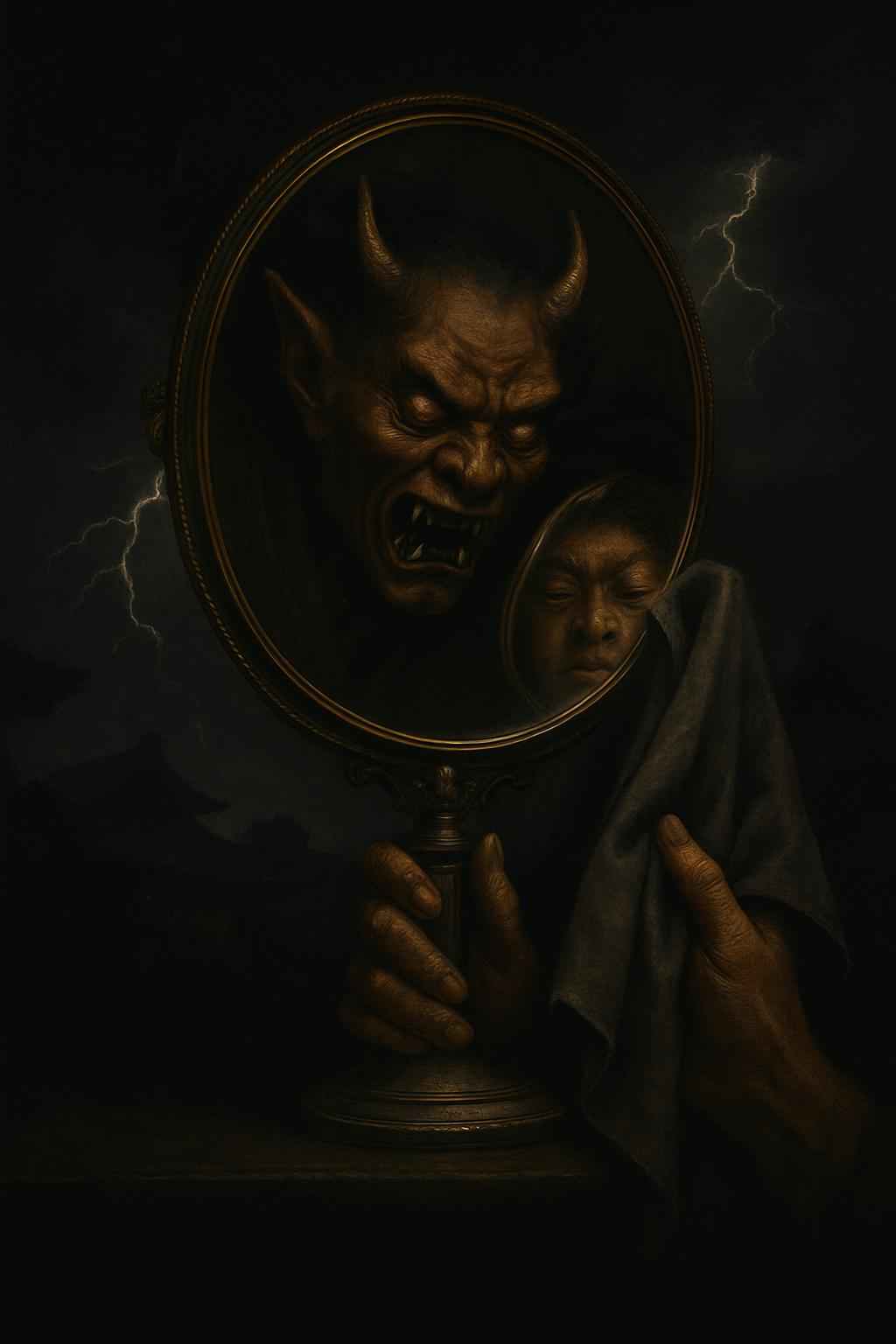
In the Kagami-Oni story, a mirror is more than a household object: it is a boundary that looks like an opening. Its surface returns a familiar face while seeming to hold a second, unreachable space behind the glass. A demon that can slip through reflections turns that everyday uncertainty into danger.
The storm-night setting sharpens the effect. Darkness and flashes of light make reflections harder to read, so an ordinary room can briefly seem unfamiliar. The tale gives that unease a shape: something may be watching from the reflected side.
Covering the Glass Changes the Story’s Focus
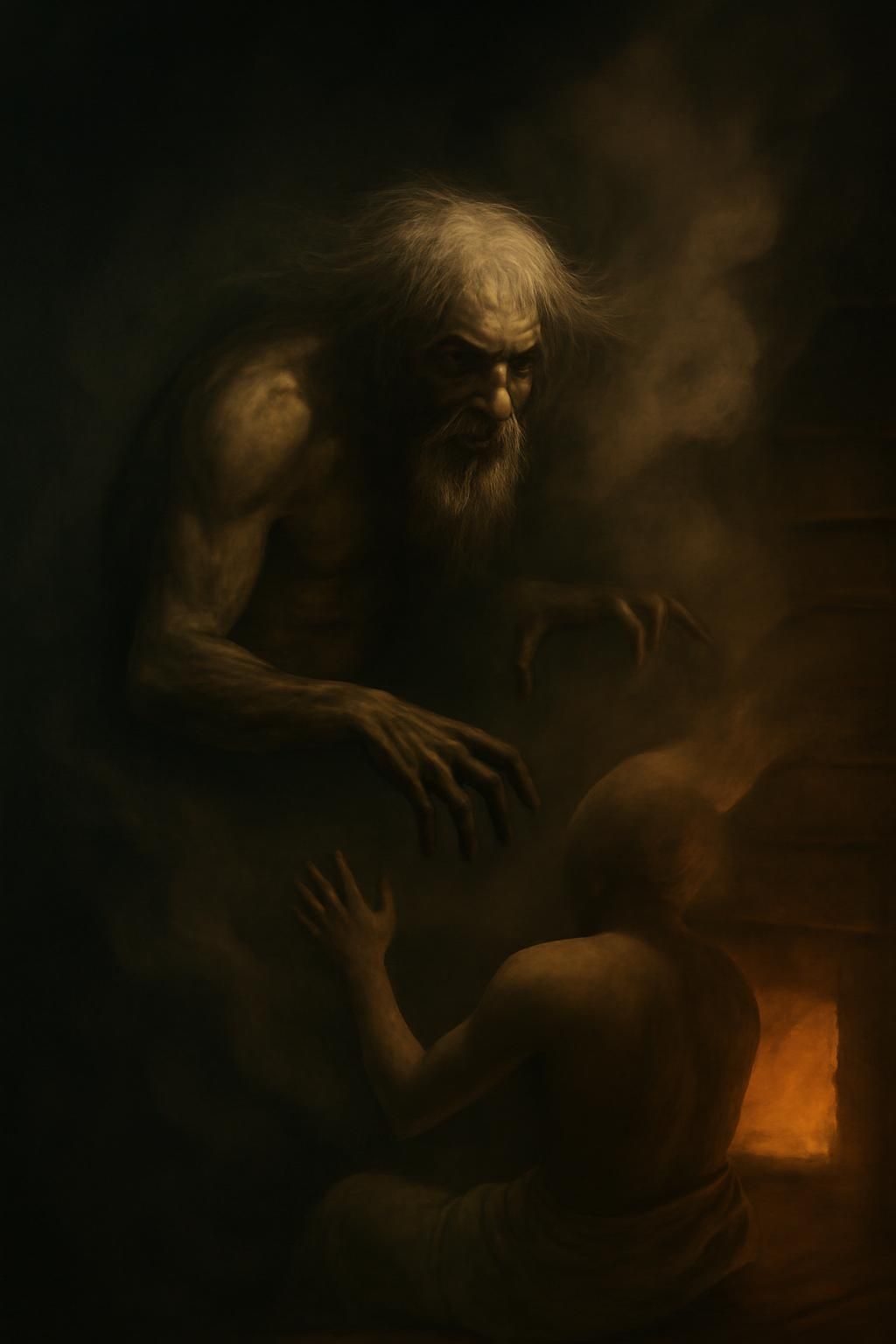
The demon’s association with vanity gives the mirror a moral role as well as a supernatural one. It is where someone might linger over their appearance; in the folklore, that self-absorption becomes the opening through which danger can enter. Covering a mirror at dusk is therefore a practical gesture within the story, but also a symbolic refusal to keep checking one’s image.
That small action makes the legend easy to carry into daily life. A cloth over glass does not defeat the storm or explain the demon. It marks a boundary between the ordinary room and the unsettling possibility the reflection represents—and turns an everyday object into the tale’s most memorable warning.