A landmark has to work at running speed
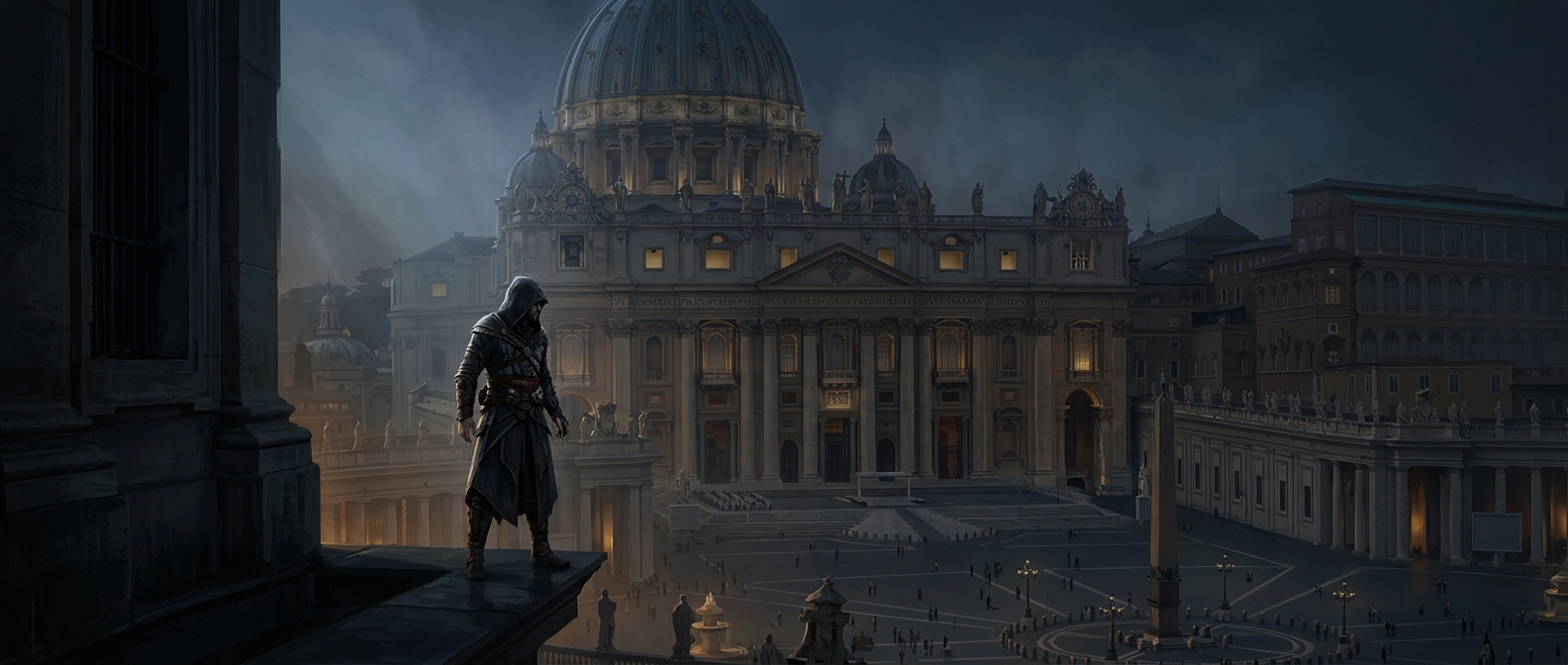
A real monumental building is designed to impress from the ground, not to serve as a route through a game. Its broad walls, long approaches, and immense height can make a climb feel dramatic in person—but at true scale, crossing the Vatican’s architecture on foot would consume too much play time. Shrinking it turns that distance into something a player can cover in moments.
Compression keeps the city connected
Parkour in Assassin’s Creed depends on a chain of reachable ledges, roofs, and other handholds. If buildings remain far apart or rise too high, that chain breaks: the player must spend more time traveling between useful surfaces and less time moving fluidly through the city. Reducing the scale helps keep routes close together and makes climbing a practical way to get around, rather than a prolonged detour.
The result is a playable interpretation, not a miniature architectural survey. The landmark still needs to read as monumental, but its dimensions must also support the pace and movement the game is built around. A player can recognize the imposing setting, scale its structures, and get back across the city before the real-world distances would allow.