Why cardboard rides over a spinning screen
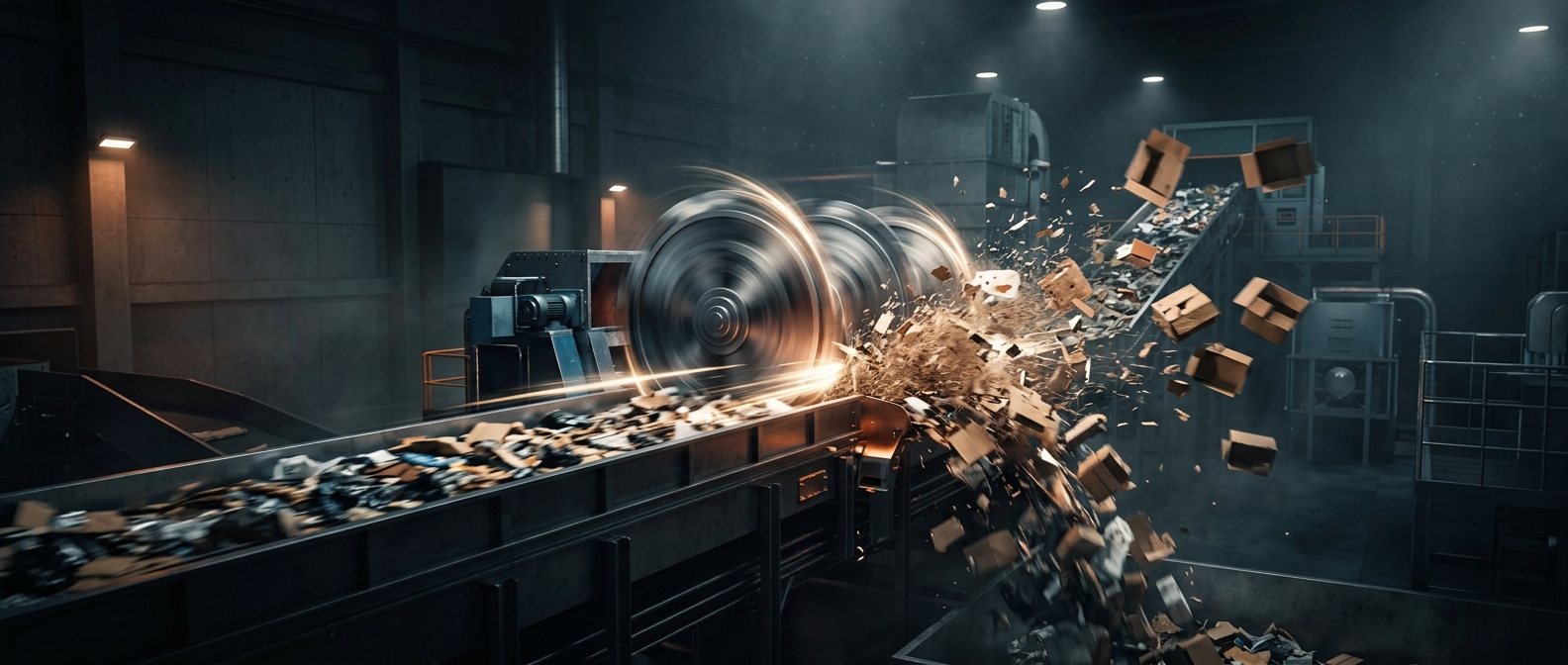
A disc screen separates material by how it moves across a series of rotating shafts fitted with spaced discs. As the shafts turn, they agitate the mixed stream and carry it forward. Pieces small enough to fit through the openings drop below the screen; larger pieces continue along the top.
Cardboard’s size and shape help it stay on that upper path. A broad sheet can span several discs even when it is light, while small scraps and fragments can slip through the gaps. The discs keep material moving and shifting, giving smaller pieces repeated chances to fall through rather than simply letting the pile travel as one mass.
A useful split, not a perfect one
The screen sorts by physical dimensions and behavior—not by recognizing cardboard as a material. Its performance depends on the spacing between discs and on how items arrive. A crushed carton, a tangled sheet, or a small piece of cardboard may follow a different route from a large, flat piece. Other sorting steps are needed to separate materials that share similar shapes or sizes.
That makes the disc screen an early sorting tool: it divides a chaotic stream into more manageable flows before further processing. The practical tradeoff is straightforward: openings must be large enough to pass the smaller material but arranged so useful cardboard does not fall through with it. A change in shape can decide which side of the screen an item takes.