The pipe is a shortcut to the river
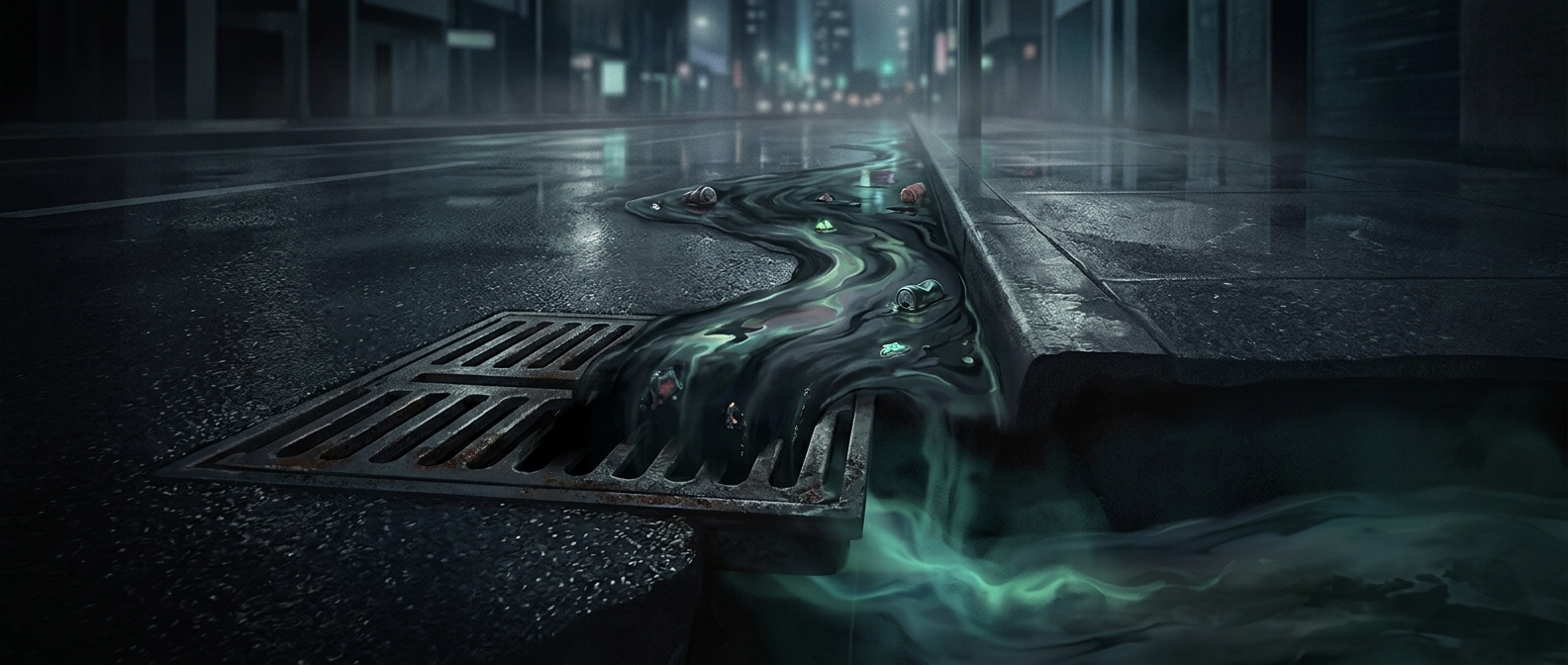
A street drain is the entrance to a storm-sewer system: grates collect water, and underground pipes carry it downhill to an outlet, or outfall, often at a river. In neighborhoods with separate storm and sanitary sewers, this rainwater usually does not go to a wastewater treatment plant. The system is designed to move it out of the street quickly, not clean it first.
That distinction matters because rain washes across roofs and pavement, picking up grit, oil, tire and brake particles, litter, and other residue. The pipes efficiently deliver that mixture to the waterway along with the runoff itself.
Speed solves one problem—and creates another
Pavement sheds water instead of soaking it into soil. Drains and pipes help prevent that water from collecting on roads, where it can obstruct traffic or enter buildings. But sending runoff away quickly also concentrates it: after a storm, a river can receive a faster, larger surge than it would from rain filtering gradually through the landscape. That surge can contribute to erosion and worsen high water, while carrying street pollutants downstream.
Storm drains are not all connected the same way. Some older areas have combined sewers that carry rain and household wastewater in the same pipes; during heavy rain, those systems can overflow. But where stormwater has its own pipe, the basic bargain remains: less water standing on the street, more water—and whatever it picked up—reaching the river promptly.
Slowing the flow changes the bargain
Cities can reduce the rush by giving rain places to soak in or pause: planted rain gardens, permeable pavement, and storage basins hold water before it reaches a drain. These measures do not replace the need to drain streets, but they can reduce the sharp pulse entering a river. A curbside grate is therefore more than a hole in the pavement: it marks the start of a route that trades local flood protection for a faster connection between streets and waterways.