Why a Track Needs a Last Line of Defense
At the end of a railway track, there may be no open route ahead—only a platform, a wall, or another piece of infrastructure. A buffer stop is the final physical barrier against a train rolling beyond the rails. It is not meant to replace careful driving or signaling; it is a safeguard for the moment a train reaches the track’s limit with too much motion still left in it.
Turning a Collision Into a Controlled Stop
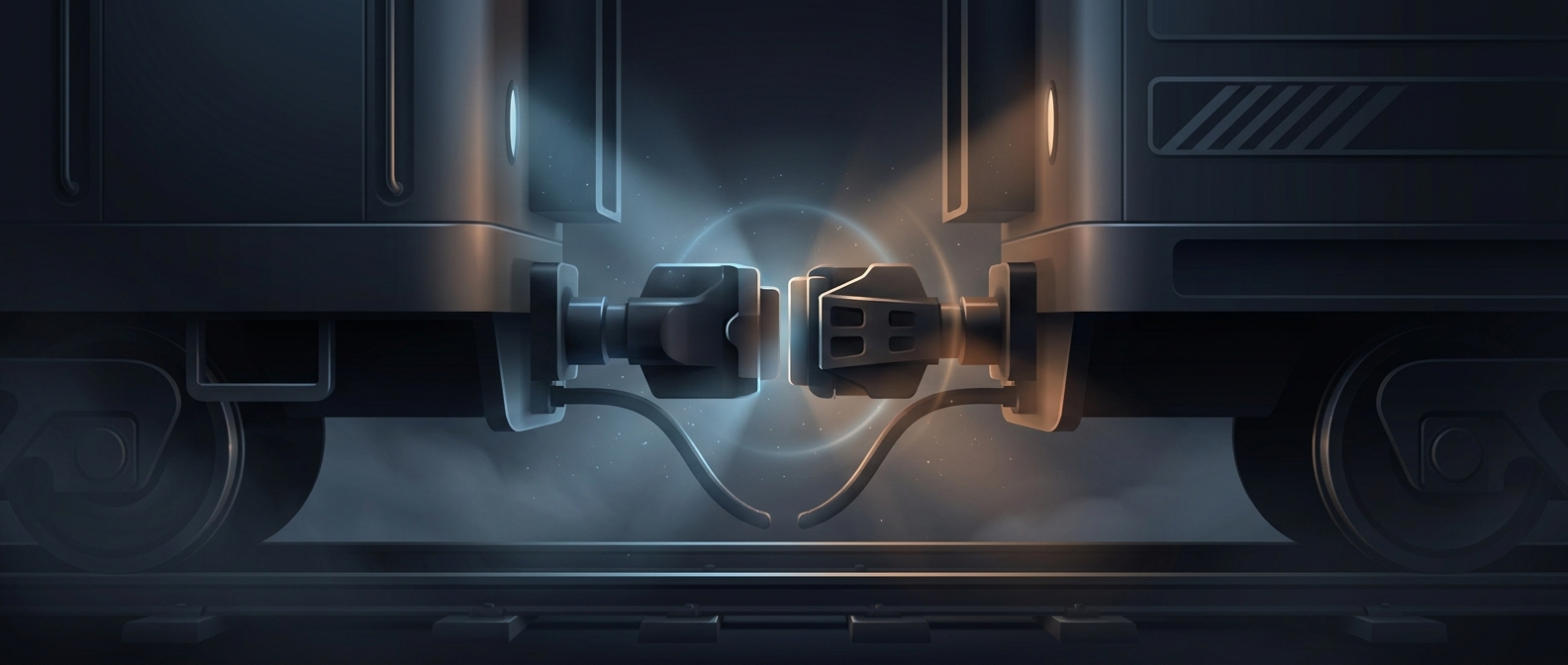
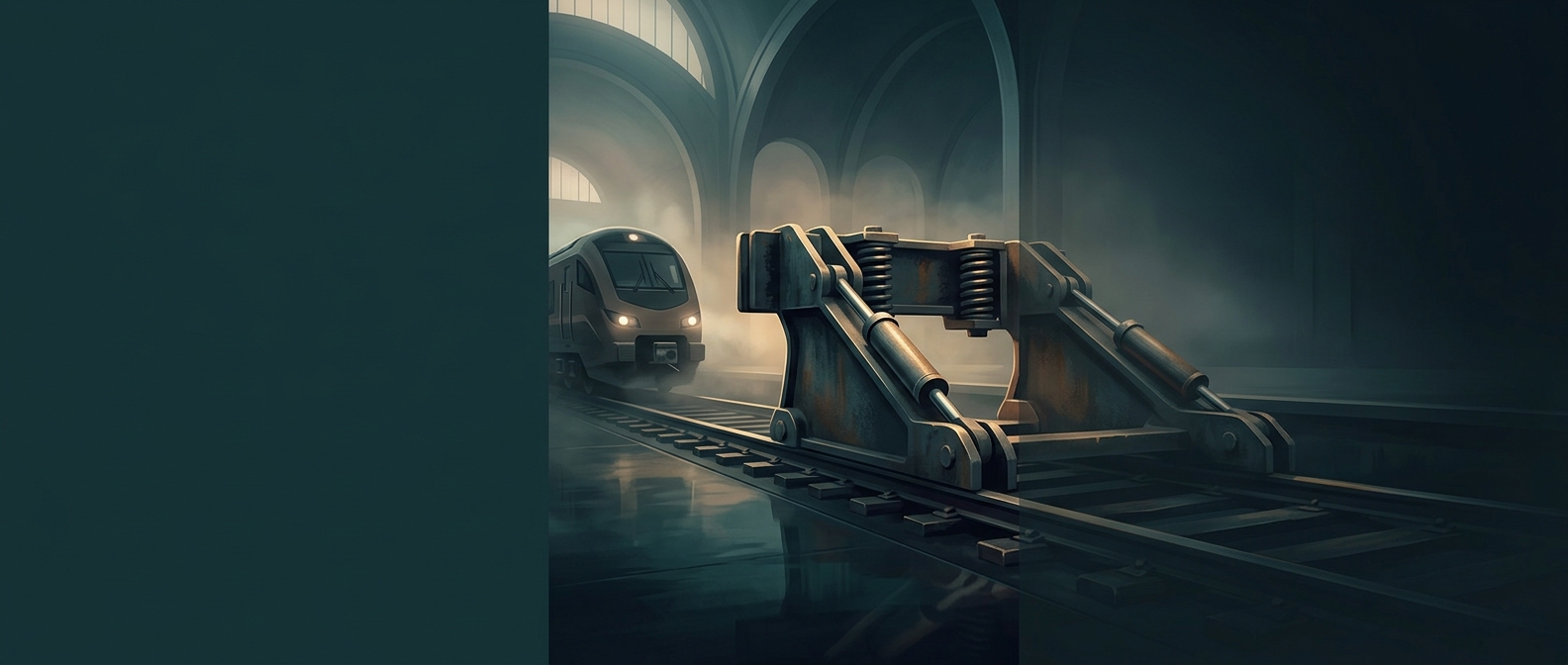
A moving train carries energy because of both its mass and its speed. Simply putting a rigid barrier in its path would bring that motion to a halt over a very short distance, creating a severe impact. A sliding buffer stop instead gives way: the train pushes it along the track while springs compress or hydraulic cylinders resist the movement.
That travel spreads the stopping process over more time and distance. Springs store some of the impact energy as they compress; hydraulic systems dissipate energy as fluid is forced through restricted passages, producing heat. In either case, the aim is to reduce the force of the encounter, not make it disappear.
Built for a Particular Track
A buffer stop has to work with the trains that use its track and the space available beyond it. A low-speed track ending at a station presents a different stopping problem from one where a train could arrive faster. The stop’s ability to move, and the resistance it offers, determine how much motion it can manage before reaching the end of its travel.
That is why the “bumper” is more than a metal bar at the end of the rails. Its useful feature is the controlled movement behind it: even a short stretch of give can turn an abrupt strike into a less violent, more manageable stop.