Turning a Lava Pool Into a Portal Frame
In ordinary Minecraft play, obsidian is a stubborn building material: breaking it takes a diamond or netherite pickaxe, and each block takes time to mine. Speedrunners can skip that work by making the blocks where they need them. The trick is to control how lava and water meet.
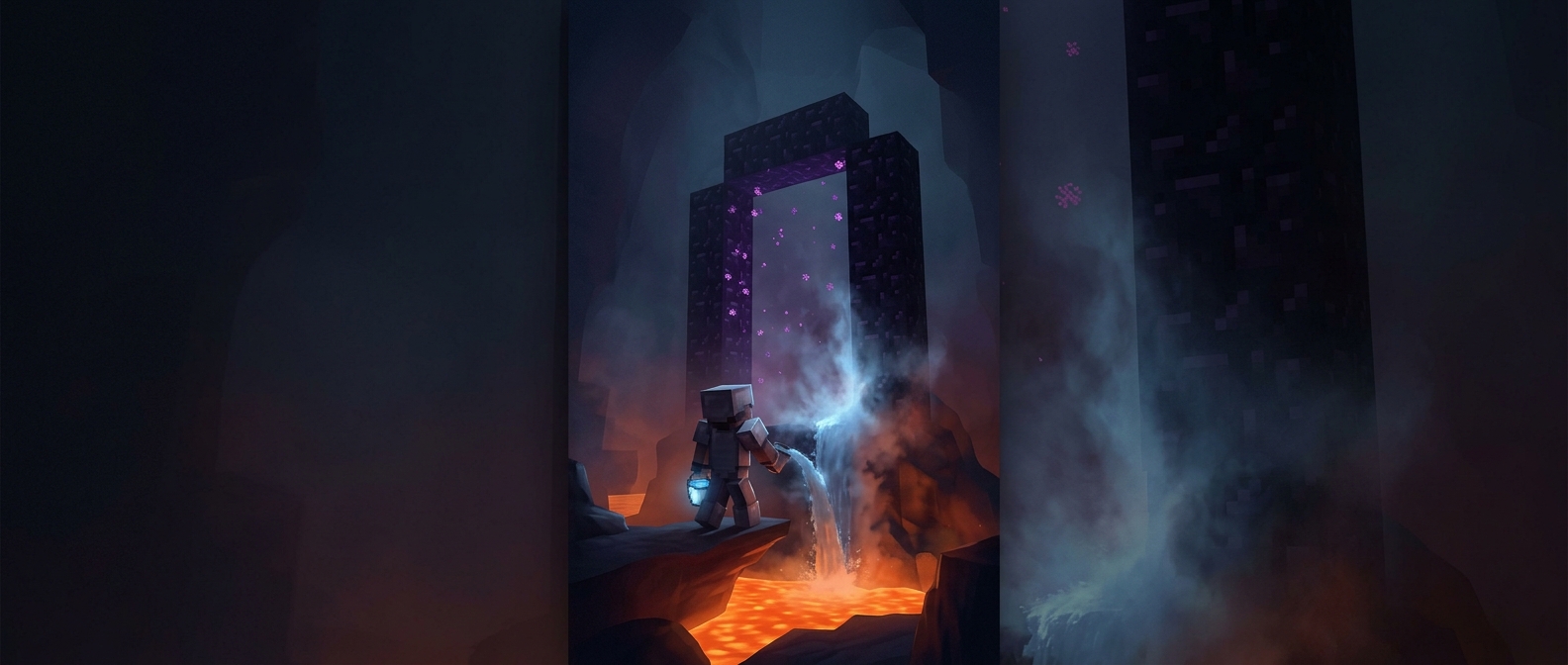
Water turns a source block—a stationary, full block of lava—into obsidian. Lava that is merely flowing instead makes cobblestone, so the runner has to place or channel source lava into the outline of a Nether portal before letting water touch it.
Build the Shape, Not a Stack of Obsidian
A runner gathers lava from a pool with a bucket and places it in the positions needed for the portal’s frame. Water is then directed across those lava blocks to solidify them. By repeating the placement and cooling steps, the runner constructs the frame in place rather than mining obsidian elsewhere and carrying it over.
The frame can omit its four corner blocks, reducing the amount of lava that must be positioned. Once the remaining obsidian blocks form a valid rectangle, the runner lights the opening to activate the portal.
A Shortcut That Depends on Precision
This method trades mining time for careful placement. Water can solidify the wrong lava, and a flowing block will not produce the needed obsidian, so the runner must manage the order and location of each pour. The payoff is substantial: a nearby lava lake becomes a supply of portal material, and the player can enter the Nether without first crafting a pickaxe capable of mining obsidian.