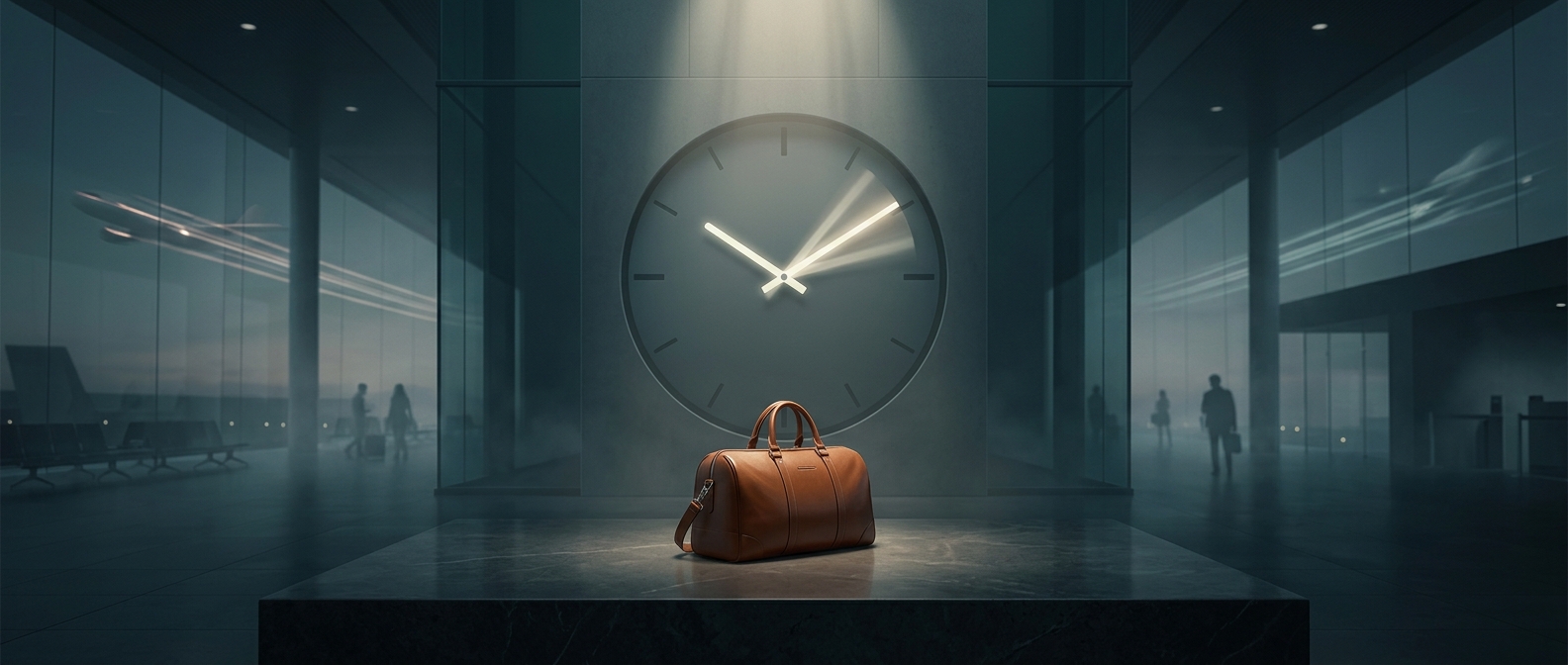
The bag that turns a trip into a small packing problem
A weekender is built around a quiet limit: bring enough for a brief change of scene, but not enough to move your whole routine with you. Its soft-sided shape usually gives clothes room to compress, while a wide opening makes it easier to see what is packed without unpacking everything.
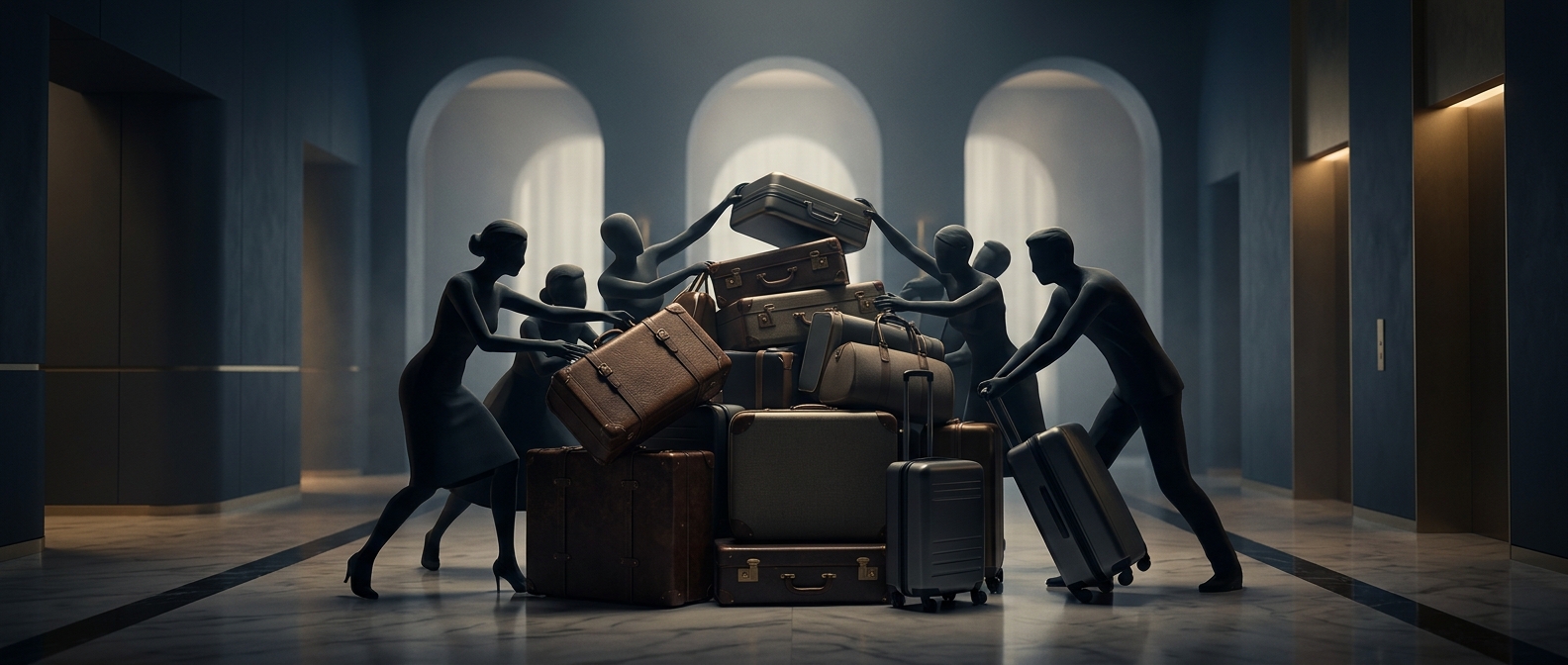
That capacity changes what travelers choose. A second pair of shoes can consume space quickly; an extra outfit may mean leaving behind a bulky layer or another “just in case” item. The bag encourages a compact plan—clothes that work together, toiletries in travel sizes, and little room for purchases on the way home.
Why its in-between size matters
A daily bag is meant to stay close and carry a small set of essentials. A larger suitcase makes room for more outfits, special gear, or a longer stay. The weekender sits between them, and that middle ground is useful precisely because it is restrictive: it can spare a traveler from hauling a full suitcase for a short visit, but it does not make overpacking effortless.
The name describes an expectation, not a fixed number of nights. A minimalist might use one for several days; someone packing shoes, formal clothes, or bulky weather gear may fill it much sooner. What the bag really measures is how much of ordinary life a person is willing to leave behind.
That is why it can feel like more than luggage. Its finite space makes the trip feel bounded before it begins: pack what fits, and the escape has a shape.