Cover Turns Damage Into a Short-Term Problem
Regenerating health changes what a firefight asks of the player. With a limited supply of health packs, damage can remain a cost long after a battle ends: a player who wins one encounter badly hurt may enter the next at a disadvantage. When health returns after a pause, the immediate question becomes whether to survive long enough to recover.
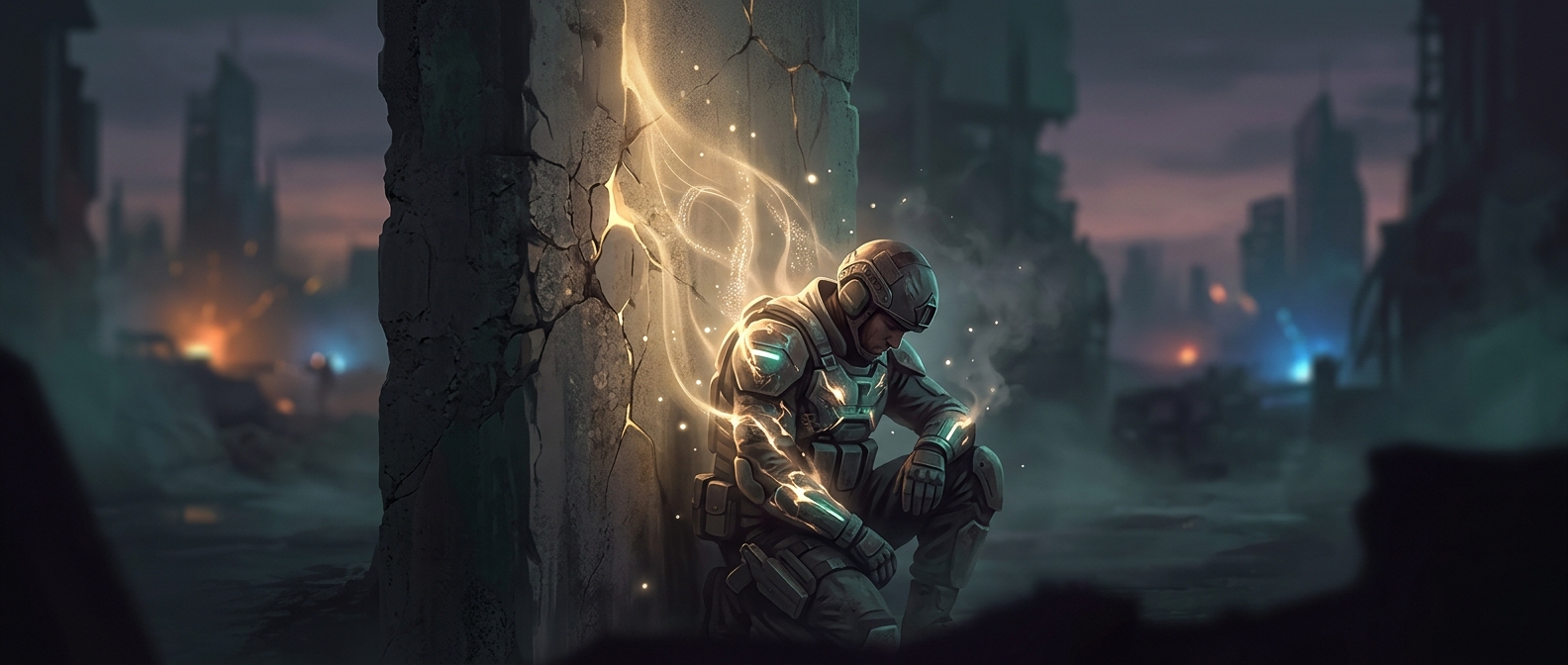
That pause gives cover a second job. A wall or doorway is not only protection from incoming fire; it is a place to wait out the danger. The player shifts between two states—exposed and acting, then sheltered and recovering—so the rhythm of combat is built around brief retreats as well as attacks.
A Different Kind of Risk
This system can keep a level moving without asking players to search every room for supplies. It also makes damage easier to understand: getting hit signals that the player should break line of sight, rather than manage a dwindling stock of healing items. Designers can use that clear cue to make encounters feel fast and readable.
The tradeoff is that a retreat may erase much of the consequence of a mistake. To keep pressure on, a game can make safe cover scarce, send enemies around it, or force the player to move toward an objective. The important decision is then not simply how much health remains, but whether there is time and space to stop fighting. A few seconds behind a wall can turn a near-loss into a fresh attempt—but only if the battlefield lets the player stay hidden.