A spectacle built from the game’s hacking premise
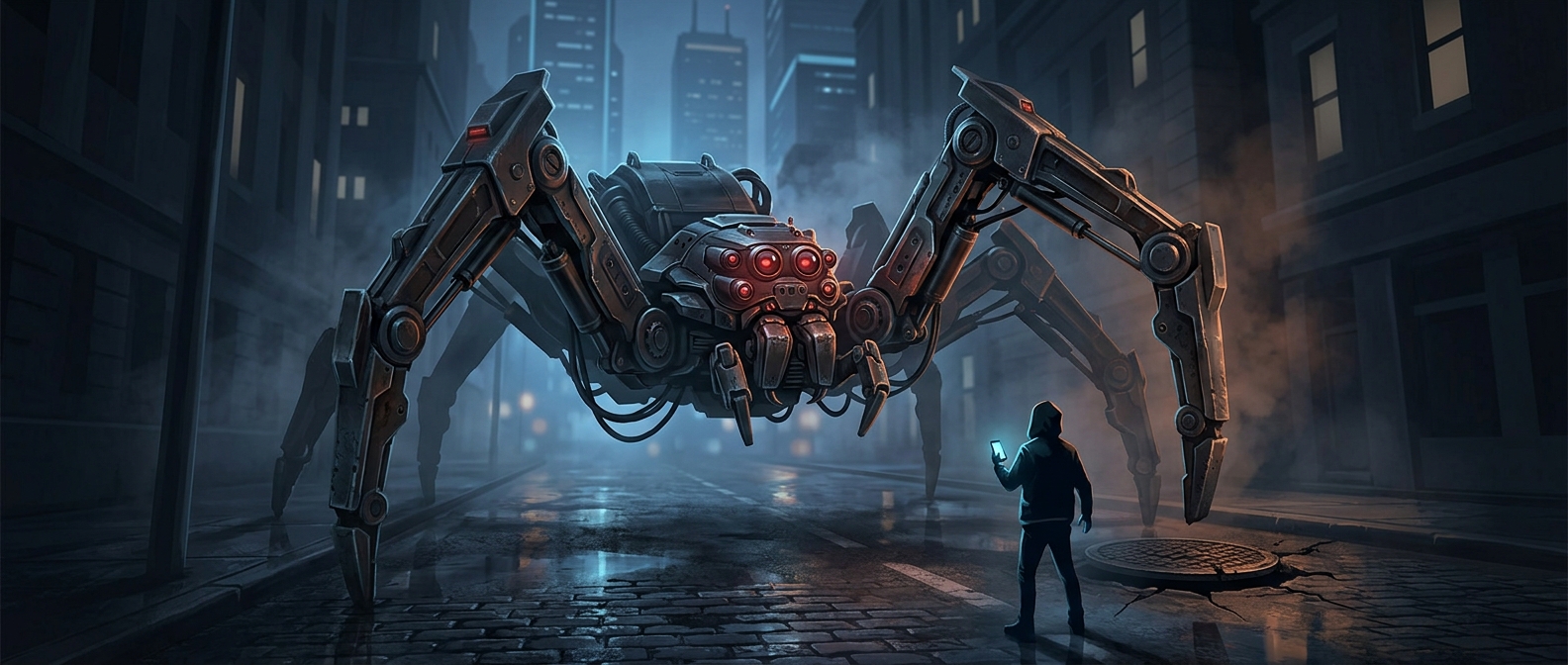
The giant spider is a playable remote-controlled machine, not a sudden transformation of the protagonist. Its appearance turns Watch Dogs’ central idea—using connected technology to manipulate a city—into a much louder kind of power. Instead of quietly accessing cameras or interfering with urban systems, the player takes direct control of a hulking robot and moves through the streets as a mechanical threat.
From surveillance to street-level destruction
That contrast is the point of the detour. Much of Watch Dogs asks players to treat the city as a network: cameras provide sight, devices offer access, and hacked infrastructure can create openings. The spider shifts that fantasy from indirect influence to physical force. Its size makes the consequences visible: traffic and pedestrians become part of the environment it can disrupt, while the player experiences the city from a perspective ordinary characters cannot match.
The machine also changes the rhythm of play. In a stealth-focused sequence, attention goes to routes, cover, and timing. In the spider, the pleasure comes from inhabiting an outsized machine and seeing how the same urban space behaves when the player is no longer trying to blend in.
A deliberate change of tone
A city-destroying robot does not fit neatly with a crime story about surveillance, but that mismatch helps make the sequence memorable. It lets the game exaggerate its technological premise rather than keeping every hack plausible or subtle. For a short stretch, the city’s connected systems are no longer merely tools for investigation or escape; the game turns them into a stage for a mechanical rampage.