Why a Moving Box Can Pass for Cover
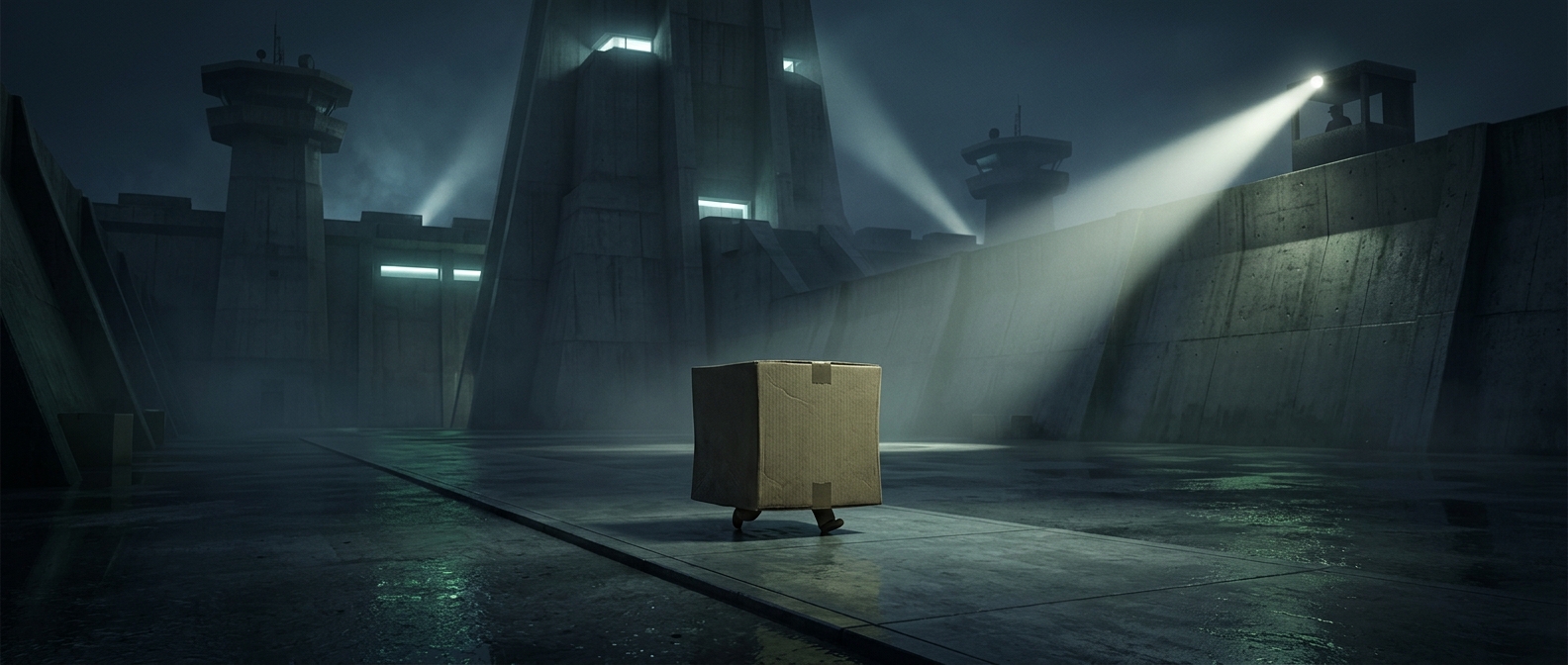
A cardboard box works as camouflage because the game treats it not just as an object in the scenery, but as a disguise the player can carry. Once the character is underneath it, the box changes what enemies can detect: instead of reacting to a clearly visible soldier, they may read the shape as an ordinary piece of equipment or discarded packaging.
That is a simplified rule, not a simulation of how real guards would inspect a suspicious box. The game gives the player a clear stealth tool with a memorable visual result. A crawling figure would be easy to spot; a box that creeps along turns the same movement into a joke—and makes concealment immediately legible to the player.
A Stealth Tool With a Comic Cost
The box also makes stealth feel active. The player can reposition while hidden rather than simply crouching behind a wall, trading the safety of stillness for the chance to move. The humor comes from the gap between the enemy’s response and the scene the player sees: a military base, a supposedly alert patrol, and a box inching across the ground.
That gap is useful design. A realistic disguise system would need many rules about sightlines, suspicion, and inspection. A box offers a compact alternative: understand the disguise, use it when the situation allows, and enjoy the absurdity when it works. The result is both a practical gameplay shortcut and a visual gag that players can recognize at a glance.