A Name That Works Like a Button
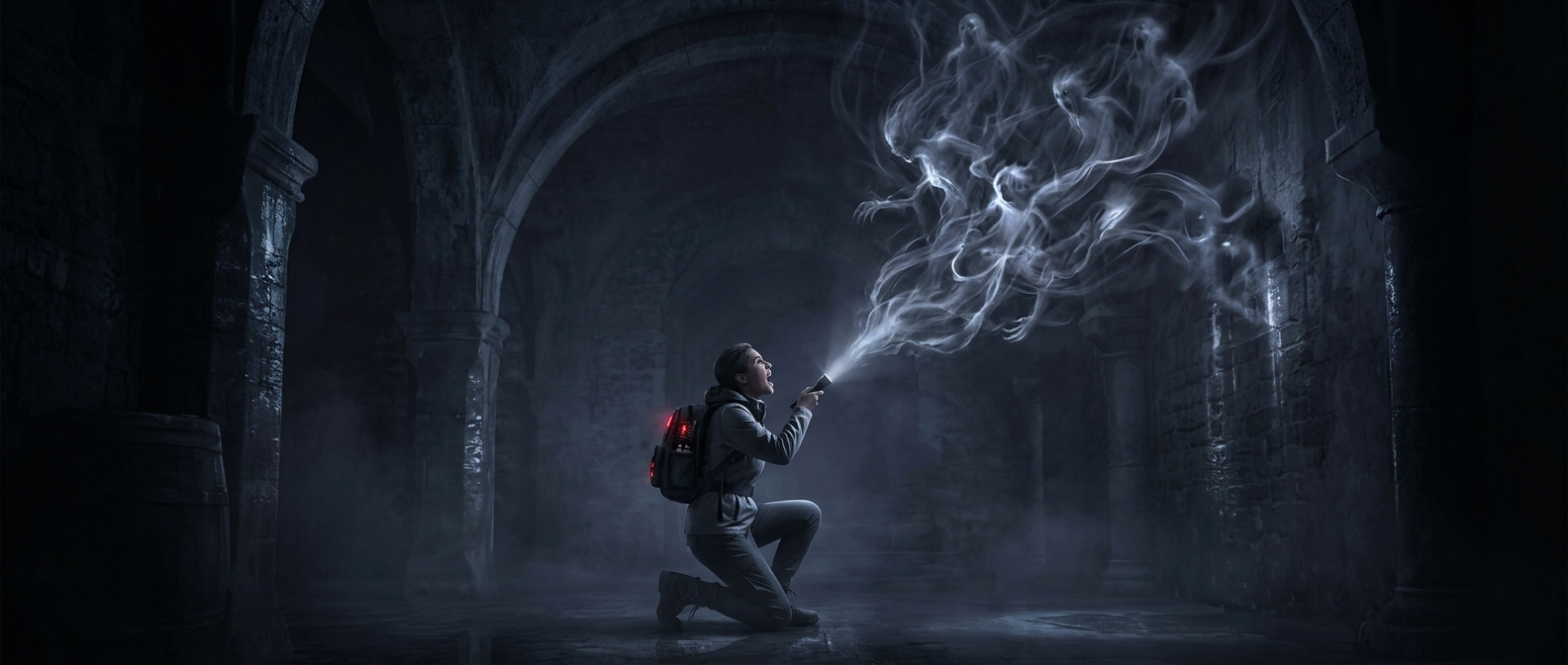
In this ghost-hunting game, the name is more than a label: entering the ghost’s full name can trigger an in-game response. That turns a scrap of identifying information into an active tool. Players can use it to try to draw a reaction from the ghost rather than searching a room blindly.
The darkness makes that trade especially tempting. In a basement, sight may offer little help, but a name can still be entered. If the ghost responds, players gain a clue about its presence or position without needing to see it first.
Information Has a Price
The same interaction can also raise the danger. Trying to get a reaction means deliberately engaging with the entity, so the name is useful not because it guarantees safety but because it gives players a choice: risk provoking the ghost in exchange for information that may help them decide what to do next.
That tension is a compact horror-game design trick. A name feels personal, and typing it is a deliberate act; the player is not merely waiting for a scare but choosing to reach into the dark and invite an answer. The full name becomes both a survival instrument and a way to make the basement feel more threatening.