Grazing Makes a Machine Read Like an Animal
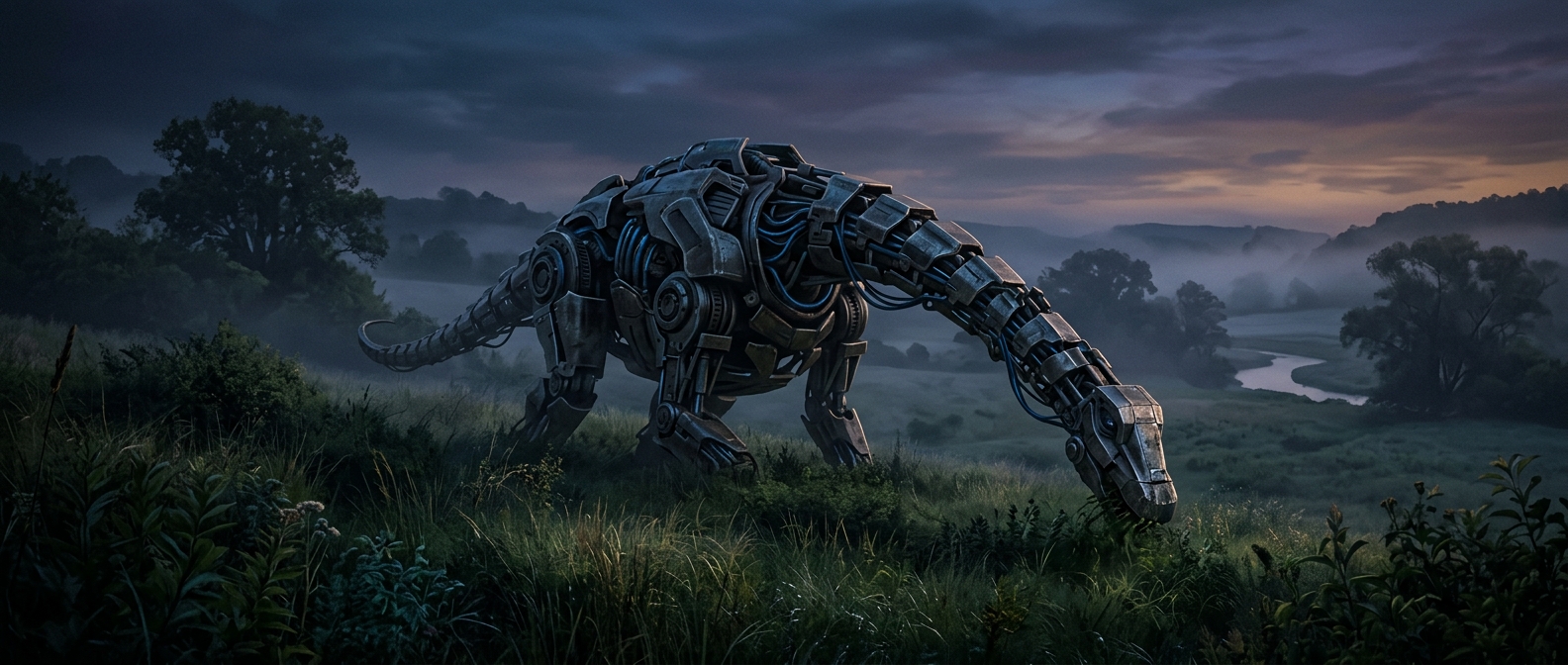
A robotic dinosaur does not need grass for calories, but a game creature needs more than a mechanical shape to feel alive. Repeated behaviors—lowering its head, moving through a patch of plants, then lifting it again—give the machine a recognizable routine. Players can read that routine as grazing before they know anything about how the creature works.
That small performance also makes the machine seem connected to its surroundings. Instead of standing like a vehicle dropped into a landscape, it appears to have a reason to be there. The foliage becomes part of the scene’s action, not just decoration.
A Useful Clue for Players
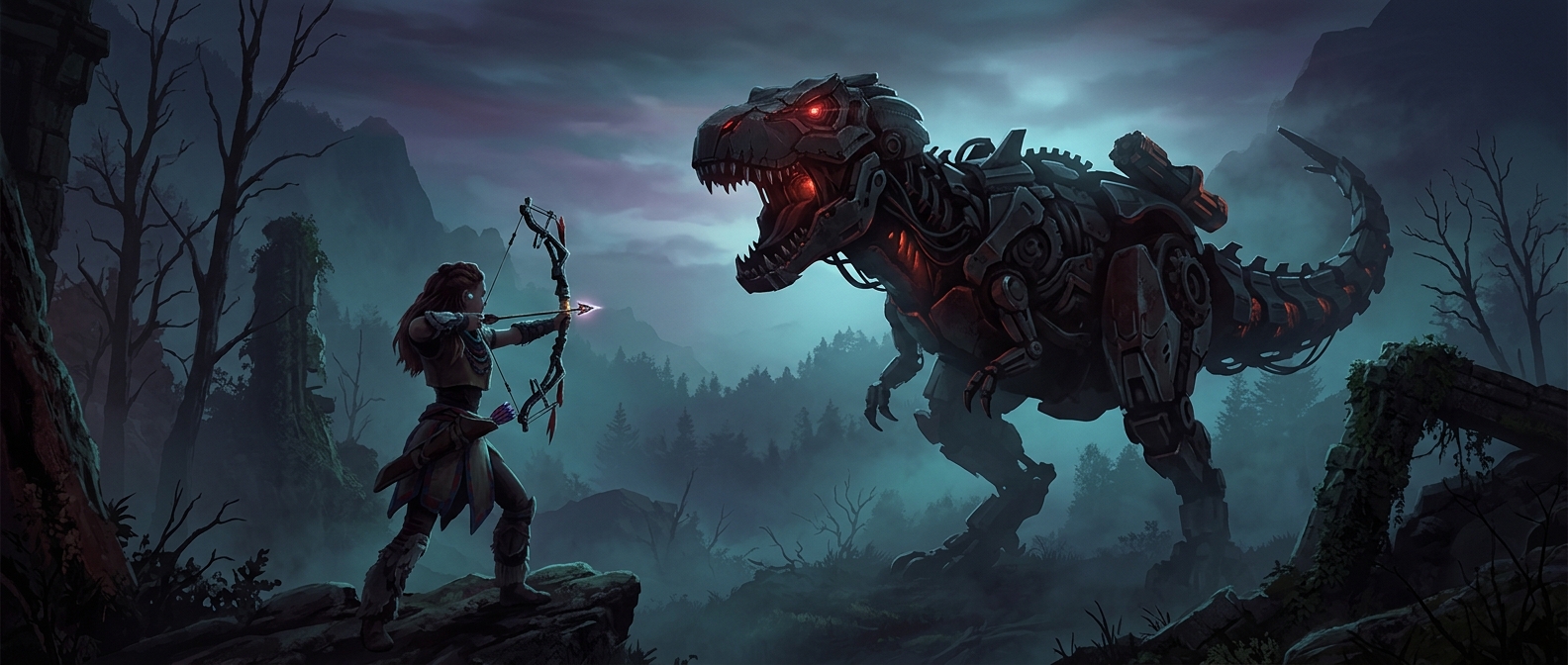
In games, an animal-like routine can communicate character and state without an explanation box. A creature that calmly grazes reads differently from one that is searching, fleeing, or preparing to attack. The animation gives players a quiet moment to observe it—and can make a change in its behavior stand out.
The apparent mismatch is part of the appeal: the machine does not need to eat, but acting as if it does helps the world feel inhabited. A metal dinosaur bent over wild grass can suggest an entire ecology, even when the grass is doing nothing for its body.