Turning Injury Into Creature Design
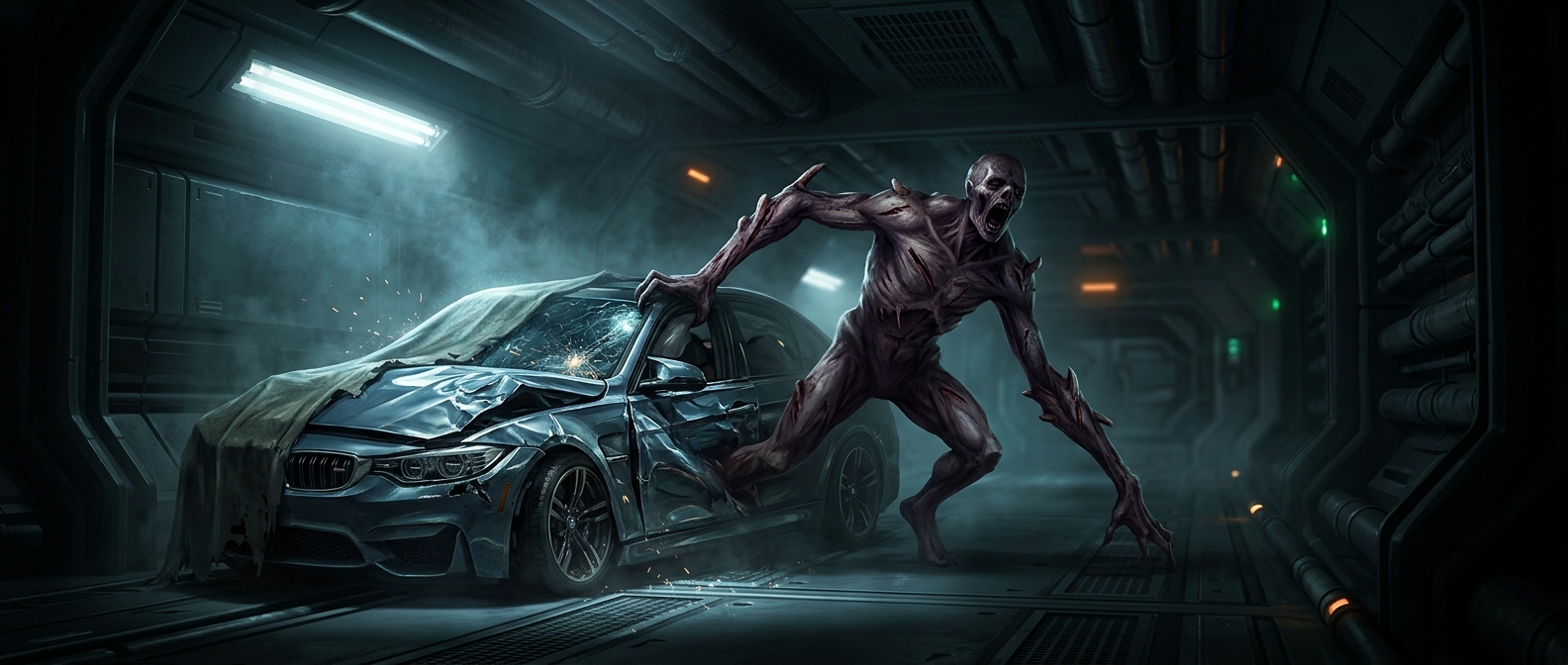
The unsettling force of a Necromorph comes from a collision between two kinds of recognition. Its body is distorted enough to read as a monster, but its wounds still resemble damage a human body could suffer. That realism gives the design a foothold in the familiar: a twisted limb or torn outline feels disturbing partly because the viewer can imagine the person who used to be there.
For the artists, the challenge was not simply to make the creatures bloodier. They had to turn the visible consequences of real trauma into shapes that could function as fictional anatomy—legible at a glance, yet strange enough to suggest that a body had been remade into something dangerous.
Why the Wounds Matter in Play
That visual logic also supports Dead Space’s combat. Players are encouraged to disable Necromorphs by cutting off their limbs, rather than treating them like ordinary enemies who simply absorb damage. The appendages are therefore both part of the horror and readable targets in a fight.
Realistic injury references helped keep those targets grounded in bodily form, while the monsters’ exaggerated shapes made them usable as game creatures. The result is a particularly effective kind of body horror: the Necromorph looks impossible, but its injuries make the transformation feel uncomfortably physical.