How Fewer Aliens Made the Invaders Faster
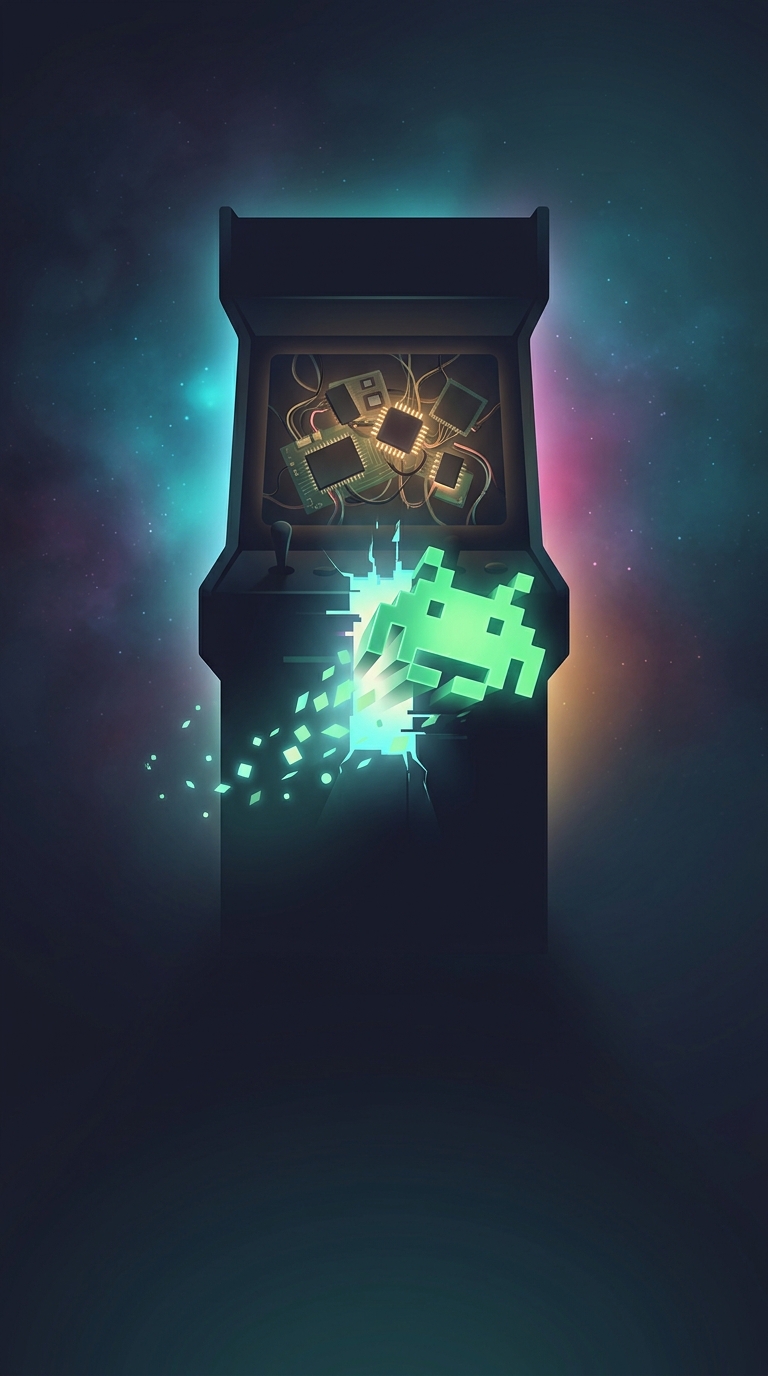
In Space Invaders, the alien formation grows more urgent as the player destroys it. The surviving invaders march across the screen at an increasingly brisk pace, turning a successful attack into a harder one. That escalation became one of games’ most recognizable difficulty curves—but it also grew out of a limitation in the arcade machine.
The game’s processor had to handle the aliens’ movement and redraw them on the screen. With a full formation, that work took longer. As aliens disappeared, there were fewer objects for the game to process, so each cycle could finish sooner. The movement was tied to that cycle rather than paced by a perfectly steady clock. Less work for the hardware therefore meant more frequent movement updates—and faster invaders.
A Limitation Became a Design Feature
That unintended acceleration fit the game remarkably well. At the start, a crowded formation advances slowly enough for players to aim and learn its patterns. Each alien removed makes the remaining group quicker, so the screen becomes more dangerous as the player approaches clearing it. The technical quirk supplied a natural ramp in tension without requiring a separate system to gradually raise the difficulty.
The effect also changed how a round felt: eliminating enemies did not simply reduce the threat. It made the survivors harder to hit, rewarding accuracy while increasing pressure. A hardware constraint had become part of the game’s rhythm, helping turn a simple shooting game into a contest that grew more intense right up to its final invader.