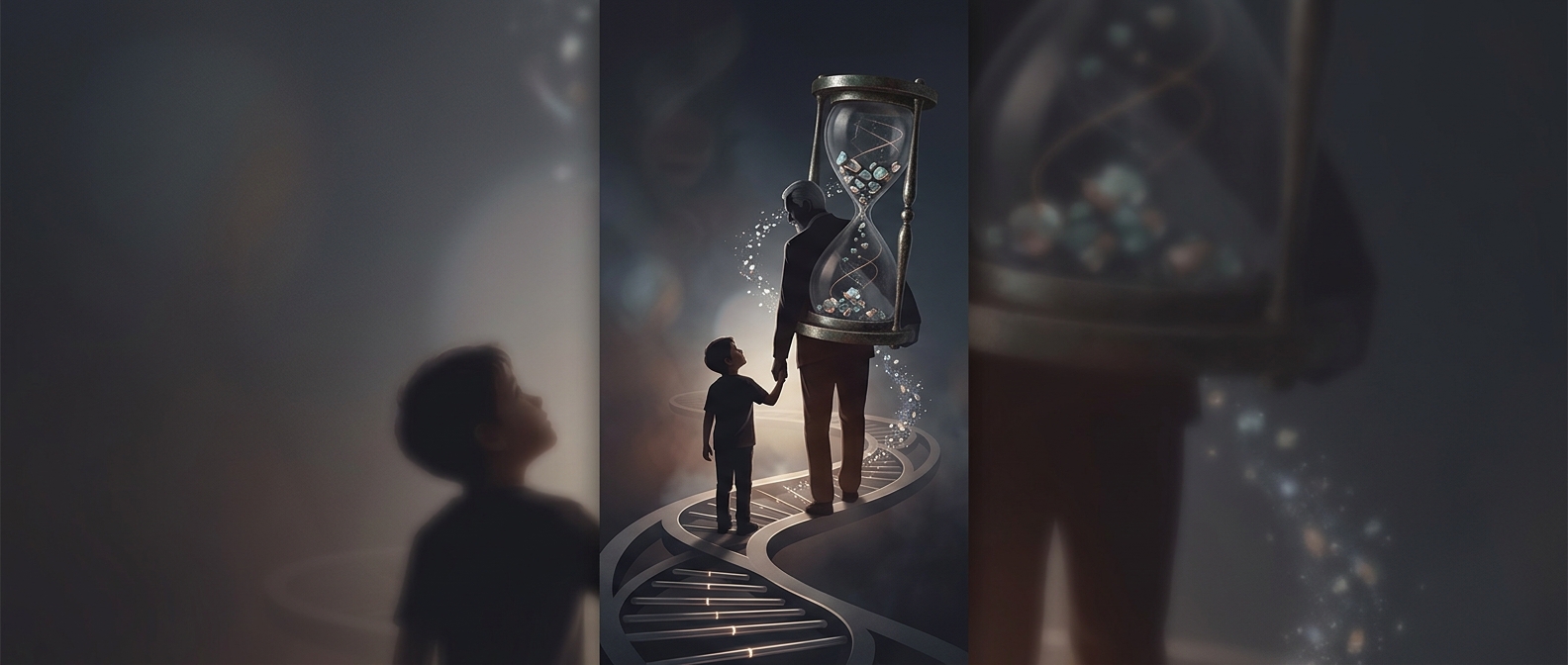
How repeated sperm-cell copying can change inherited DNA
Sperm are made from stem cells in the testes. These cells keep dividing: some produce cells that will mature into sperm, while others remain available to make more. Each division requires DNA to be copied. The cell’s proofreading and repair systems catch many copying mistakes, but a few can remain as mutations.
A mutation in a cell that contributes to sperm can be passed on if that sperm fertilizes an egg. It then becomes part of the child’s starting genetic code. This is different from mutations acquired in a parent’s ordinary body cells, which generally are not inherited.
More chances do not mean every child is affected
As a man ages, his sperm-producing cell lineages have had more rounds of copying, so sperm tend to carry more newly arisen mutations on average. The added changes are not all harmful: many have no noticeable effect, while some can alter how a gene works. A mutation must also be present in the particular sperm involved in conception to reach a child.
The result is a shift in odds, not a prediction about any one family. A child does not inherit every mutation found in a parent’s body, and an older father’s age alone cannot tell whether a particular mutation will occur. The mechanism is simply cumulative opportunity: more cell divisions give DNA more occasions to be copied—and each copy is another chance for a lasting change.