Why evolution keeps producing crab-like bodies
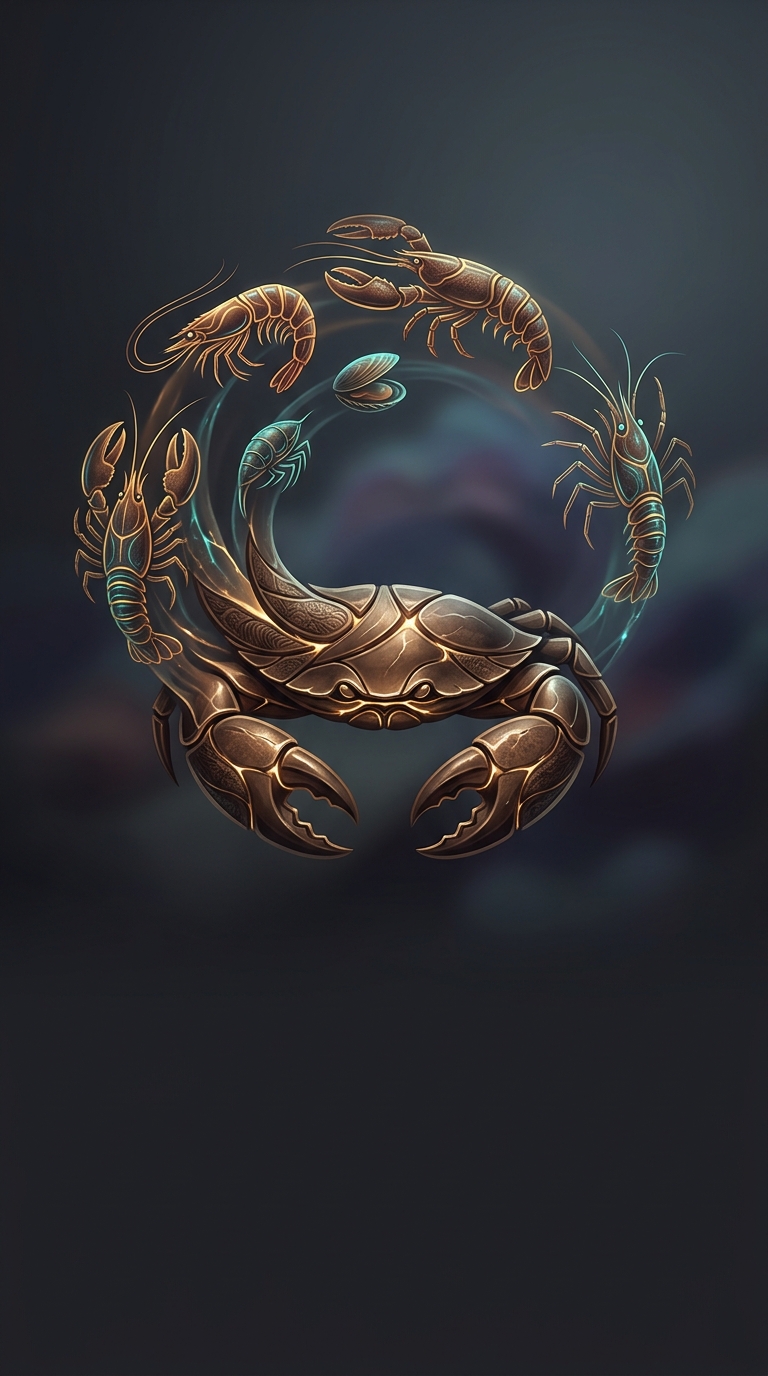
Carcinization is the repeated evolution of a compact, crab-like body in crustaceans whose ancestors did not all share that shape. It is a striking case of convergent evolution: separate lineages encounter similar physical challenges and independently arrive at similar solutions. The animals are related broadly as crustaceans, but they did not inherit one crab-shaped blueprint from a single crab-like ancestor.
What makes the shape useful
A typical crab-like body is broad and flattened, with the abdomen folded underneath the body. Compared with a long, exposed abdomen, that compact arrangement can make the animal harder to grasp and easier to maneuver around the seafloor or into tight shelter. A sturdy front section also provides a base for the legs and claws.
Those features may be advantageous in particular habitats and ways of life, but there is no single benefit that explains every case. Evolution does not assemble a body plan from scratch or aim for an ideal design. It modifies inherited structures over generations, and similar demands can repeatedly favor similar changes.
The crab shape is not an evolutionary finish line
Carcinization has occurred in at least five crustacean lineages, each reaching a crab-like form through its own evolutionary history. Some descendants later shifted toward a more lobster-like shape, showing that the compact crab form is not an endpoint. If conditions change—or a different body shape better suits a lineage’s way of life—evolution can favor that instead.
The surprising lesson is not that nature is trying to make crabs. It is that certain body plans can be useful often enough to reappear, while still remaining reversible: a lineage can arrive at a crab-like form and later move away from it.