Why a Chicken Can Evoke a Tiny T. rex
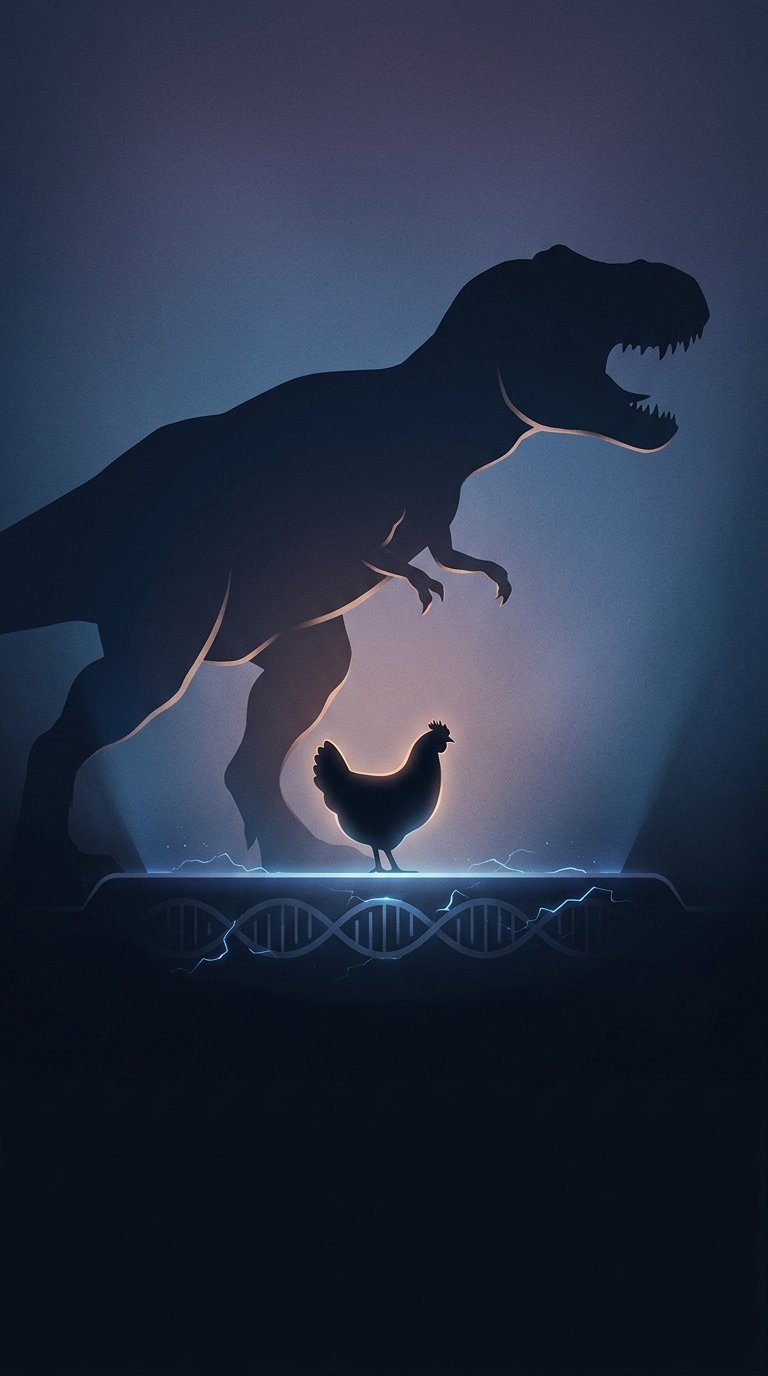
A chicken is not a miniature Tyrannosaurus rex, and it did not descend from that particular species. But it belongs to the only dinosaur lineage still alive: birds. Chickens and T. rex were both theropods, a group of mostly two-legged dinosaurs that included many meat-eaters.
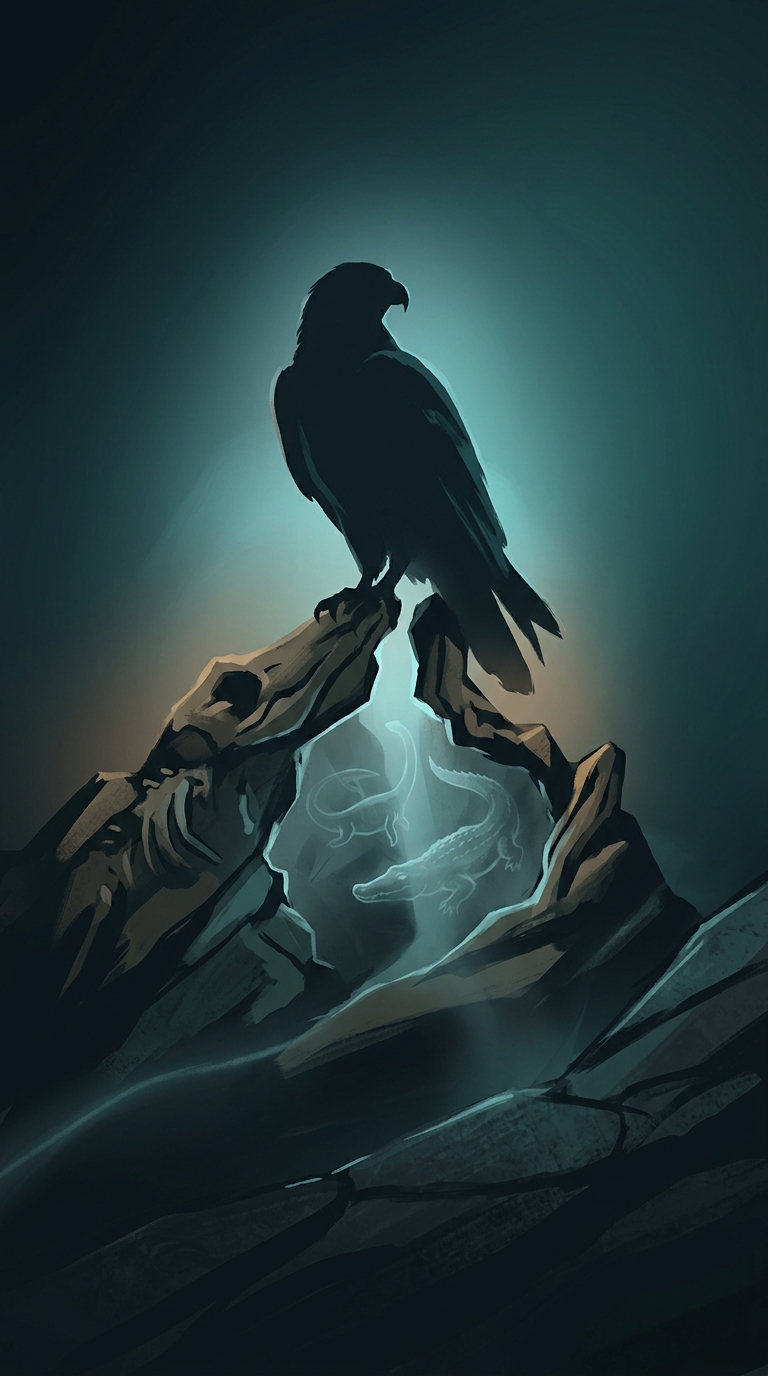
The key relationship is evolutionary, not a resemblance-based guess. Birds arose from small, feathered theropod dinosaurs. Over many generations, that branch changed: its members developed wings and other features suited to flight, while the famous giant tyrannosaurs followed a different branch. A chicken is therefore a living dinosaur relative—and, in the broader family-tree sense, a dinosaur itself.
What Genetics Can—and Cannot—Tell Us
Genetic comparisons help scientists place living birds among other animals and trace how bird lineages are related. But there is no usable T. rex genome to compare with a chicken’s: DNA breaks down over time, and fossils that old have not yielded a complete dinosaur genome. The connection rests on the combined evidence of evolutionary relationships, especially fossils and anatomical features, rather than a direct genetic match between the two species.
That distinction matters: the chicken is not a T. rex reduced in size, but a modern bird carrying a much older theropod inheritance. Its ancestry links the familiar bird in a yard to a dinosaur branch that survived the mass extinction that eliminated the nonbird dinosaurs. In that sense, the striking part is not that a chicken looks exactly like a tyrant lizard—it is that a living dinosaur can scratch in the dirt beside us.