Why Sweetness Is Missing From a Cat’s Menu
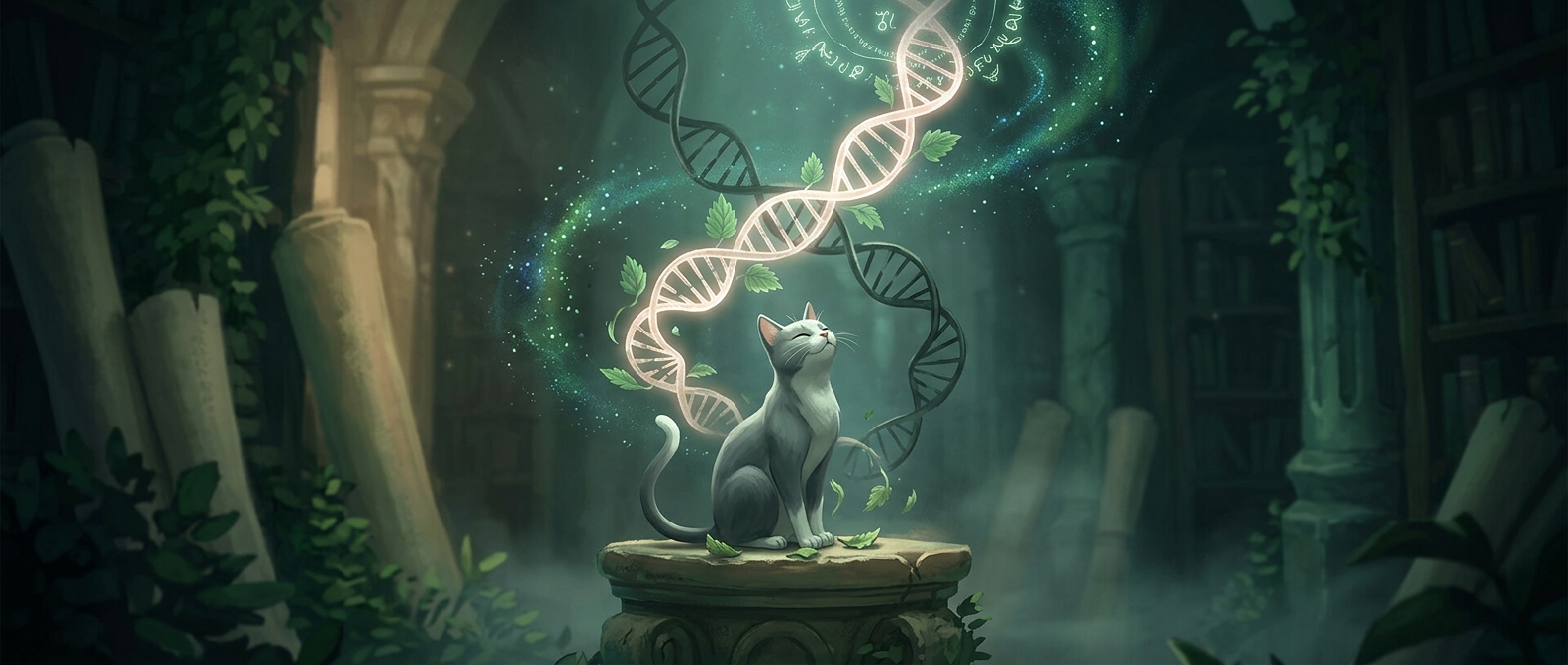
House cats can detect several basic tastes, but they do not perceive sweetness the way humans do. In most mammals, sweet taste begins when sugar molecules activate a sensor on the tongue made from two proteins, called T1R2 and T1R3. Cats have the gene for T1R3, but their T1R2 gene is nonfunctional. Without that working partner, the usual sweet-sensing receptor cannot form.
A Taste Sensor Built for a Meat-Eater
The missing sensor fits a feline diet. Cats are obligate carnivores: their bodies depend on nutrients found in animal tissues, and they have little dietary need to seek out sugar-rich foods. Over evolutionary time, the machinery for detecting sweetness appears to have become less useful and was lost.
That does not mean cats have no sense of taste. They can detect other qualities, including bitterness, sourness, saltiness, and savory flavors. Their tongues also respond to the texture and temperature of food, while their noses contribute heavily to what a meal seems like overall.
Why They May Still Lick Your Dessert
A cat that investigates ice cream or pastry may be drawn to its smell, creamy texture, or fat content—not to its sugar. A sweet-tasting treat to a person can be appealing to a cat for entirely different sensory reasons. So a snack thief may be interested in the bowl, but the sweetness itself is a sensation its taste system is not equipped to register.