A population-wide genetic bottleneck
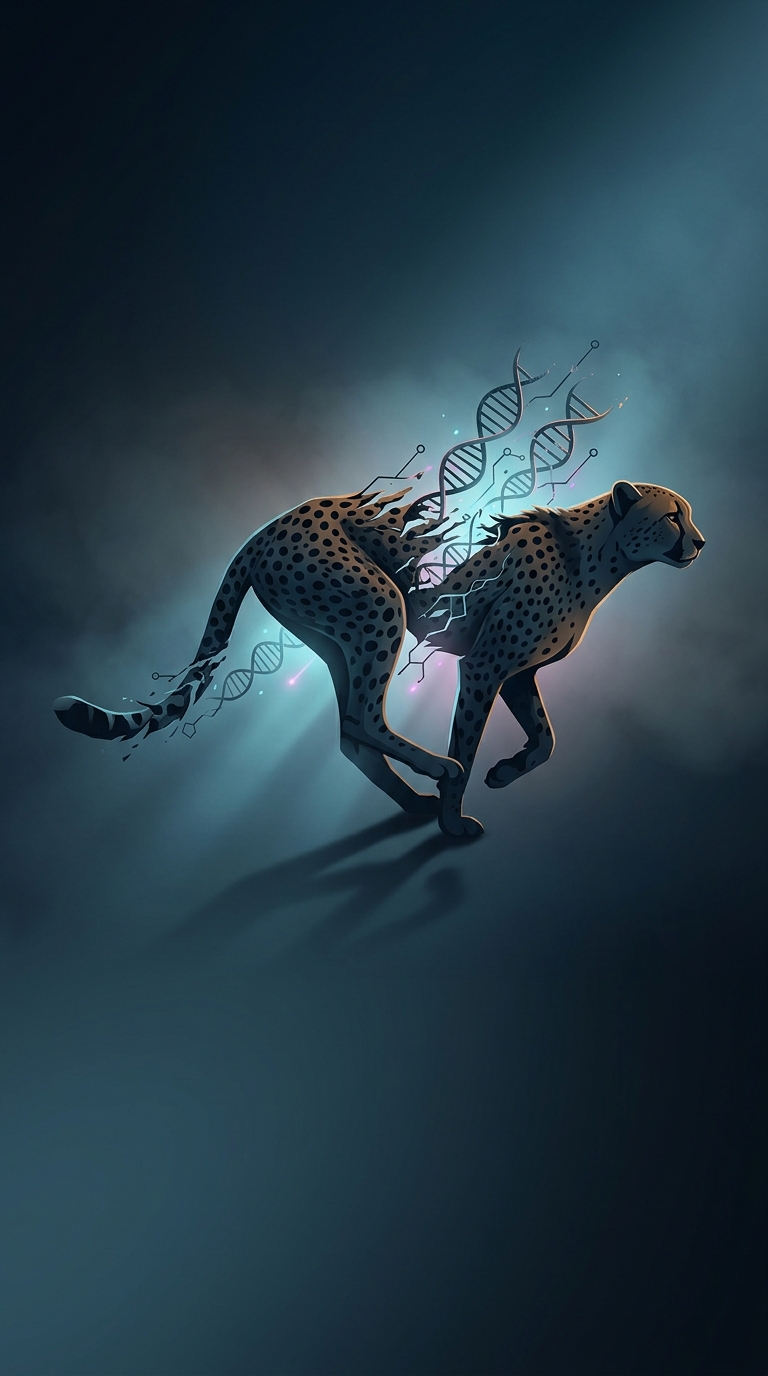
Cheetahs’ unusual genetic similarity is not a single defective gene shared by every animal. It is the legacy of a genetic bottleneck: a sharp reduction in population size that leaves the survivors with only a fraction of the genetic variation their ancestors had. When the population later grows, its members still inherit much of that narrow gene pool.
The result is strikingly little difference in some parts of cheetahs’ DNA—even among animals from distant populations. In a well-known demonstration, skin grafts from unrelated cheetahs were not rejected as strongly as would generally be expected between unrelated individuals of many other species. The animals’ immune systems had fewer genetic differences to recognize.
Why low variation can be risky
Genetic diversity gives a population a wider range of biological traits. If a disease spreads or the environment changes, some individuals may carry variations that help them survive and reproduce. A genetically uniform population is less likely to have that built-in range of responses, so a new threat could affect many animals in similar ways.
The narrow gene pool can also make it harder for small, isolated populations to avoid mating between relatives. That can increase the chance that harmful inherited variants are paired up, though cheetah conservation challenges also reflect habitat loss, conflict with people, and other pressures—not genetics alone.
A vulnerability, not a verdict
Low diversity does not mean every cheetah is sick or that the species cannot adapt. It means there may be fewer genetic options available when conditions change. Protecting connected populations matters because movement between them can preserve or restore variation; keeping animals alive today is only part of the task. The deeper challenge is ensuring future generations have enough genetic variety to face threats their ancestors never encountered.