Why evolution keeps producing crab-shaped crustaceans
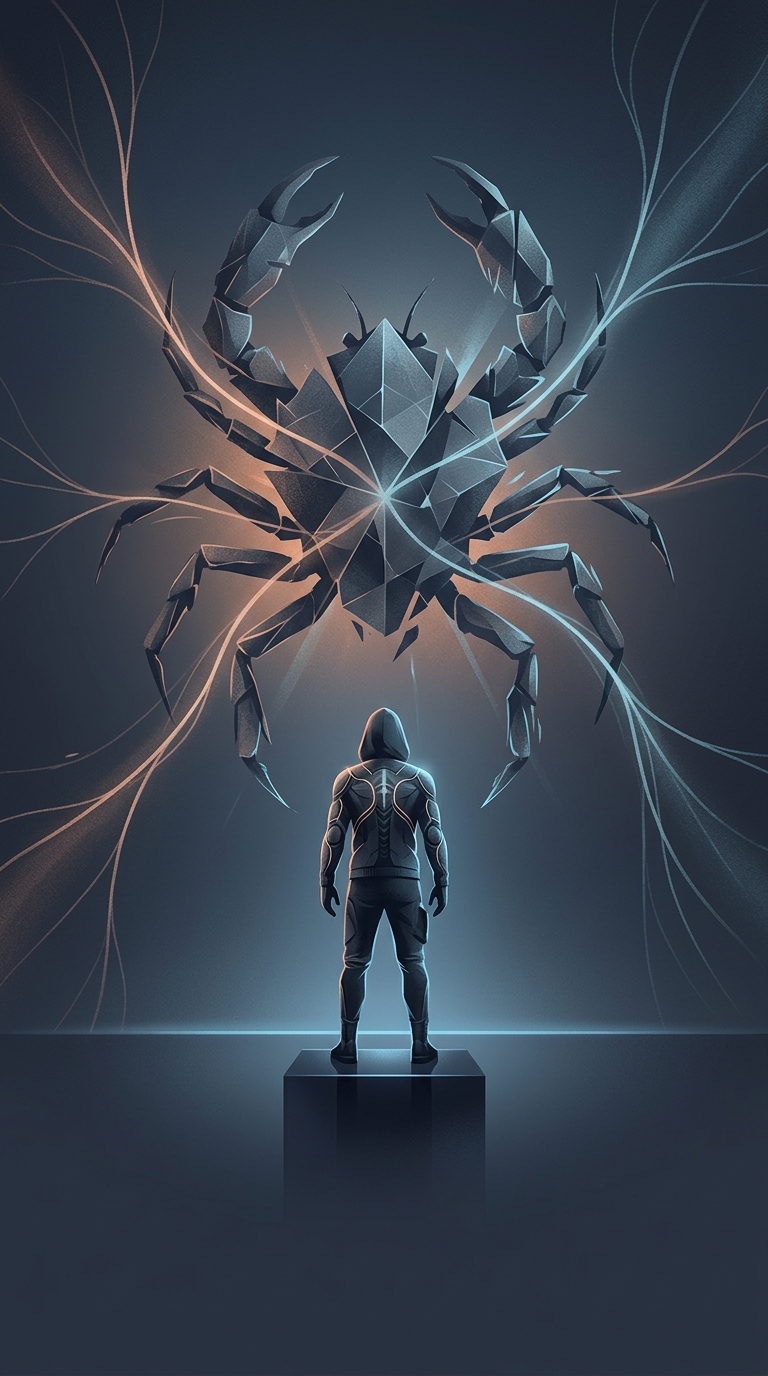
The repeated crab-like shape has a name: carcinization. It describes separate crustacean lineages evolving toward a compact body with a broad shell, a tucked-under abdomen, and legs arranged for moving sideways or scuttling along the seafloor. The animals may look like close relatives, but the resemblance evolved independently; it is a case of convergent evolution, in which similar pressures favor similar forms.
A body plan with practical tradeoffs
Many crab-shaped crustaceans belong to the decapods, the group that includes crabs, lobsters, and shrimp. In several branches of this group, evolution altered a more elongated body: the abdomen became shorter and folded beneath the body, while the front shell became wider. That arrangement can make an animal more compact and protect its softer underside. It also changes how the animal moves and fits into crevices.
The shape is not a single destination with one guaranteed advantage. A broad shell and tucked abdomen may suit life on the bottom, but different species face different demands, and crab-like bodies vary in their details. Evolution does not plan toward a crab; inherited variations that work well enough in a particular setting can accumulate over many generations.
The crab form is a recurring solution, not a final one
Some crab-shaped animals are true crabs; others are more distant crustacean relatives that arrived at a similar outline. Their shared appearance is a clue to both ancestry and adaptation: the body plan can be rebuilt from different starting points when it offers useful combinations of protection, compactness, and mobility. The striking part is not that evolution made one perfect crab, but that it found the crab-like shape more than once.