How a coal slurry stays moving
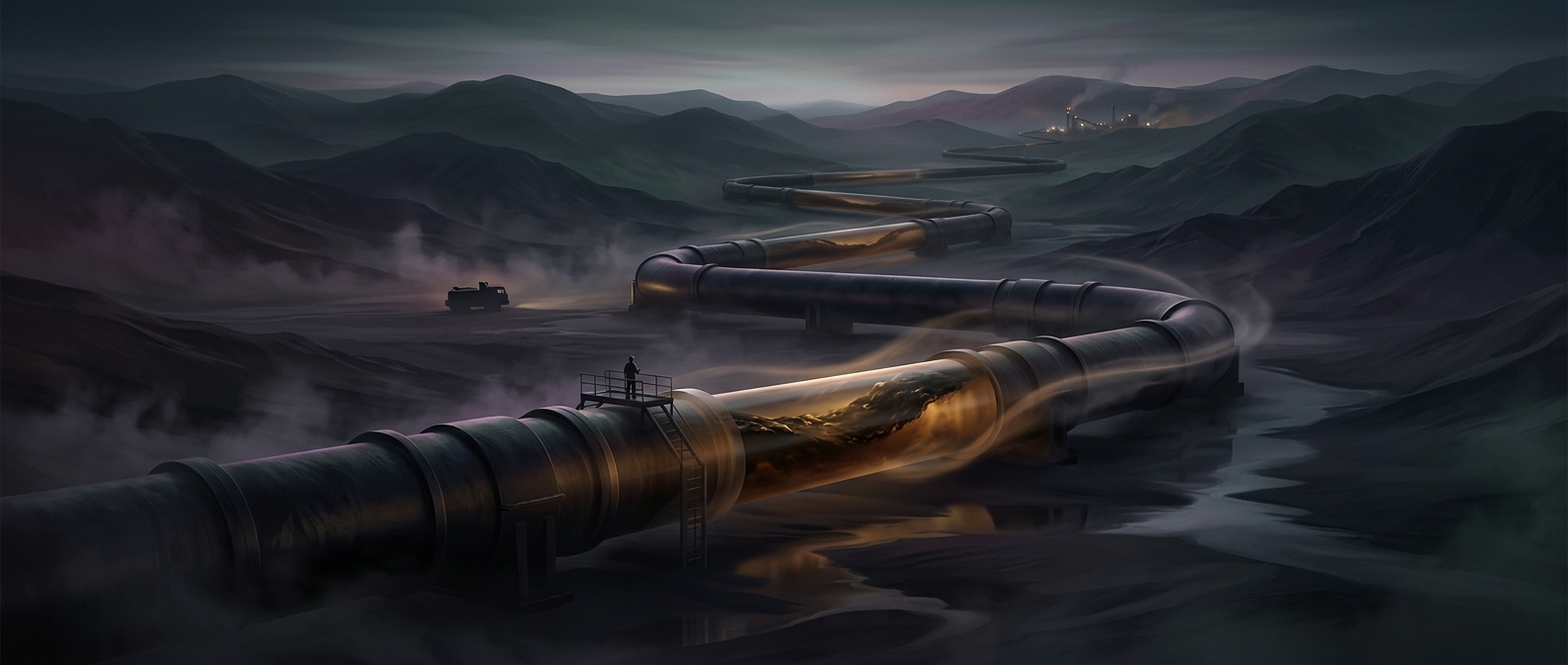
Turning coal into a pumpable mixture changes the transport problem. Crushed particles are suspended in water, and pumps push the mixture along the pipe. Because coal is denser than water, the flow has to keep the particles dispersed: if it slows too much, solids can settle and build up inside the line. The pipeline’s route, pump spacing, and operating speed therefore have to be designed together, balancing steady movement against the energy needed to overcome friction and elevation changes.
The mixture is not simply water with a little coal added. Its solids content affects how readily it flows, how much material can be carried in each volume, and how hard pumps must work. Too little water makes the slurry harder to move; too much means more water must be handled at the other end.
The destination is part of the system
At the receiving terminal, the coal must be separated from its carrier water before it can be used or stored. Screens or other separation equipment remove the solids, while the water can be collected for reuse where the system allows. This means a slurry line needs more than a pipe and pumps: it also depends on a reliable water supply and facilities at both ends to prepare and recover the mixture.
The tradeoff is clear. A pipeline can move coal continuously without a procession of loaded rail cars, but it commits the route to a fixed corridor and makes water management part of the freight operation. The coal arrives not as a dry load, but as a mixture that still has to be processed.