Why cuy arrives whole
In Ecuador, cuy is more than an unusual menu item for visitors: it is a traditional food in parts of the Andean highlands, where guinea pigs have long been raised for meals. The name cuy comes from the animal’s sound. Serving it whole makes the preparation visible—the browned skin, legs, and body are presented together rather than hidden in a portion of boneless meat.
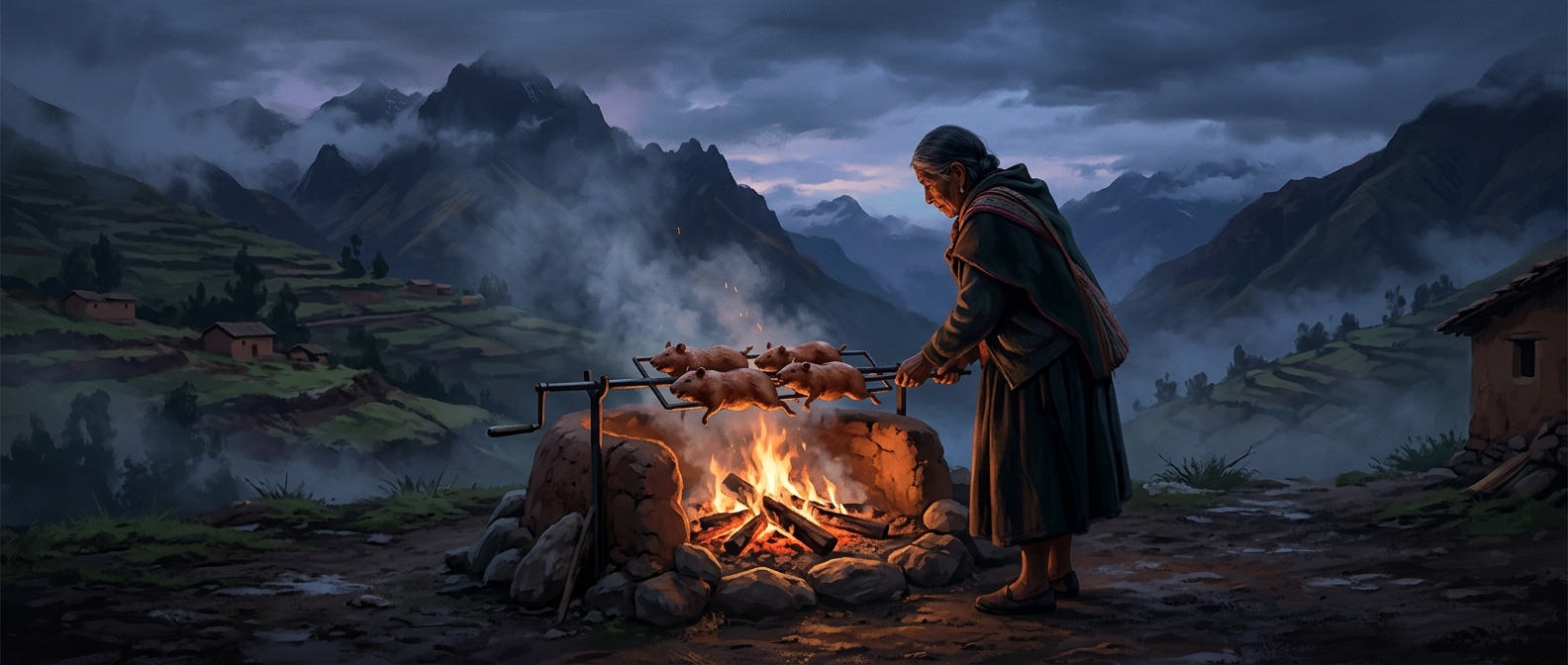
For special occasions, cooks often roast cuy on a spit, turning it over heat until the outside is browned. The method cooks the animal intact and gives the skin a crisp finish. It is commonly served with familiar Andean staples such as potatoes, though accompaniments vary by cook and region.
A meal shaped for sharing
Cuy is often associated with gatherings and celebrations, so its whole presentation can make the dish feel like the centerpiece of a meal. Diners may share it or take portions from the platter; it is not necessarily eaten as a single serving by one person. That difference in presentation can be striking to travelers used to seeing guinea pigs as household pets, but in Ecuador the animal also belongs to a distinct food tradition.
The whole roast is part of what makes the meal memorable: it shows both how the cuy was cooked and the role it plays at the table.