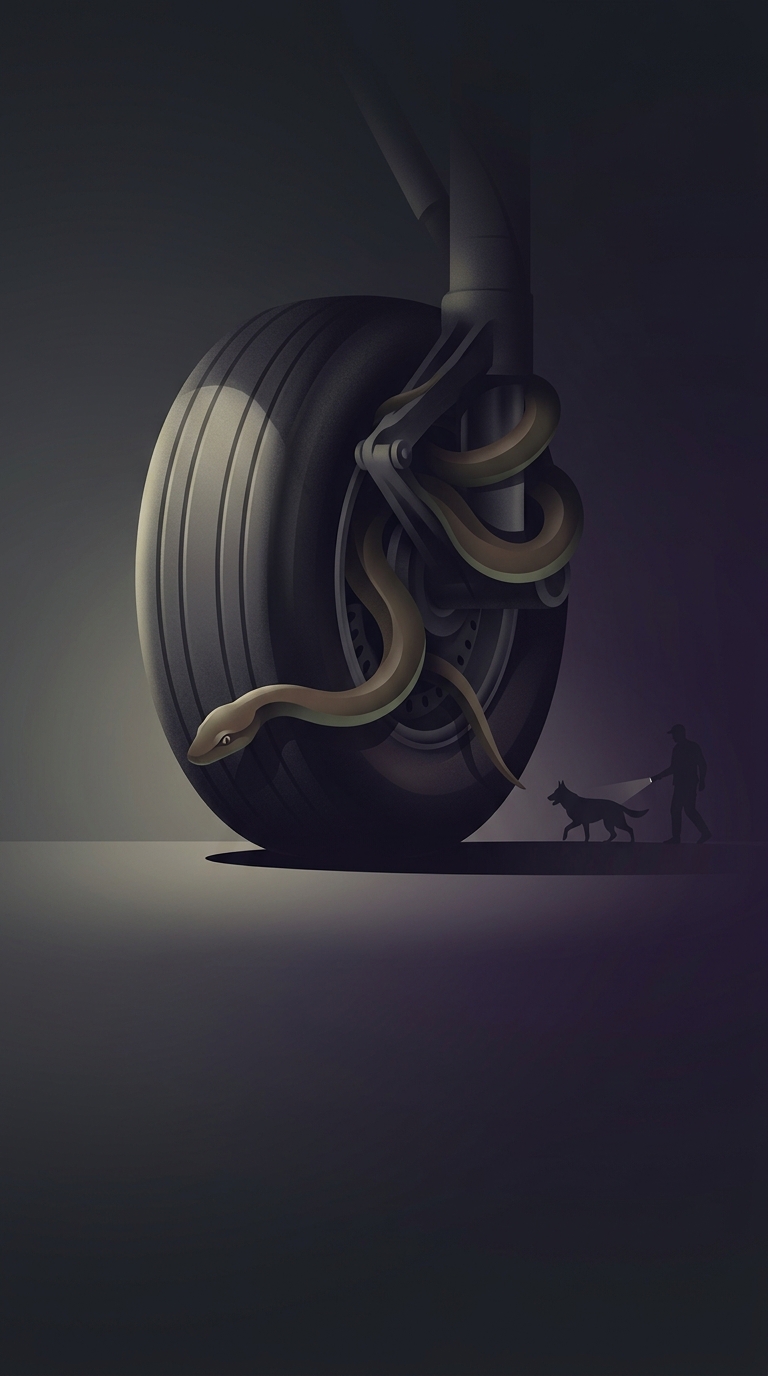
A small hiding place with a large ecological risk
A brown tree snake can slip into the tucked-away spaces around an airplane’s landing gear, where a visual check may not easily reveal it. The aircraft can then carry the snake far beyond Guam before anyone notices. For the snake, a flight is an accidental ride; for a destination with vulnerable wildlife, it can be the start of an invasive-species problem.
Brown tree snakes have had devastating effects on Guam’s native birds. In a new environment, a stowaway that survives the journey could find prey and few effective controls, then spread beyond the airport. The danger is not that every snake will establish a population, but that a single unnoticed animal can bypass the barriers that normally keep species separated by ocean.
Dogs turn detection into prevention
Trained dogs can search around aircraft and landing-gear areas for the snakes’ scent. That matters because the relevant window is before departure: once a plane is airborne, ground crews at Guam can no longer inspect its hidden spaces. A dog’s nose helps crews find an animal that is difficult to spot by sight alone, while there is still time to remove it.
The search is a form of biosecurity—steps taken to keep potentially harmful organisms from moving between places. It makes an airplane’s routine preflight ground time part of wildlife protection. A snake caught on the tarmac is a manageable problem; one discovered after arrival may already have crossed the most important boundary.