Building a Roast Look for the Camera
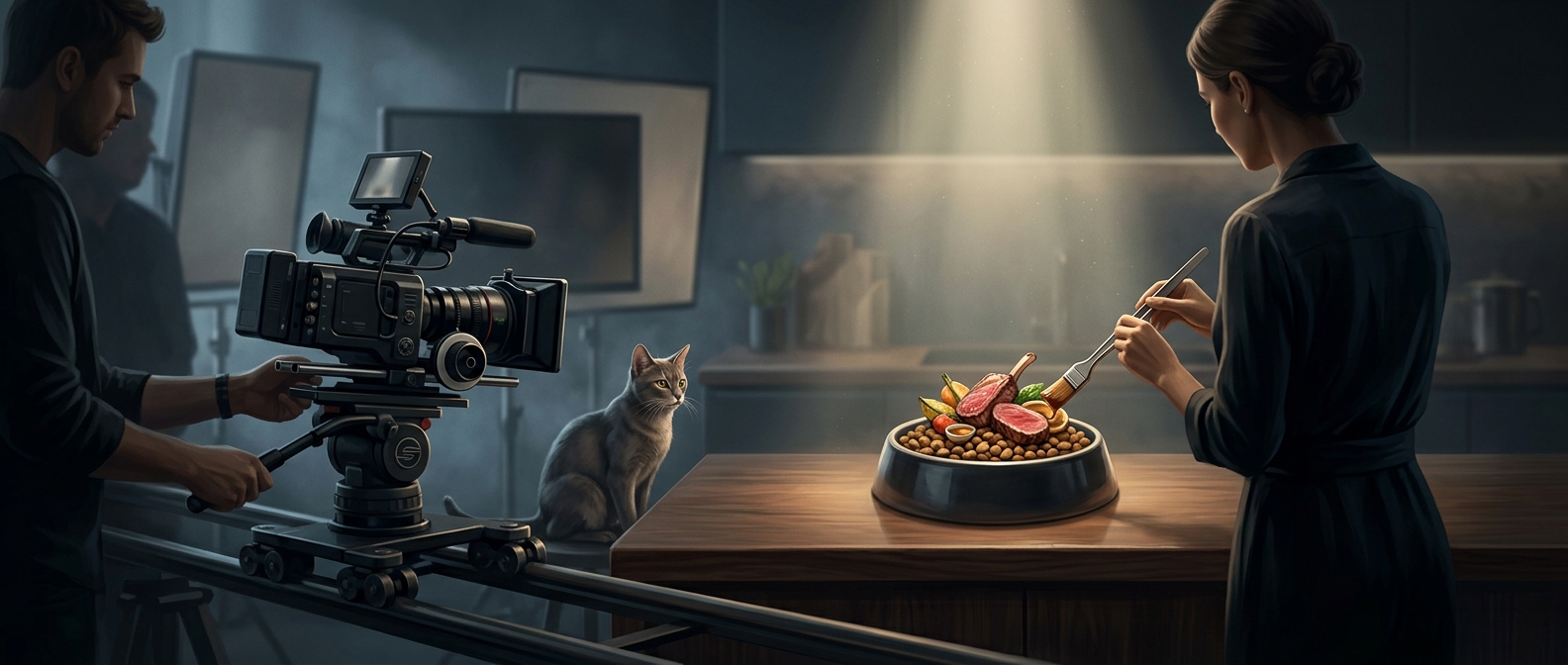
A convincing food image does not always require a meal that could actually be served. On a production set, a turkey may need to hold its appearance through lighting adjustments, camera setups, and repeated takes. A real roast can dry out or change as it sits, while a prop can be prepared to look the same for each shot.
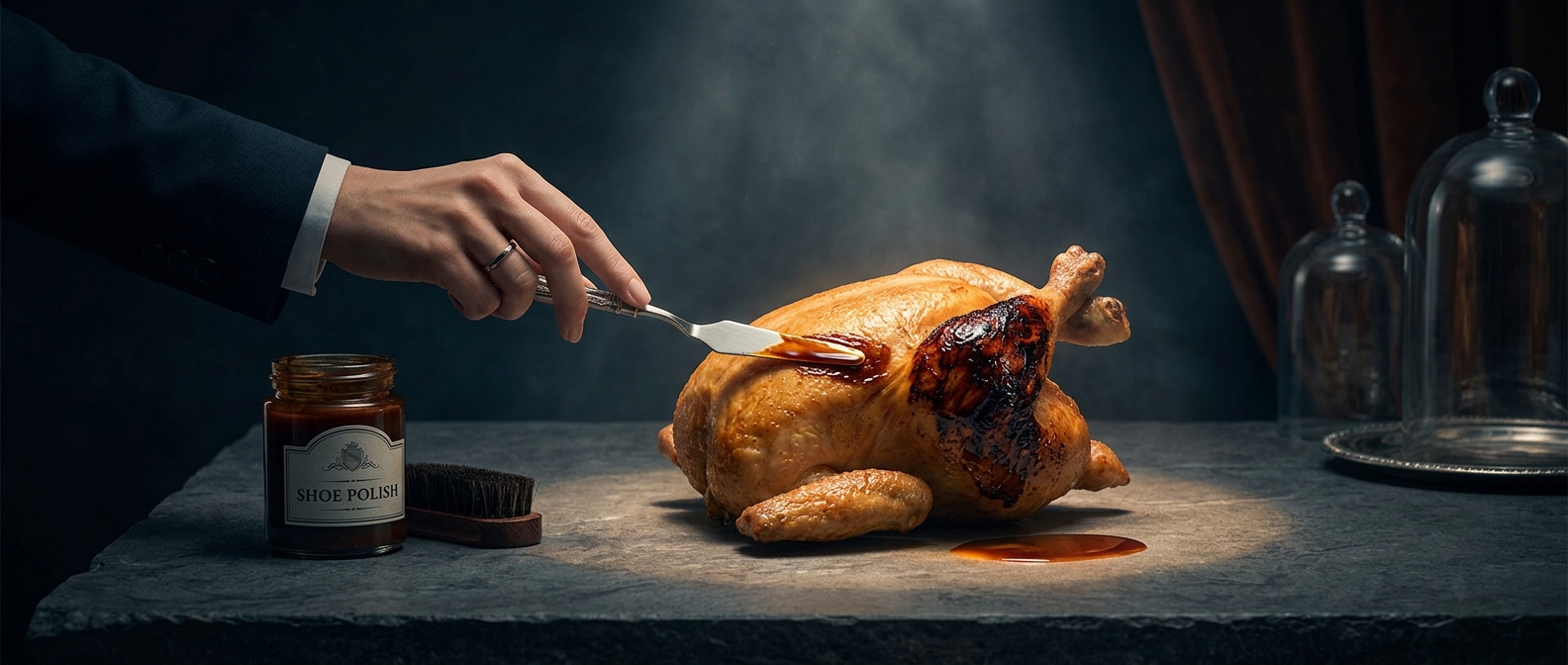
A heat gun concentrates hot air on the bird’s surface, creating browned patches where the camera can see them. Brown shoe polish can then darken the color and make it look more evenly roasted. The result is a visual effect, not a cooking method: the outside may look done while the interior remains raw.
A Prop, Not Food
That distinction matters. Shoe polish is not edible, and a turkey prepared this way is a set prop—not something to carve or serve. Its job is to read as appetizing on screen, where color, texture, and lighting do much of the work of persuading the viewer.
The trick reveals a basic production tradeoff: the most realistic-looking food for a camera is not necessarily food that is safe or practical to eat. The golden bird is designed for the shot, not the dinner table.