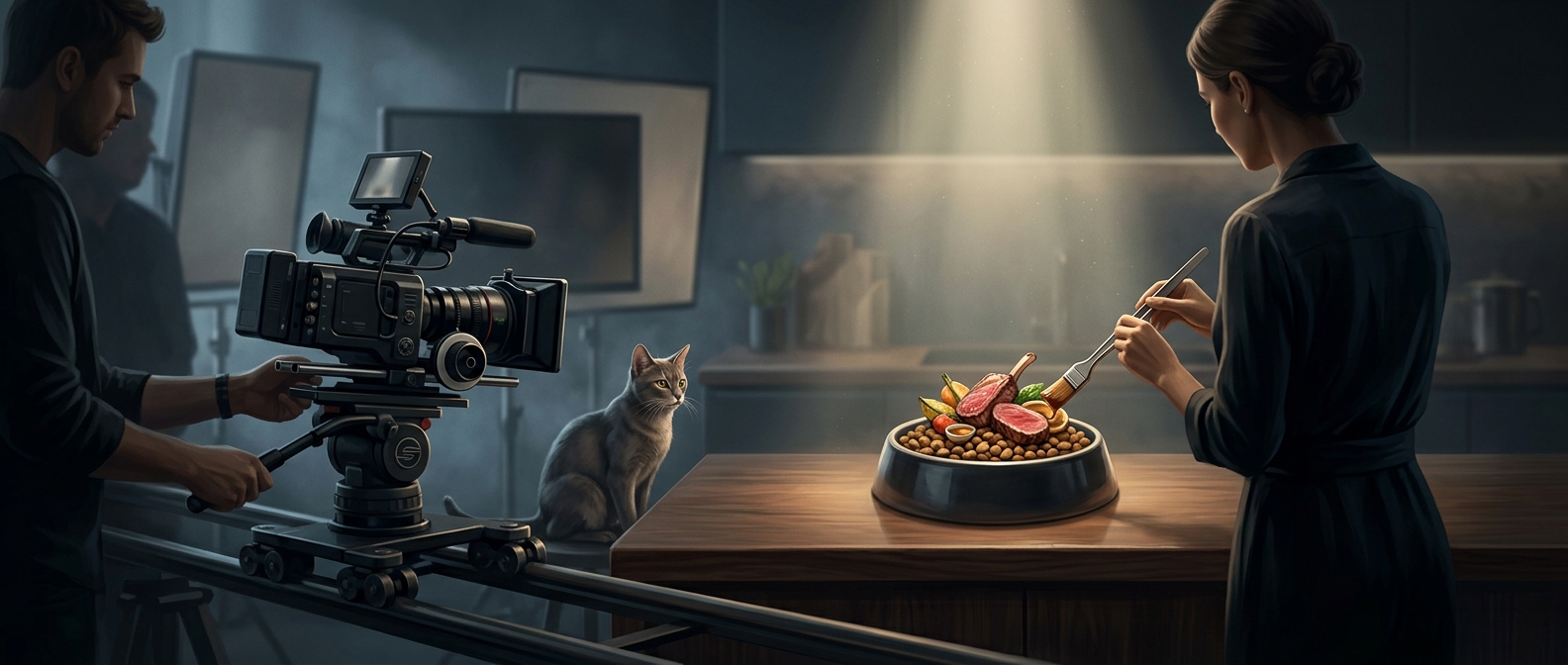
Why Kibble Gets a Food-Styling Makeover
Dry kibble is made to be shelf-stable and easy to portion, not to look juicy under studio lights. Its small, uniform pieces can read on camera as dry and repetitive. A few recognizable ingredients—glossy beef, bright peas, thick gravy—give the image texture, color, and a clear visual story: this is a meal, not just a pile of pellets.
The Picture Is Built for the Person Choosing
A dog may respond to smell and taste, but the human buying the food judges it largely by what can be seen on a package or screen. Food styling borrows the visual language of human cooking: browned meat suggests savory flavor, fresh vegetables suggest wholesome ingredients, and gravy makes the dish appear moist. Those cues can make an otherwise hard-to-photograph product feel familiar and appealing.
The ingredients also help viewers imagine what is inside the food. That impression is not the same as a literal picture of every bowlful: an advertisement is a composed image, arranged to make the product legible and appetizing. The styling sells the meal to the owner, even when the dog is the one who eats it.
Appetite as a Marketing Tool
That visual gap helps explain why pet-food advertising can look more like a dinner commercial than a view of kibble alone. The real product still has to be understood as pet food, but the surrounding ingredients translate it into a language shoppers already know: color, gloss, and the promise of a satisfying meal. The result is a small but telling inversion—food photographed to tempt one species is chosen by another.