A smooth silhouette, built from separate pieces
Traditional hanbok is assembled from roomy garments rather than shaped around fitted seams and utility pockets. A woman’s skirt, or chima, hangs from a high waistband, while the short jacket, or jeogori, closes with fabric ties. Adding a pocket to these flowing layers could pull at the cloth or interrupt the clean outline; the garments’ construction also offered fewer natural places for a deep, secure pocket than a tailored coat does.
That does not mean hanbok was designed without any way to carry things. Instead, storage was often handled separately from the clothing itself.
The pouch did the work—and could be changed
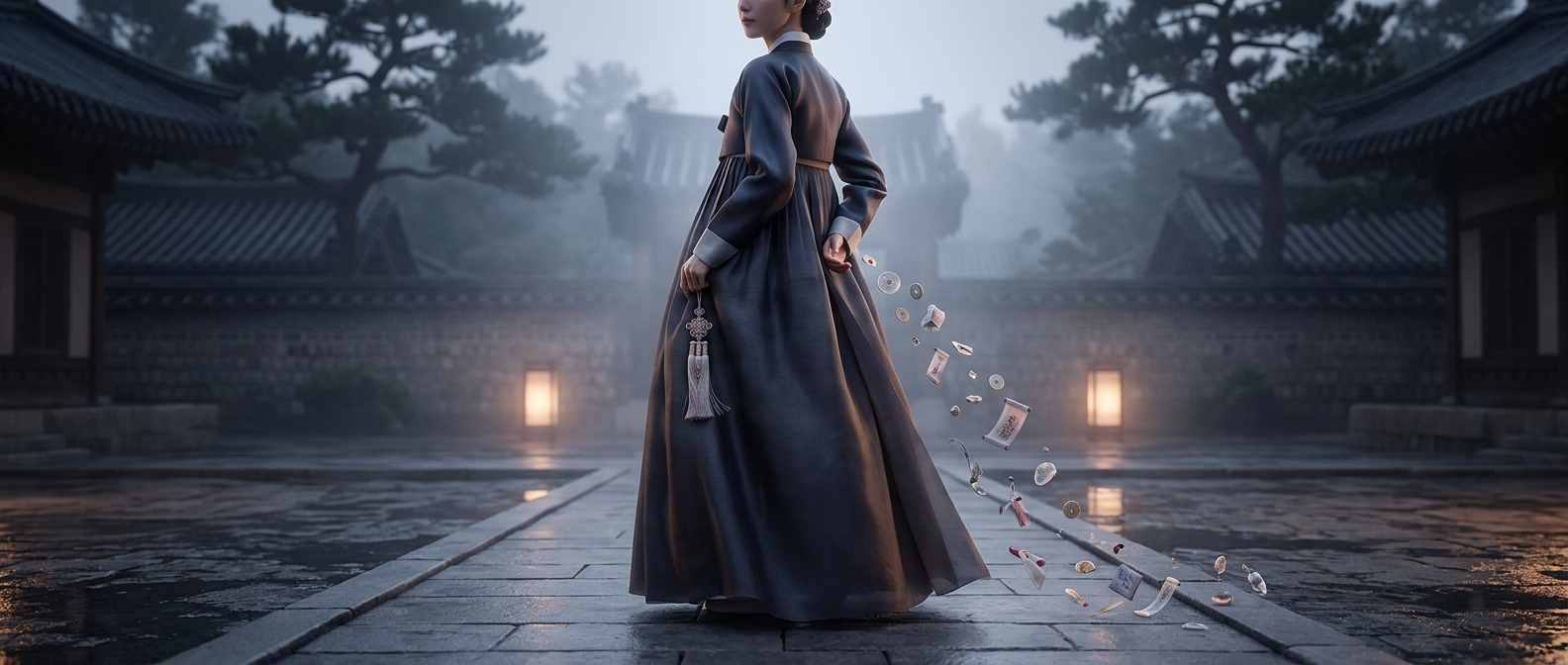
A small fabric pouch could be tied to a waistband or worn as a hanging ornament. This kept useful items close while letting the garment retain its shape. Because the pouch was separate, it could also be removed, replaced, or matched to a particular outfit without altering the clothing.
Some hanging pouches were elaborately decorated, so a practical accessory could also contribute color and personal style. The absence of a sewn-in pocket shifted storage from the garment to an adaptable accessory: hanbok’s smooth lines stayed intact, while the wearer could choose how to carry small belongings.