A toss turns four sticks into a move
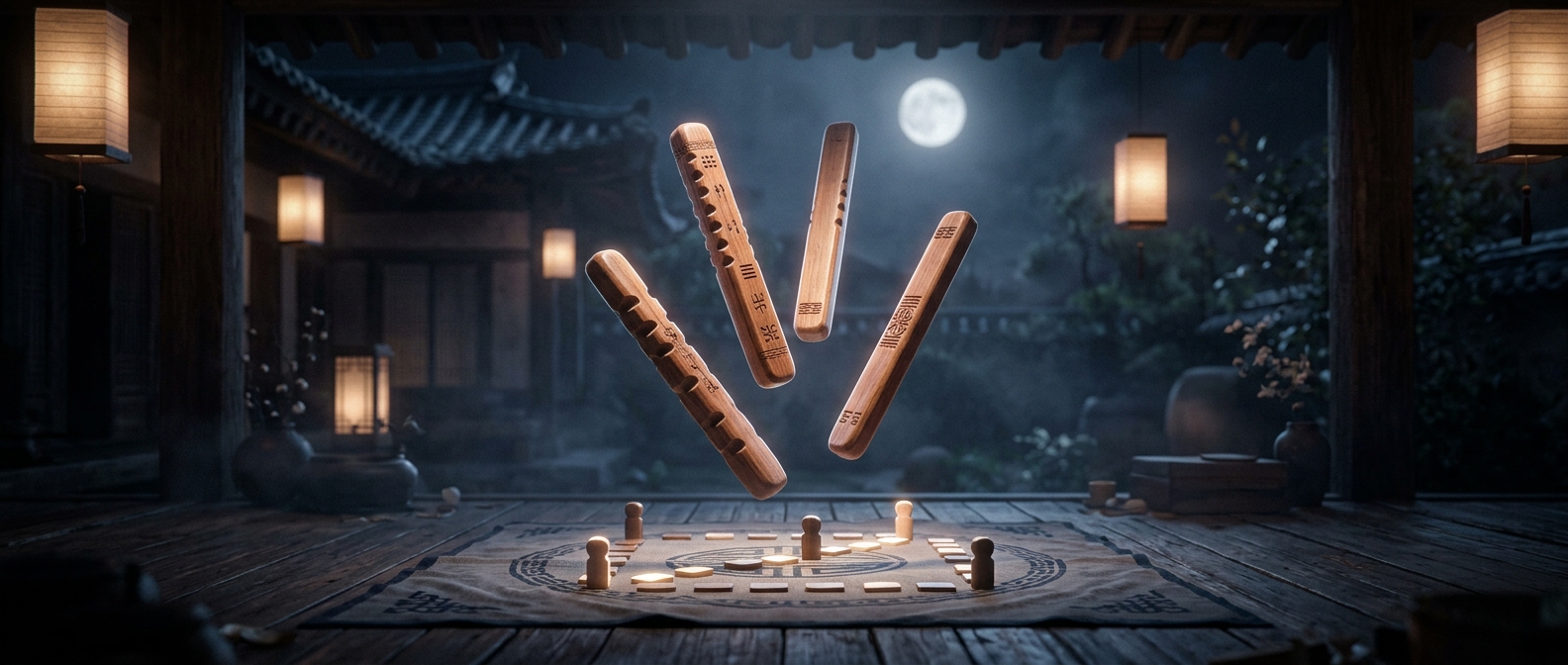
Yut Nori replaces numbered dice with four short wooden sticks. Each stick has a flat face and a rounded face, so a throw produces a pattern of sides pointing upward. Players count the flat faces to choose a move: the possible totals run from zero to four, each with its own traditional name and distance around the board.
The sticks do more than imitate a die. Their shape makes the result visible to everyone at once, while the throw adds a physical moment of suspense: the pieces tumble together, then settle into a pattern the players can read.
Why a single throw can change the plan
The result determines how far a piece advances, but it can also affect what a player does next. In many versions, the highest results—called yut and mo—earn another throw. A lucky sequence can therefore carry a piece farther than one move would suggest, while a shorter result may force a player to choose between advancing a new piece and moving one already on the board.
That choice gives the game much of its tension. Players are not simply racing a fixed number of spaces; they are deciding how to use each outcome, with the prospect of another throw balanced against the risk of exposing a piece to an opponent. The sticks make chance tangible, and the board turns each landing into a decision.