Why the First Bingo Cards Needed Beans
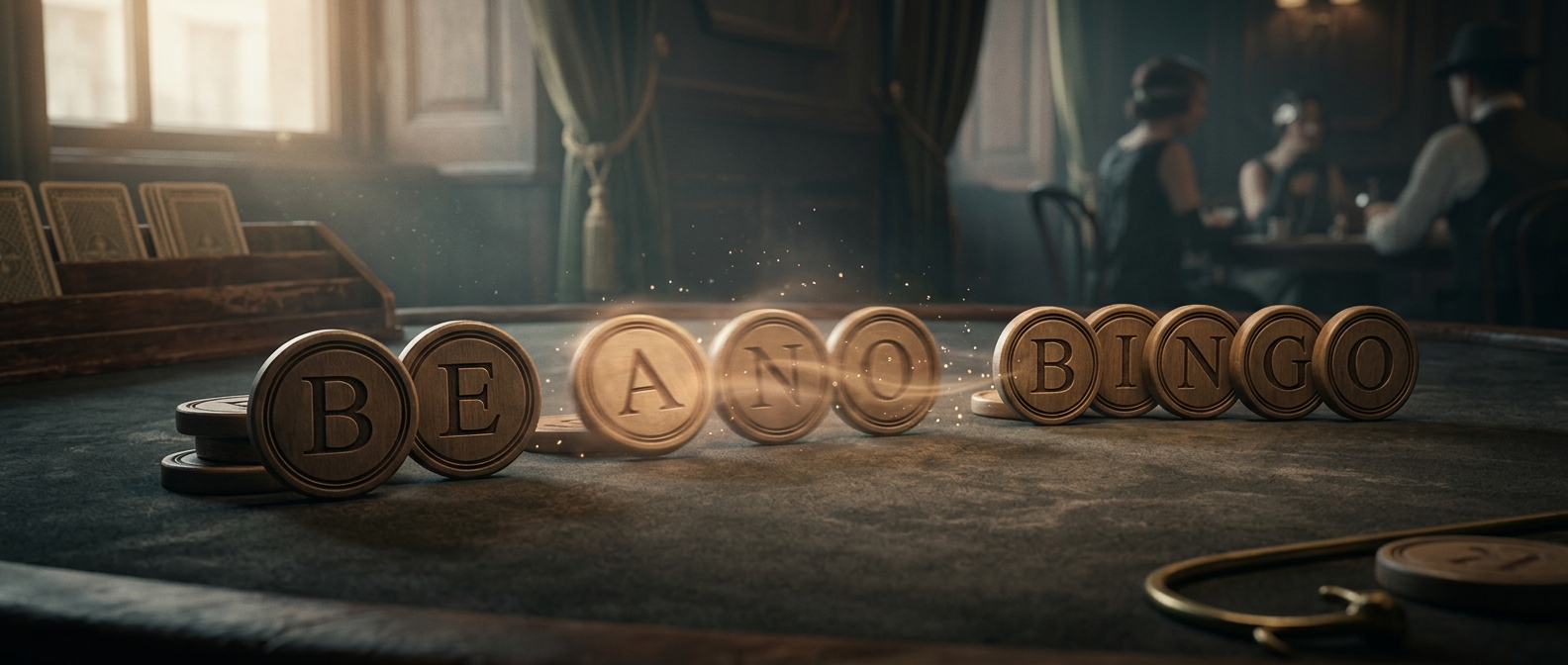
In early versions of the game, players listened as numbers were called and marked matching numbers on their cards with dried beans. The beans made a simple, reusable substitute for printed markers: a player could place one over a number and see at a glance which spaces had been called. The game’s first name, Beano, came directly from that everyday object.
The setup also created the game’s central tension. Each call might fill another space on a player’s card, bringing a win closer while leaving everyone else waiting to see whether their own numbers would line up.
How Beano Became Bingo
The familiar origin story says that a player celebrating a win shouted “Bingo” instead of “Beano.” A toy salesman took up the mistaken word, and it became the game’s name. The change was small, but it gave the pastime a sharper, more memorable label than one tied to its original markers.
The beans did not define the game forever; the act of matching called numbers did. But they explain why its earliest name sounded so different—and how a bit of accidental wordplay supplied the name players still use.