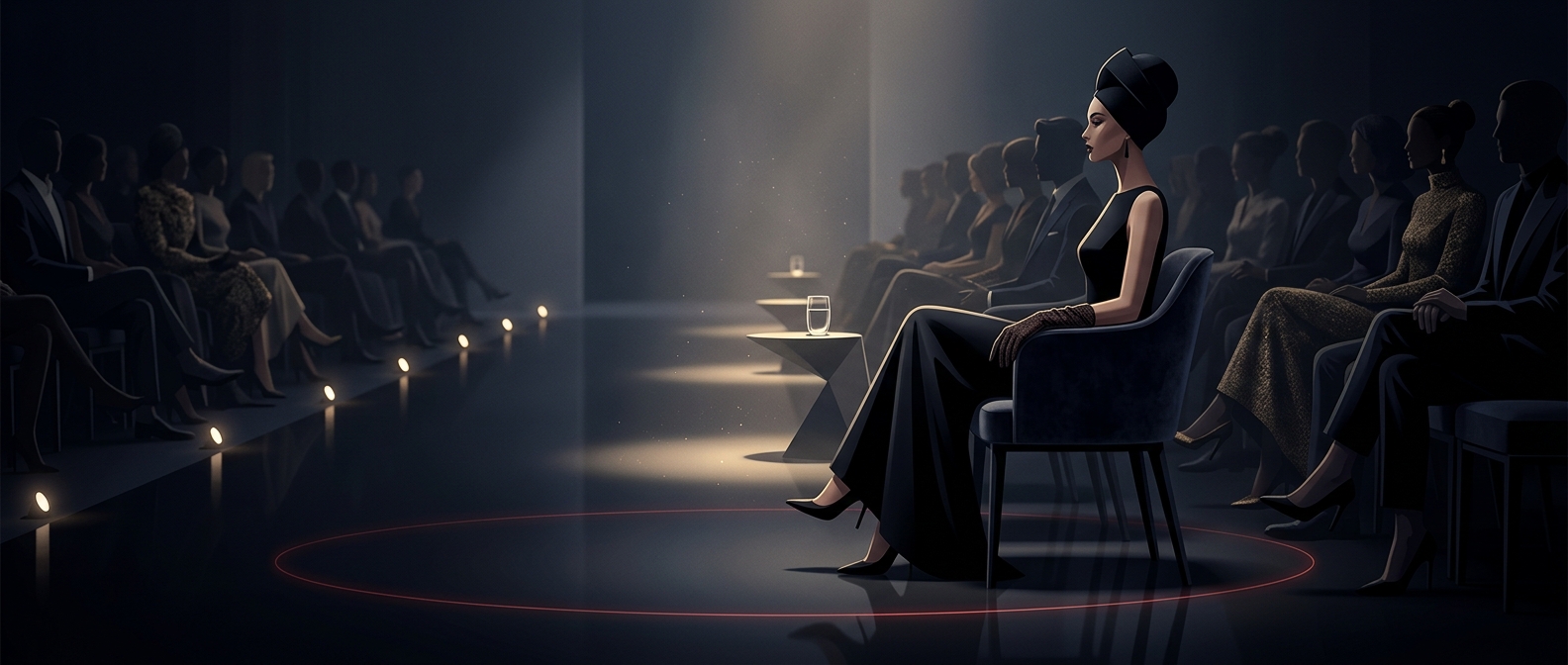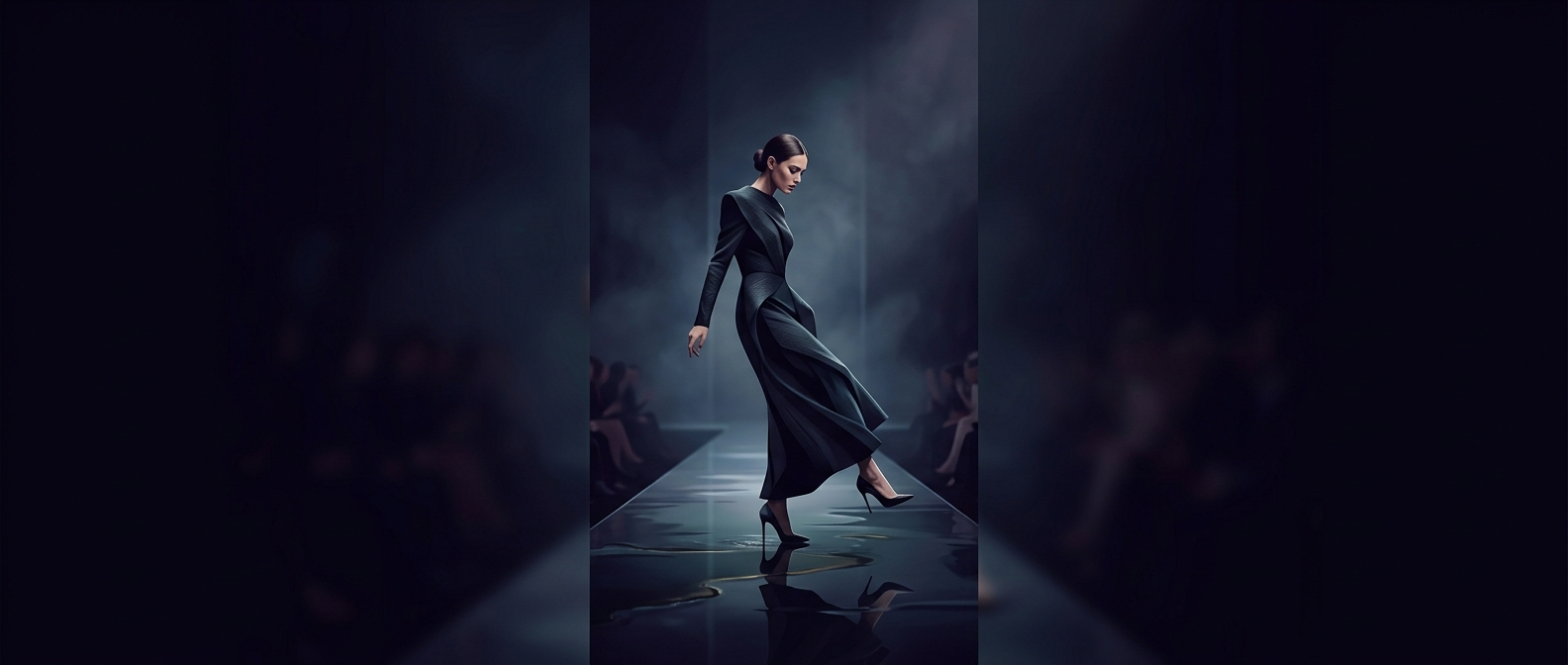
When the runway becomes part of the set
A wet or muddy catwalk is more than an unusual surface: it turns the models’ route into a visual element of the show. Water can catch and scatter light, while mud can leave visible marks and suggest a rougher, less polished world. As models cross it, their steps change the surface, so the scene keeps developing rather than staying like a clean, static backdrop.
That effect comes with a practical cost. A runway is usually designed to let models move steadily and present clothes clearly. Water and mud can reduce traction, and heels make it harder to recover balance because they concentrate a person’s weight on a small area. A surface that looks dramatic from the audience’s seats can therefore demand much more attention from the person walking on it.
The image has to survive the walk
Designers and show teams have to weigh the visual idea against what the route can safely support. The material, the footwear, and the pace of the walk all affect how manageable the surface is. Even then, a model may need to shorten a step or adjust footing—changes that can alter the smooth, composed movement a runway presentation usually aims for.
That tension is part of the spectacle: the clothes are being displayed, but the conditions of displaying them become visible too. The runway stops being neutral ground and becomes a challenge the models must navigate in real time.