The sari is shaped by how it is draped
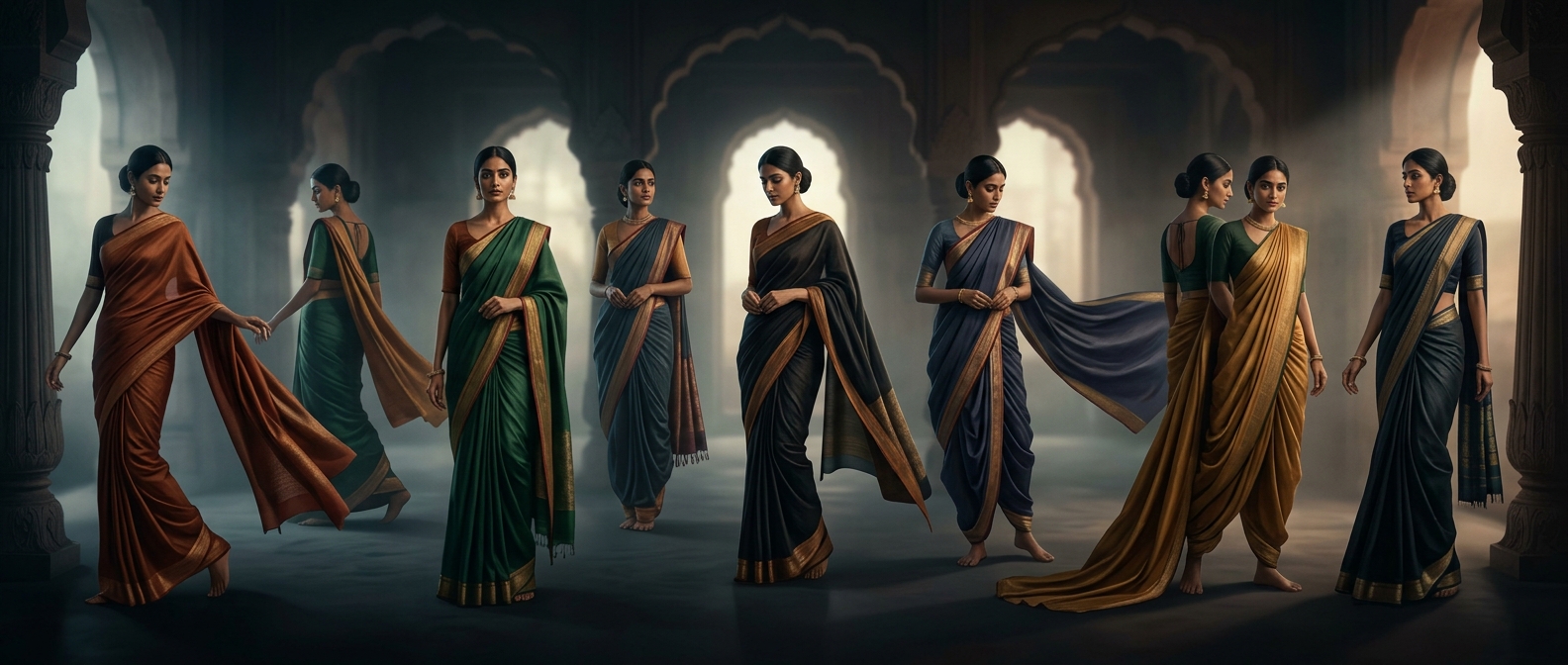
A sari’s versatility comes from being a long, unstitched cloth rather than a garment with a fixed outline. The wearer creates that outline while dressing: one section is tucked at the waist, another is folded into pleats, and the remaining length is arranged over the shoulder or around the body. Small changes in where the cloth is secured—and in which direction it falls—can produce a markedly different silhouette.
The shoulder-draped end is often called the pallu. It can hang freely, be brought across the torso, or be pinned in place. Pleats at the waist can be narrow or broad, and the cloth may be wrapped to leave the legs more or less free. Each choice affects not just appearance but how the sari moves and stays put.
One garment, many local conventions
Draping styles are not simply a menu of interchangeable looks. They are traditions associated with particular regions and communities, and they can signal familiarity with a place’s customs. The same cloth may therefore be arranged differently for everyday activity, ceremony, or personal preference. Fabric weight, texture, and border design also influence which folds are practical and how they hold.
Because the sari is not pre-shaped, dressing it involves learned technique: the wearer balances neat folds with enough slack to walk and sit comfortably, then tucks or pins the fabric where needed. Its variety comes from the interaction between a single length of cloth and the skill of the person wearing it. The result is a garment whose form can change without changing the fabric itself.