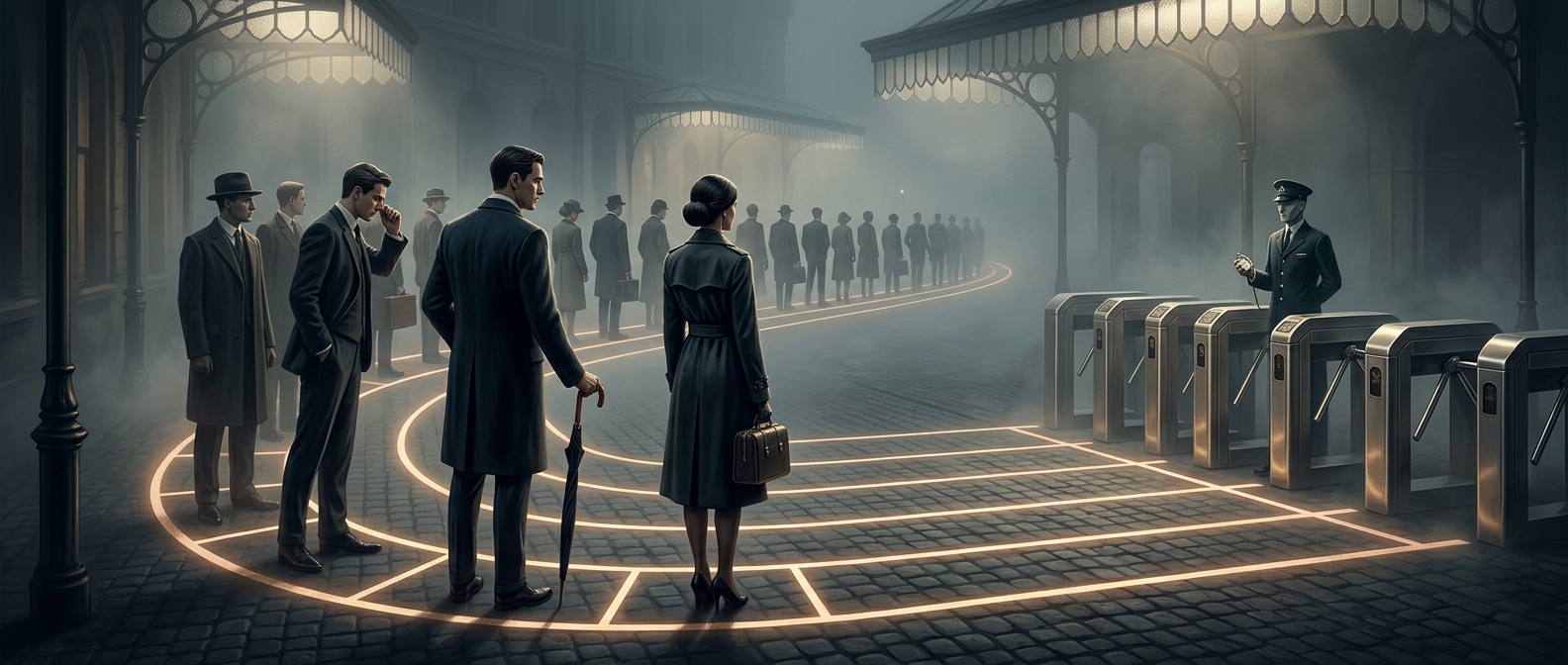
The queue runs on an unwritten rule
In Britain, a queue is more than a way to wait: it is a small agreement about fairness. People accept that everyone will wait their turn, usually in the order they arrived. Because the line often has no barrier or ticket system, strangers have to recognize and respect that order for themselves.
That makes the queue feel competitive without anyone needing to announce the rules. A newcomer may have to work out where the line begins, while those already waiting keep track of who was there first. A place in line is an informal claim, held in place by everyone’s shared understanding.
How the crowd enforces its rules
The response to someone stepping ahead is often social rather than physical. A pause, a pointed look, or a pointedly audible sigh signals that the person has broken the agreement. These reactions can be enough to prompt an apology or a move to the back, restoring the order without a direct confrontation.
The system depends on the line being clear. At a crowded stop or counter, people may be unsure whether there is one queue or several, and the unwritten rule becomes harder to apply. But when the order is understood, waiting your turn is a visible way of showing consideration for strangers—and cutting in challenges the fairness everyone else has agreed to uphold.